Norris R. McDonald |Corruption as economic violence
Loading article...
-
 According to one report, while crime on the streets has fallen by 40 per cent, white-collar crimes have increased by over 400 per cent.
-
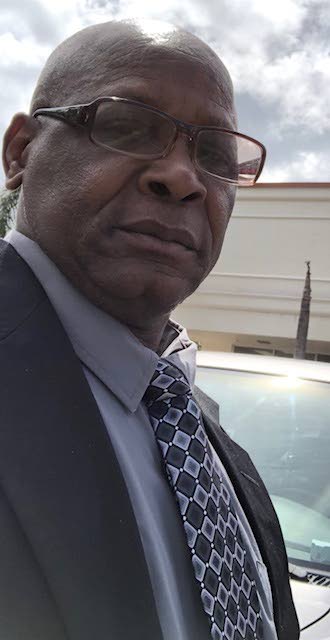 Norris McDonald
Jamaica may be recording a decline in murders, and that is welcome news. But while the headlines celebrate falling homicide rates, the country is stuck in a deeper, more corrosive crisis: a perpetual rise in public corruption.
According to one report, while crime on the streets has fallen by 40 per cent, white-collar crimes have increased by over 400 per cent. This is a continued shocking situation.
Yes, we must celebrate that people on the street are experiencing some semblance of relief from criminal activities. But it is too much to expect that crime at the top will be urgently addressed as well.
Indeed, white-collar crime is Jamaica’s national emergency. It quietly transfers wealth upward, concentrates power, and corrodes public institutions.
This is not simply about morality. It is about national survival. A nation that only counts bodies, but not stolen billions, is misreading its own danger. All aspects of the nation’s crime problems are important. This is not to simplify the issue of deaths on the streets, but to point out the need for a fair administration of justice.
While national corruption does not produce graphic, shocking images, the moral conscience of our nation needs to be jolted. It can’t be that politicians ‘shame-tree so dead” that they can’t give up their corrupt ways.
My friends, the country is facing a deep political economic, social and moral crisis. There is national stagnation, slow decay of communities, crumbling schools, understaffed hospitals, unsafe roads, unreliable water supply, and a permanent sense of scarcity for people who are already stretched to the breaking point.
Jamaican people have grit. Our people know how to survive without public support. But public policy should also be focussed on community redevelopment. Improving people’s lives can help to further lift their self-esteem making them play a more meaningful role in society. In this way fighting crime comes through direct government to people positive actions.
DISASTER MONEY AND FEEDING FRENZY
Then we come to the issue of the wanton destruction caused by Hurricane Melissa in western Jamaica. The massive scale of reconstruction underscores why integrity in public finance matters. With billions of US dollars required for infrastructure repairs, after Hurricane Melissa, it is a true test of our national spirit if the country can unite around this important national goal.
And it is here again, that government’s ability to manage disaster recovery efficiently is being put to the test.
Will there be fairness, justice, and an absence of political greed? That is the question on everyone’s mind.
Public corruption is not an unfortunate collection of isolated mistakes. It is a systemic failure that distorts priorities and reallocates national wealth upwards into the hands of the corrupt and politically connected few.
• Every diverted dollar is a dollar not spent on hospital beds, school repairs, rural roads, water systems, or disaster-resilient housing.
• Every manipulated concession increases costs elsewhere in the economy.
• Electricity rates, taxes, transport fares, and utility bills do not rise in isolation; they reflect structural inefficiencies and fiscal leakages that someone must absorb.
Lower-income Jamaicans often face swift arrest and incarceration for minor infractions. Meanwhile, high-level financial irregularities languish in endless audits, delayed investigations, and administrative reviews that seldom culminate in convictions or meaningful asset recovery.
This is not accidental. It is designed by neglect.
CORRUPTION IS CLASS WARFARE
When public funds are mismanaged, the poor and middle class pay twice: once through higher living costs and again through deteriorating public services.
Corruption also has the face of overcrowded classrooms; under-resourced clinics, unsafe roads; unreliable water supply, and stagnant wages. This is the direct practical consequence of leakages from the budget.
White-collar crime kills slowly. It does not leave crime-scene tape or nightly news footage. It leaves deferred maintenance, postponed investments, and weakened institutions.
Corruption, in effect, becomes economic class warfare waged against those least able to defend themselves.
Meanwhile, citizens are told that taxes must rise, that belt-tightening is unavoidable, and that sacrifices are necessary.
A reasonable question follows: if taxes go up, will corruption go down?
Is that too much to ask?
Citizens accept taxation and regulation in exchange for services, protection, and opportunity. And yet, when taxes rise and services still deteriorate, while public debt grows, this undermines people’s faith in democracy.
Is there any wonder, then, that over the last 20 years or so, electoral participation has been rapidly declining?
When people vote, they do not give consent to a government that provides schools without adequate teachers, or hospitals without essential equipment. People vote for a better life. Also, they do they consent to a system in which proximity to power gives rise to endemic corruption.
HANDCUFFS MUST REACH CONFERENCE ROOMS
My dear friends, the relationship between elite impunity and street crime is not simple imitation. It is structural. Corruption weakens institutions, diverts resources from education and employment, widens inequality, and erodes trust.
This unfair, unjust situation of corruption, waste, fraud, and abuse must be stamped out. No society can build durable prosperity on selective justice.
• Handcuffs must become as conceivable in boardrooms as they are in inner-city communities, talk of reform will remain theatrical.
• The rich and powerful must fear legal consequences as much as the poor do.
• If not, we will have a society in which punishment for crimes is only for the poor and not for the rich.
Demanding accountability does not weaken the state. It strengthens it.
A nation cannot develop while its ruling class is perceived as unjustly feeding on the public purse at taxpayers’ expense.
Yes! Raise taxes if needed. But remember: every dollar must be spent wisely.
Having this systemic corruption is like, with blind faith, asking a mongoose to continue watching our chicken coop!
That is the uncomfortable truth Jamaica must confront.
But, in the final analysis, real change has never flowed from polite appeals to conscience. It has always come from organized pressure that makes injustice costly.
That’s the bitta truth.
Norris R. McDonald is an author, economic journalist, political analyst, and respiratory therapist. Send feed back to columns@gleanerjm.com and miaminorris@yahoo.com.