Framing the future
Loading article...
-
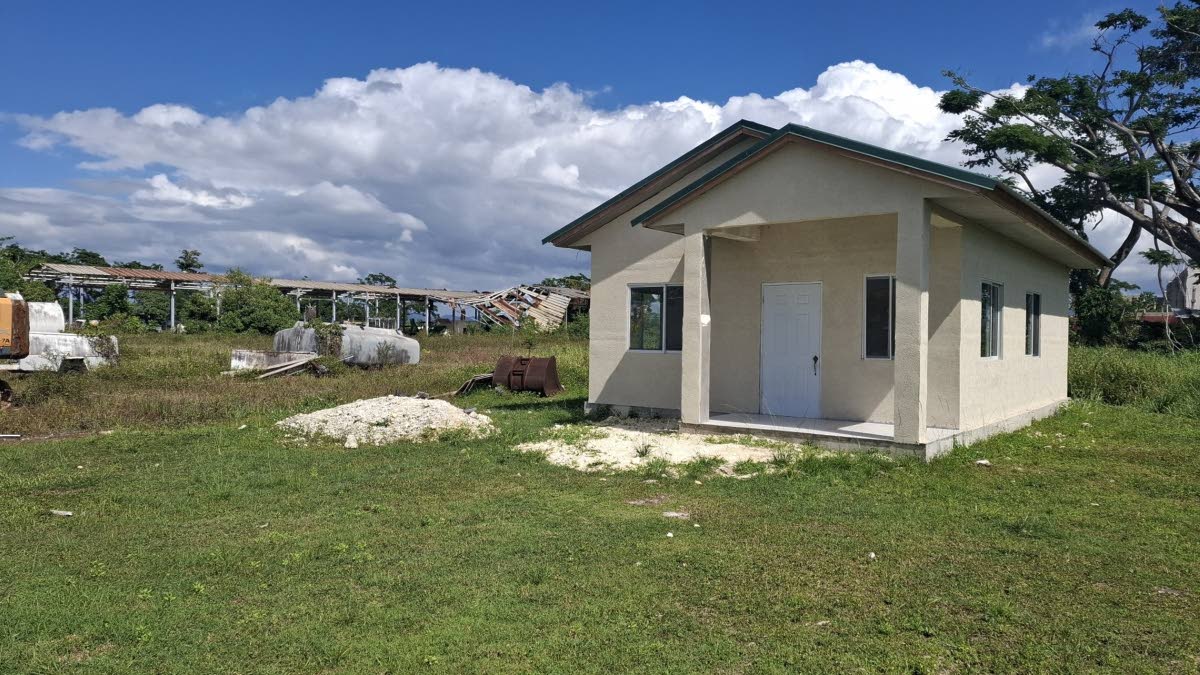 The 700-square-foot steel-frame model house in Savanna-la-Mar that stood standing after Hurricane Melissa.
-
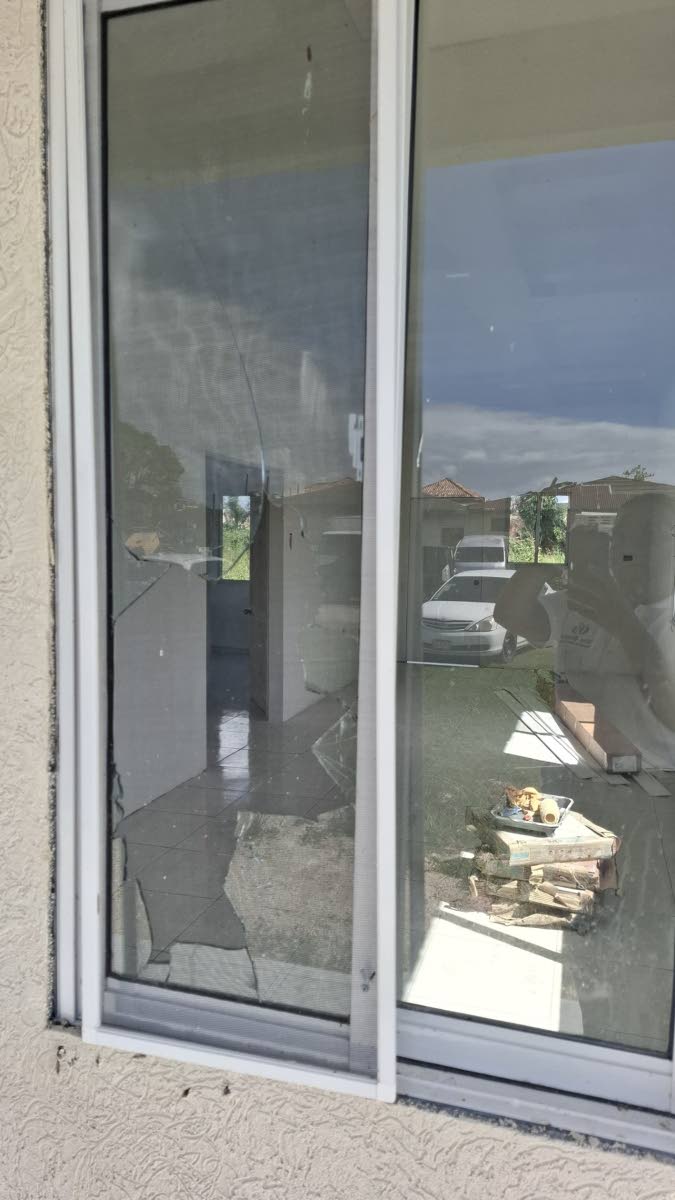 A shattered window on the steel-frame building, the only damage which the model house sustained.
-
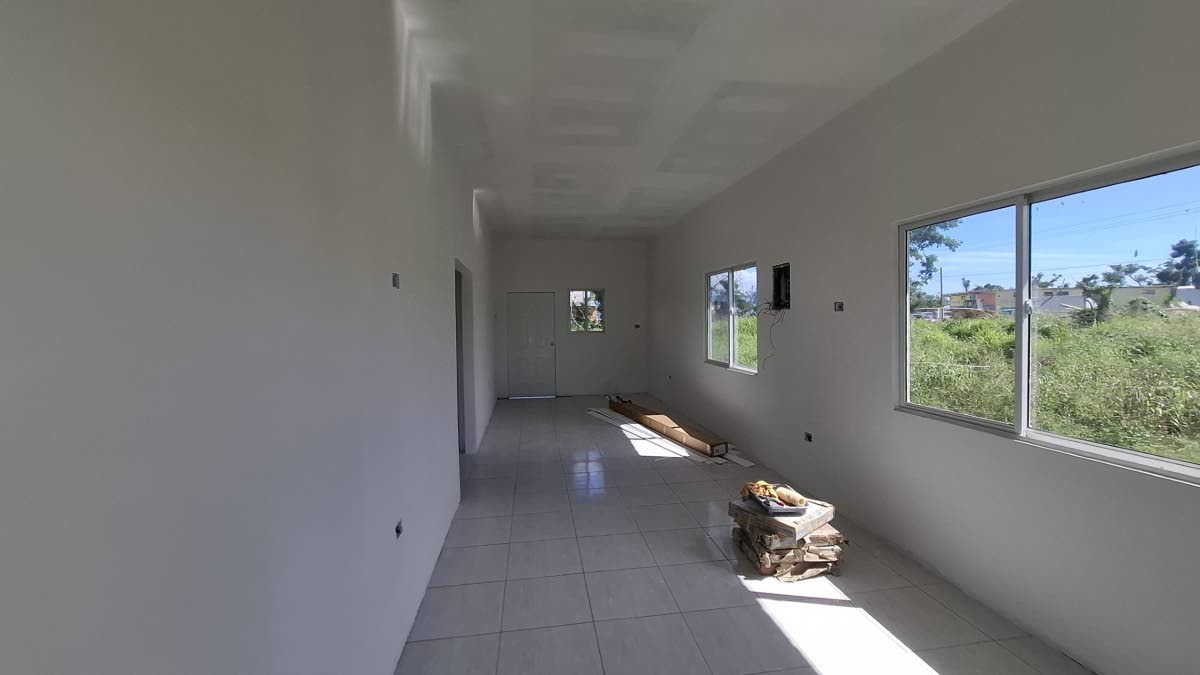 An interior view of the steel-frame modular home in Savanna-la-Mar.
-
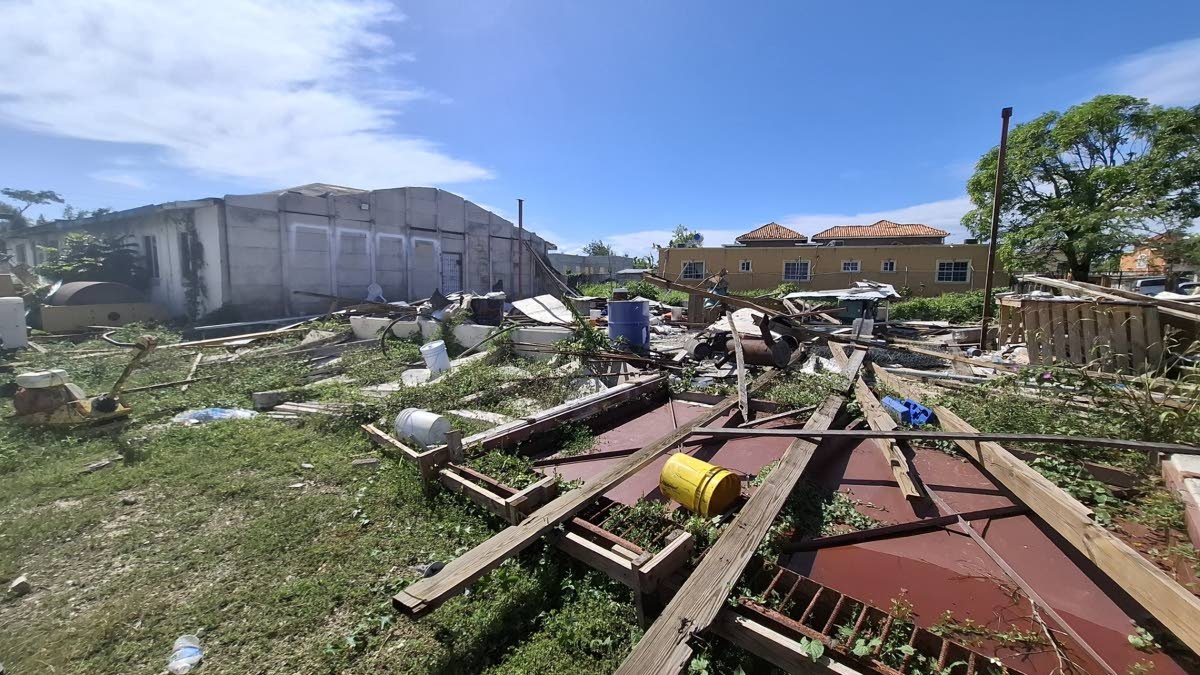 A nearby building damaged following the passage of Hurricane Melissa.
-
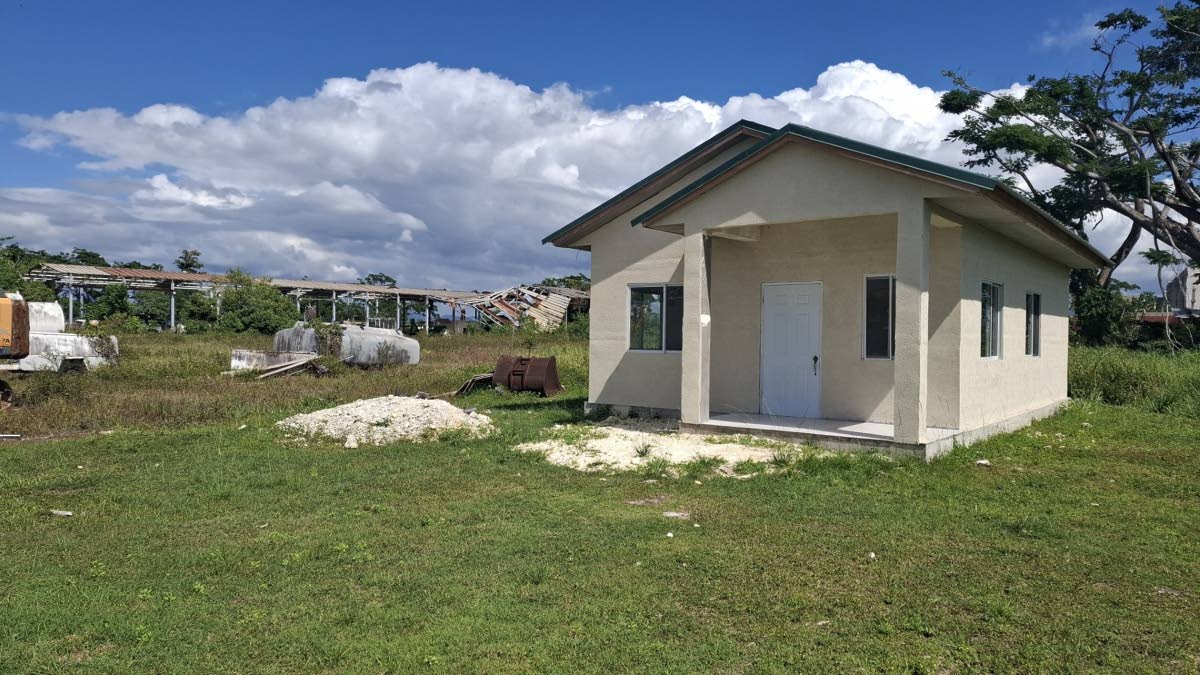 The 700 sq ft steel frame model house in Savanna la mar that stood standing after Hurricane Melissa.
A steel frame house left standing in Savanna-la-Mar after Hurricane Melissa tore through sections of western Jamaica has started a conversation about how the country should rebuild and whether it is time to rethink traditional block and steel construction.
At the forefront of that push is Modular Jamaica, led by CEO William Massias and Chief Marketing Officer Kevin Bourke, who say the future of resilient, affordable housing lies in engineered steel frames manufactured locally.
Massias said the idea was rooted and grounded after a visit to the Sav town.
“Kevin Burke called me and said, ‘Hey Will, did you see the house that is left standing in Sav-la-Mar?’ (He said) come and look at this thing because it’s really amazing how this house stood up down there,” Massias recalled.
“So we went down and we looked at it. And I was very impressed that the house remained standing.”
The surrounding destruction, he said, was a stark difference.
“There was a factory immediately behind it. And ... it looked like Hulk took it and crushed it up.”
Massias, who previously served as executive director at Food for The Poor, said this is what he believes is a viable solution for rebuilding.
He noted that comparable traditional homes often range significantly higher.
“if you’re familiar with the prices out there for homes ... most home are in the $20- to $25-million [range]. Our home [in square footage], for foundation and steel frames that would go up on there, would cost just about $4 million.”
Speed, he said, is another major advantage.
“We can put up ... the steel frame and the foundation. And then it takes ... probably another few days or up to a week to finish the actual finishes.”
“Foundation, steel frames, finishing, everything in two to three weeks,” he added.
Bourke said the system is not just experimental but already proven elsewhere in the Caribbean.
“It’s already established, tried, tested, improved in other Caribbean countries. And it’s thriving and we’re just super excited for it to come to Jamaica,” he said, adding that 600 homes are currently being built in Guyana.
On structural integrity, Massias maintained that steel’s flexibility makes it better suited to withstand earthquakes and shifting ground.
“When you build with concrete, the concrete has no flexibility. That’s why they crack,” he said. “With the steel frame, it’s a lot of flexibility because it’s earthquake proof.”
He also addressed concerns that people may have about lightning strikes.
“Lightning won’t affect it,” he said. “It’s grounded in the foundation. The steel frame is covered with concrete board and it has a zinc roof as well.”
Grounded means it is securely connected into the foundation and ultimately the earth. In simple terms, grounding gives electricity, including lightning, a safe path to travel into the ground rather than through the building itself. It is a standard safety feature in modern construction, designed to reduce the risk of electrical damage or fire.
GOING LOCAL
The company’s representative say they also plans to establish a local factory and training programme.
“Somebody who can come with no prior construction skills or anything at all, we will teach them,” Massias said. “It will take one day to train someone to understand how because it’s a modular set.”
He also added that Modular Jamaica hopes to partner with NGOs and government to expand access.
“We’re looking for the support so that we can build back better ... . We need to look at other avenues that are ... more efficient, less costly if we want to really talk about building better.”
However, the proposal has drawn pointed responses from voices within the Jamaica Institution of Engineers (JIE), who say innovation must be carefully evaluated against local realities.
Nalford Hyde, civil division chairman of the JIE, stressed that adherence to established standards is the first concern.
“We want to make sure that whatever is done is done to the approved standards and codes. I think that is one of the critical things,” Hyde said, referring to the standards of building even a concrete house.
While acknowledging steel frame housing’s advantages, he outlined its limitations, particularly in coastal environments.
“Steel frame housing does have its advantages. It’s lightweight, it’s faster to construct – we’re talking about from start to finish – than your typical block and steel, but it also has the disadvantage that it is limited in where you can put it up in that, in your coastal environment, putting up a steel frame house there will require some additional requirements for maybe protection of the steel. Instead of using galvanised materials [you have to] use stainless steel materials, which in itself will cost more.”
Maintenance is another concern, particularly for lower- and middle-income homeowners.
“It is far easier to maintain your typical traditional block and steel units than it will be for your steel frame houses, because it uses a cladding, which is usually a concrete board, that doesn’t have the same lifespan as your concrete structure,” Hyde said.
Meanwhile, Dr Christopher Burgess, vice-president of engineering affairs at the JIE, warned that corrosion in concealed steel members may not be visible to homeowners in the long run.
“When you sandwich these steel things behind drywall and they’re corroding, you won’t know.”
He cautioned against equating steel construction with automatic strength, referencing the damage to the Black River Market during extreme winds.
“Not because it is steel means that it is strong and I think that is the main point to make over this material. It has to be properly engineered,” Burgess said.
“That Black River Market building should have been even stronger than the average home. It should have been carefully designed and it’s a larger structure with bigger members and it failed because it was exposed to the extreme winds.”
He questioned whether the benefits are as clear-cut as presented.
“Based on the initial number, I heard $5 million ... . That is comparable to a block-and-steel home and so I cannot understand why it is we’ve been experimenting with something that is novel rather than something that we know is sure,” he said. “I can’t see the cost advantage. I can’t see the speed advantage. I can’t see the resilience advantage.”
ECONOMIC IMPLICATIONS
Burgess also emphasised the economic implications of maintaining these homes.
“Our traditional block-and-steel construction energises the local economy because the blocks used are made by Jamaicans in Jamaica. There are [approximately] 135 block manufacturers in Jamaica. The cement is made right here in Jamaica and on our stock market,” he said.
Collaboration, according to Modular Jamaica, will ultimately determine whether steel-frame housing gains traction or remains a niche alternative.
Modular Jamaica said it is already in discussions with several entities.
“We are in discussions with Food for the Poor about possibly having them look at this new system that we have now,” Massias said.
He added that conversations are also taking place with a number of other NGOs that are looking to build back, whether for their staff in the tourism sector or to assist the needs in other areas of western Jamaica.
Massias stressed that the company does not want the initiative to operate in isolation.
“We’re looking for the support so that we can build back better,” he said, noting that meaningful scale would require partnership with NGOs and the private sector as well as the Government.
Meanwhile, the JIE associates have not ruled out the value of innovation, but insist it must be guided by technical oversight and national standards.
Hyde in turn cautioned against dismissing traditional methods, saying, “I don’t know if we want to say that we’re completely knocking it, but we’re thinking that, you know, we have a tried and tested and proven way of building here in Jamaica.”
mickalia.kington@gleanerjm.com