Massia Bailey | Universal design for learning: A practical and responsive teaching strategy
Loading article...
-
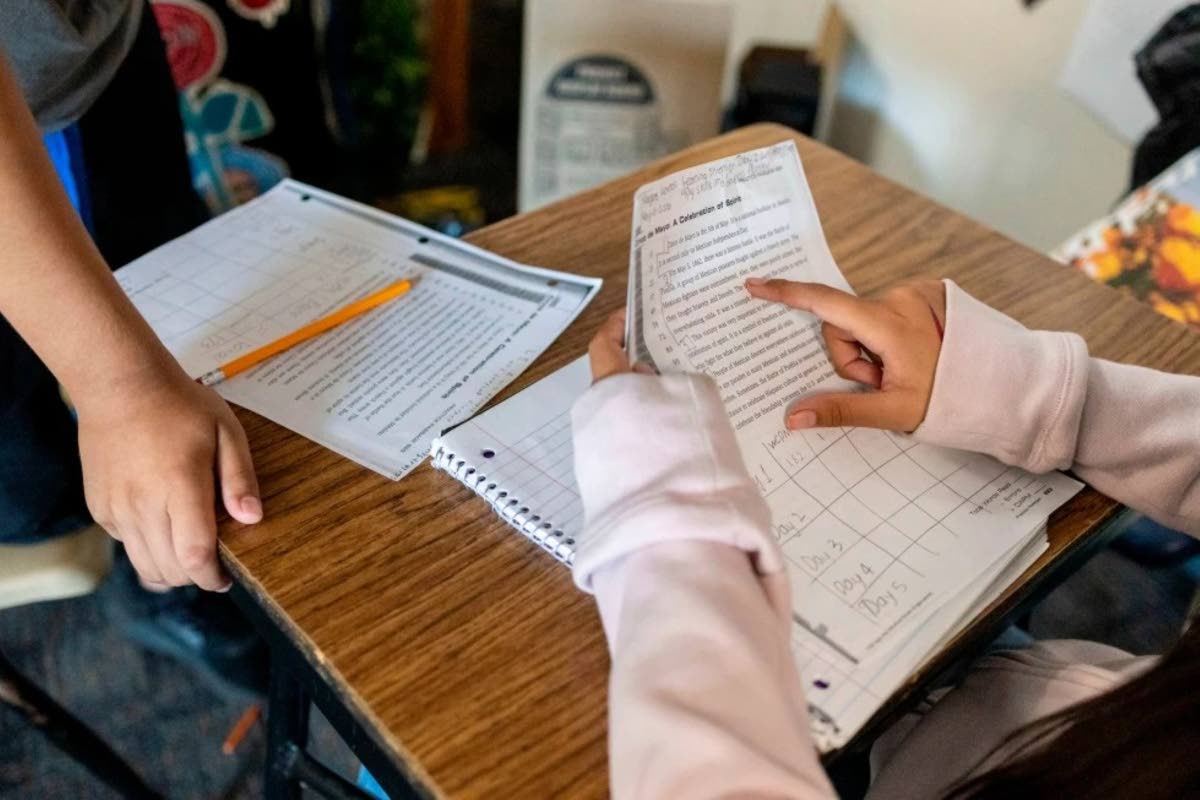 Over 760,000 teenagers in dozens of countries took the Programme for International Student Assessment (PISA) last year. Results released on Tuesday show average scores in math, reading and science are all at their lowest point in PISA history among highly developed economies. Photo - AP
-
Over 760,000 teenagers in dozens of countries took the Programme for International Student Assessment (PISA) last year. Results released on Tuesday show average scores in math, reading and science are all at their lowest point in PISA history among highly developed economies. Photo - AP
-
 Massia Bailey. Photo - Contributed
As Jamaica’s 2026-2027 school year begins, teachers and families will again work to meet children’s varied learning needs. In one classroom, students may differ in reading levels, disabilities, language processing, attention, or how they best receive information. Universal Design for Learning (UDL) offers a practical way to increase access while maintaining high expectations.
What is Universal Design for Learning?
Universal Design began in architecture and product design, where the goal was to create spaces and products that could be used by as many people as possible without requiring special adaptations. A familiar example is a ramp. While usable by the ordinary pedestrian, it supports wheelchair users, benefits parents with strollers, travellers with luggage, and children on bicycles.
Applied to education, this means designing instruction for accessibility from the start rather than waiting for students to struggle and then modifying the lesson. UDL is not a special-education programme, a way to lower expectations, or a separate lesson for every student. It is also not the same as learning styles, differentiation, or simply using technology. Instead, UDL uses flexible approaches to support varied learning needs through three areas: representation, engagement, and action and expression.
Representation: How will students access the information?
Representation refers to the different ways information can be presented to learners. Consider a teacher introducing the water cycle. Students may read about it in a textbook, but the teacher might also use a labelled diagram, photographs, a short video, explicit vocabulary instruction, or a demonstration. The learning expectation remains the same. What changes is how students access the information.
Additionally, a teacher introducing new vocabulary might have students hear the word, see it written, view a picture representing it, discuss its meaning, and use it in a sentence. This becomes particularly important for students with disabilities or learning difficulties who benefit from multiple opportunities to visually interact with the word. These same methods would still also benefit a typical learner.
Engagement: How will students become involved in learning?
Students also differ in what captures and maintains their attention. UDL encourages teachers to provide appropriate choices, make learning relevant, break difficult tasks into manageable steps, and help students develop persistence. This does not mean allowing students to decide whether they want to complete an assignment. It means looking for ways to increase their motivation as the task may appear daunting.
For instance, a teacher might say, “Would you like to complete questions one to five or six to ten first?” Students might select a topic for a writing assignment rather than having one assigned to them. Students may also be permitted to collaborate with a partner before working independently to increase their confidence level.
Action and expression: How can students show what they know?
Students also vary in how they communicate their learning. There are times when writing is the skill being assessed, and students must write. However, there are also situations where writing is simply the method being used to measure knowledge.
Suppose the goal is for students to identify the parts of a plant. One student may write the labels. Another may point to the correct parts and name them. Another might match word cards to a diagram. If the goal is to identify the parts of a plant, varying responses can provide evidence of learning. The important question is, “What am I actually assessing?”
What can teachers and families do?
Teachers do not need expensive programmes or technology to use UDL. Before teaching, ask three questions: How will students access the information? How will they engage with it? How will they demonstrate their learning? Then identify possible barriers.
For example, teachers can pre-teach key vocabulary, use visuals or graphic organisers, read difficult text aloud when reading is not the skill being assessed, and display multistep directions visually. They can also provide exemplars, highlight essential information, break larger tasks into smaller steps, offer sentence starters, and use manipulatives before moving to abstract concepts.
Families can apply UDL principles at home in simple ways. A child who struggles with organization may benefit from a checklist for homework or morning routines, while longer assignments can be divided into smaller tasks. Vocabulary can be reinforced by saying, drawing, acting out, or illustrating a word before using it in a sentence. Families can also connect reading to hands-on learning, such as reading about plants, observing one outside, drawing and labelling its parts, and discussing their functions.
For additional support, teachers and families can explore the CAST Universal Design for Learning Guidelines and the free classroom resources available through the IRIS Center.
Access does not mean lower expectations
UDL is not about making learning easier. It is about making learning more accessible. By removing unnecessary barriers, teachers can help students focus their energy on the learning itself and, in many cases, expect more from them.
As a new school year begins, classrooms include students who learn in different ways. UDL asks teachers to anticipate those differences rather than treat them as exceptions. Support may include technology, visuals, manipulatives, checklists, graphic organizers, clearer directions, or meaningful choices. These are not extraordinary interventions. Very often, they are simply responsive teaching.
Massia Bailey, EdD is an Applied Learning Scientist, Special Educator, and Adjunct Professor of Education in Florida. Send feedback to columns@gleanerjm.com and learninganddevelopmentdoctor@gmail.com