Daughters remember veteran musician Jackie Jackson as devoted dad
Loading article...
-
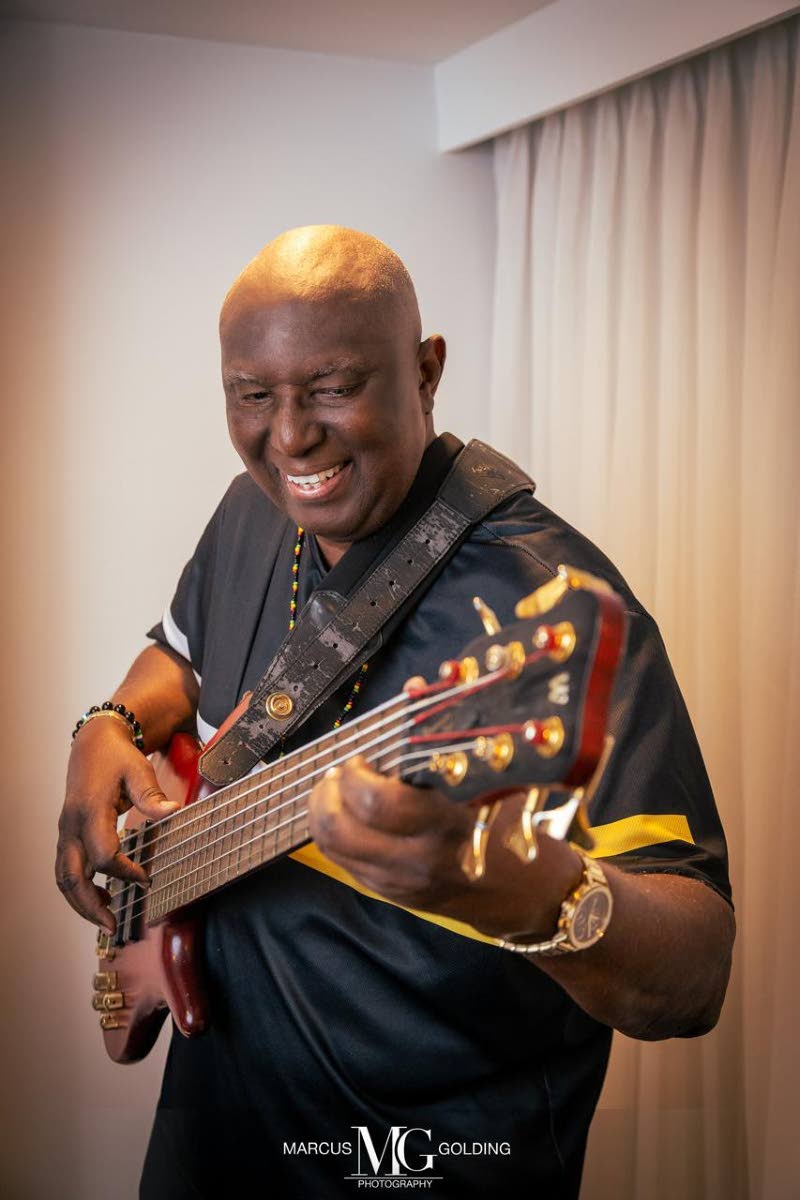 Veteran musician Jackie Jackson, arguably one of Jamaica’s greatest bass players, passed away at the Cornwall Regional Hospital on Wednesday morning.
-
 Veteran musician Jackie Jackson.
WESTERN BUREAU:
To the world, Clifton ‘Jackie’ Jackson was the legendary bass guitarist whose fingers helped shape some of Jamaican music’s most enduring recordings.
To his four daughters, he was simply ‘Dad’, the quiet protector who wanted them to have the things he never had, helped negotiate the purchase of their cars, loved giving them gifts and, above all, raised them to become fiercely independent women.
Jackson, the 79-year-old widower of celebrated Jamaican songstress Karen Smith, died at the Cornwall Regional Hospital in Montego Bay, St James, at approximately 5 a.m. yesterday.
He had been in and out of hospital since July and was discharged last Friday, but returned by ambulance on Tuesday night after his oxygen level and blood pressure fell. He died in the Accident and Emergency Department before making it back to a ward.
One of his daughters had spoken with him earlier Tuesday and said he was in “very good spirits”.
Jackson, an avid movie and television fan, wanted help finding another series to binge on after finishing action-drama Reacher.
For daughters Courtni, Jheanell and Jhanine, who spoke with The Gleaner hours after his death, the loss was still being processed. Their fourth sister, Marie, who lives in Florida, had left Jamaica only on Sunday after spending time with the family.
Amid the grief came affectionate memories of a father whose love was often demonstrated through what he did rather than what he said.
“He was the type of person who led by example. He’d never do a lot of talking,” Courtni recalled. “He fully believed in independence, and that is something I feel like he has passed down to all four of us.”
Her sisters agreed that their father had raised “very independent young women”.
JACKSON’S LOVE LANGUAGE
Gift-giving, they said, was their father’s “love language”.
“He liked to receive gifts and loved to give gifts, and that gave him a lot of joy,” Jheanell revealed.
Jackson also took pleasure in simply watching his daughters enjoying each other’s company. He would sit quietly while the sisters laughed and talked, content to observe the family he had created.
His daughters believe Jackson’s own upbringing helped shape the father he became. He rarely spoke about his childhood, except for his love for his mother, but they understood that he was determined that his children would not experience some of the hardships he had endured.
Even when they became adults, Dad remained deeply involved.
If a daughter was buying a vehicle, negotiating a price or dealing with the tax office, Jackson wanted to ensure everything went smoothly.
“He wanted to make sure we were all right,” they recalled.
Sometimes he would simply take over. “All right, I’ll take it from this point,” he would say.
As his daughters grew older, however, the relationship evolved. Father and daughters became friends and, in more recent years, they joked that the roles occasionally reversed, with them “parenting him”.
The quiet, stoic father they knew at home became another man around music.
Even after more than six decades in the business, Jackson never stopped practising. His daughters would find him working through bass lines, determined to remain sharp in case he was called into the studio.
He took a book and pen to rehearsals and, once inside a studio, the reserved musician suddenly took command, counting in other musicians and directing the session.
“Music brings out a different side of him for sure,” said Jhanine.
That passion was reignited during Reggae Month in February when Jackson performed in the ‘Back to Bass-es’ concert with Courtni, who followed both her father and late mother into music.
The performance excited him so much that afterwards he talked about taking the show on the road.
EARLY YEARS
His daughters said that, as they grew older, they also began to appreciate the enormity of what their father and his contemporaries had created.
When they once asked what had been going through his mind during those early recording sessions that produced music eventually heard around the world, Jackson’s response was characteristically understated.
“I don’t know. We were just having fun,” they recalled him saying.
That “fun” helped create the soundtrack of a nation.
Born in Kingston in 1947, Jackson emerged as one of the outstanding bass players of Jamaica’s rocksteady and reggae eras, playing with Tommy McCook and the Supersonics before beginning his extraordinary association with Toots and the Maytals.
For more than half a century, his bass provided part of the musical foundation behind Frederick ‘Toots’ Hibbert.
Jackson’s extensive recording credits also connected him with Bob Marley and the Wailers, Alton Ellis, Desmond Dekker, The Melodians and international singer-songwriter Paul Simon.
In 2012, Jamaica recognised his contribution to music with membership in the Order of Distinction (Commander Class).
In his later years, his daughters said, Jackson increasingly selected projects because he loved the music. Musicians seeking an authentic ska or rocksteady sound would still call on him.
They believe he achieved what he wanted from his remarkable career.
“I really don’t think he has any regrets, music-wise,” said Courtni, although the sisters felt he would have liked to continue touring.
Jackson had already endured the devastating loss of Smith, his wife of 36 years, who died in September 2021.
However his daughters believe their father lived long enough to see another legacy take shape.
“He was here long enough that he saw all of his children grow up into the young women that he envisaged they would become,” they stated.
For a man whose bass helped shape the sound Jamaica gave to the world, that may have been among his proudest achievements – four daughters who became the independent women he raised them to be.
janet.silvera@gleanerjm.com