Digicel flags regulatory concerns over SpaceX's global 5G cellular ambitions
Loading article...
-

Ana Rua
-
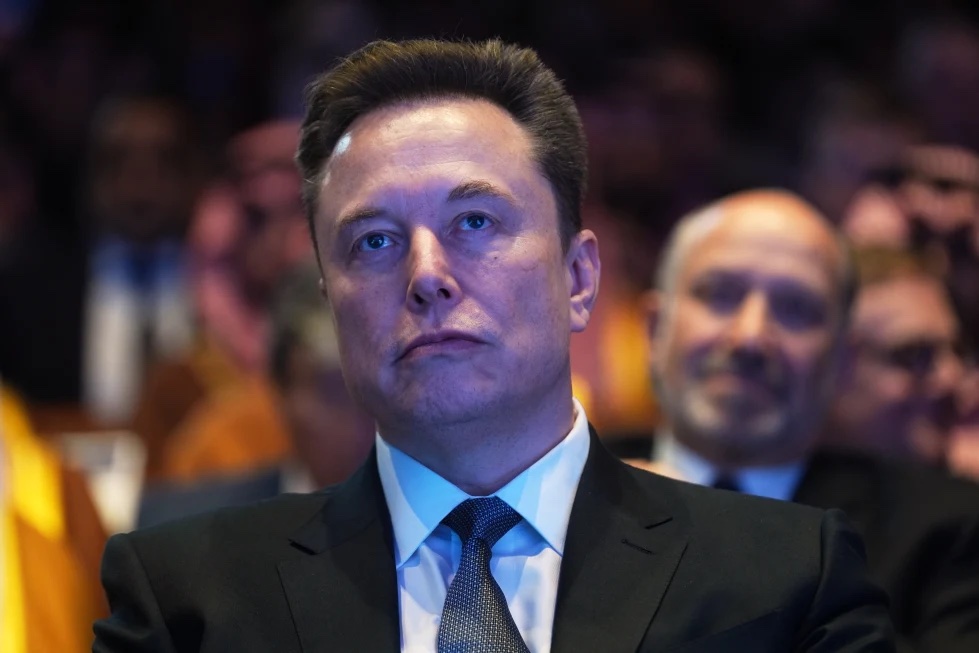
Elon Musk
-

Digicel office, downtown Kingston
Digicel Group has raised concerns about regulatory parity as SpaceX moves ahead with plans to deliver 5G connectivity directly to unmodified cell phones — a development that comes as Starlink's satellite internet service already operates in Jamaica.
It’s a $100 billion internet and mobile market up for grabs locally. That figure however grows once including the roughly 25 markets Digicel operates within. Local providers rely mainly on cell tower infrastructure, while Starlink, the subsidiary of SpaceX uses satellites to beam connectivity directly to users.
"As these new technologies emerge, it is important that all providers operate within clear and equitable regulatory frameworks. Innovation should be encouraged, but the same principles that apply to terrestrial operators, including spectrum management, compliance, quality of services, security, public safety obligations, consumer protection and fair competition, should apply consistently across the industry," said Ana Rua, Chief External Affairs and Communications Officer at Digicel Group, in response to Financial Gleaner queries on SpaceX's disclosure.
SpaceX, which was listed last week on the Nasdaq, disclosed plans to offer 5G connectivity globally in its prospectus. SpaceX is majority controlled by trillionaire Elon Musk. It forms part of a growing cluster of future services that has helped support the company's valuation, which stands well above its current revenue base. The development drew caution from Digicel, which operates the largest cellular network on the island.
Rua said satellite-to-device connectivity is an important development that the industry has been actively evaluating for some time. She said Digicel has invested billions of dollars to build out its network infrastructure, spectrum, resiliency and skilled workforce. "Ultimately, customers are best served when new technologies complement existing networks, and all participants compete on a level playing field," she said.
Jamaica had 3.0 million mobile subscribers as at December 2022 — more than the island's 2.8 million population — according to the latest Telecommunications Information Report published by the regulator. Digicel, FLOW and Rock Mobile offer mobile and other telecom services in Jamaica. Combined revenue from mobile services totalled $51.8 billion and internet services $47.9 billion up to December 2022, the most recent period for which regulatory data spans. The figures are not disaggregated by company, but Digicel and FLOW account for the bulk of that revenue.
Starlink holds an internet service provider and carrier licence, according to telecommunications licences published by the regulator in June.
In its prospectus, SpaceX said it aims "to further deliver on our goal of providing connectivity for everyone and substantially reducing mobile 'dead zones' worldwide — eventually with 5G connectivity to unmodified cell phones and Internet of Things devices globally". The company said the capability depends on deployment of its next-generation satellite constellation, designed to fully utilise spectrum acquired from EchoStar in 2025, alongside an expansion of partnerships with mobile network operators.
As of March 2026, SpaceX said it was providing Starlink Mobile services to roughly 7.4 million monthly unique devices across some 30 countries. The company said it currently operates about 650 dedicated mobile satellites and is developing more comprehensive satellite-to-mobile services, referred to internally as Starlink Mobile Gen2, expected to deliver resilient, infrastructure-independent connectivity worldwide and enable 5G connectivity.
SpaceX said it plans to expand its mobile constellation by deploying next-generation V2 Mobile satellites in 2027, which, combined with the EchoStar spectrum acquisition and optimised 5G protocols, are expected to increase capacity by orders of magnitude compared to its first-generation constellation.
In the United States, the Federal Communications Commission approved a spectrum licence transfer from EchoStar in May 2026, while SpaceX said it expects remaining necessary US regulatory authorisations in the second or third quarter of 2026.
Internationally, the company said it has filed applications in nearly every country in which it intends to operate its upgraded Gen2 satellites, though approvals have been granted in only a limited number of jurisdictions to date. "Each international jurisdiction presents its own regulatory process and timeline, and we cannot predict when or whether approvals will be granted in any given market," the filing states.
SpaceX's filing did not name specific Caribbean markets or mobile network operator partners for its Gen2 rollout. The company said its satellite-to-mobile capabilities are intended to both enhance service quality in existing markets and extend coverage to previously capacity-limited and unserved regions, including dense urban areas and emerging markets.
The Gleaner awaits a response to queries sent to FLOW. The Gleaner also reached out to the Office of Utilities Regulation and awaits a response.
steven.jackson@gleanerjm.com