A CEO’s ego –Now clinging to prior success
Loading article...
-
 Francis Wade
-
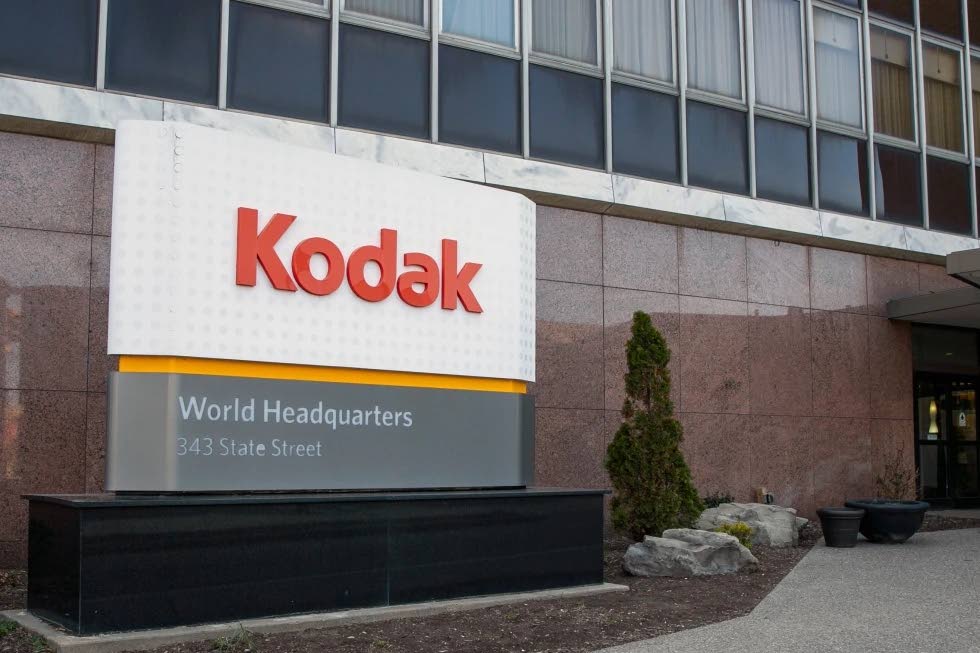 The Eastman Kodak Company world headquarters is visible in Rochester, New York, USA on Friday, April 29, 2022.
Your CEO has a strong ego. Most successful ones do. It carried him through the growth years, and it now sits at the centre of every conversation about the company’s future. Right now, that same ego is working against him.
At the last strategy meeting, you raised a simple idea: pause and examine what is actually driving five straight years of record numbers. He cut you off mid-sentence. He defended those numbers as if you had attacked him personally, not questioned the plan behind them.
As such, your logical arguments have not worked. In your words, success has a particular ‘shape’. Over time, as the environment changes, the C-suite must transform this shape to accommodate trends like AI and automation.
You aren’t wrong, but when logic fails, you wonder whether the CEO has a unique personality quirk.
He’s not just fighting the idea of a post-mortem. Instead, you suspect his ego is getting in the way.
You dig a little, only to discover what numerous studies have revealed. A top executive is highly prone to narcissism and psychopathy. In practice, he’s likely to see accomplishments as personal, not corporate. Your attempt to examine good results produces a defensive reaction. These results have become part of his identity.
Contrary to your first instincts, he’s not arguing with your data. He’s defending the story of how he got there.
Ironically, the more successful the company is, the higher the risk that its prior strategy will go unexamined due to a CEO’s ego. While failure invites questions and self-examination, success doesn’t. In fact, leaders go to extraordinary lengths to deny the possibility of disruption.
KODAK CASE
If there’s a company that should have been immune from this trap, it’s one that saw a major disruption coming from inside its own R&D department. You’d think that owning the disruptive technology itself would be the answer.
Fact: Kodak invented digital photography. Yet, it still died defending traditional film.
The cause of their eventual failure was ego-based. The company had fused ‘we are a film company’ into its identity, rather than ‘we are a photography company.’ The evidence of a limit to its success formula was ignored.
Such is the power of ego attachment. Is there any way to escape it?
ESCAPE
Proof of a way out comes from one of the most successful CEOs on record.
Jeff Bezos, in his 2016 shareholder letter, named “the eager adoption of external trends” as one of four ways to avoid disruption. He argued that fighting a trend means fighting the future, while embracing it turns the trend into a tailwind.
This points to a kind of continual reinvention in the face of honest analysis, regardless of ego.
NEXT STEPS
As a non-CEO who sees the importance of revisiting prior success, here are some ways to be effective.
Learn to tell persuasive stories: Given that many CEOs are prone to ego attachment, a direct confrontation won’t work. Instead, develop your ability to tell lots of neutral stories, such as ones about Kodak and Netflix.
Rigorous post-mortems with AI: One of the challenges of confronting past success is purely political. Everyone is assumed to have an agenda. Fortunately, a large-language model can be used to offer unbiased but brutally frank feedback. Use it skilfully, and it creates room for others to commit to a postmortem.
Staff interviews by AI persona: To build a mountain of first-hand evidence, gather input from staff, using a tool like Blendification. It allows each staff member to engage in a deep, interactive conversation with an AI persona on a topic such as ‘The weaknesses and strengths of the prior corporate strategy’.
With unlimited reach, this tool adjusts its interview posture mid-stream to accommodate anything it’s told. After the fact, the data is compiled and summarised within hours.
These three approaches are not meant to describe a complete methodology. Instead, they represent a direction for handling some of the most common challenges.
Don’t attack a CEO’s confidence or defensiveness. It’s not the problem. Rather, focus on going beyond it to the point where prior success can be rigorously examined.
Thankfully, you don’t need to beat his ego. Just make room for him to look at success in a new way using the post-mortems, the AI feedback, and the staff interviews.
Simply put, AI is speeding everything up. This gives your organisation less time than ever to adjust. This means crafting new ways to see the shape of its success. Your next corporate strategy depends on it.
The ego that built your company’s success will not be the force that protects it. That work belongs to whoever in the room is willing to ask the harder question.
Francis Wade is the author of Perfect Time-Based Productivity, a keynote speaker and a management consultant. To search his prior columns on productivity, strategy, engagement and business processes, send email to columns@fwconsulting.com.