Peter Espeut | Restorative justice and reparations
Loading article...
-
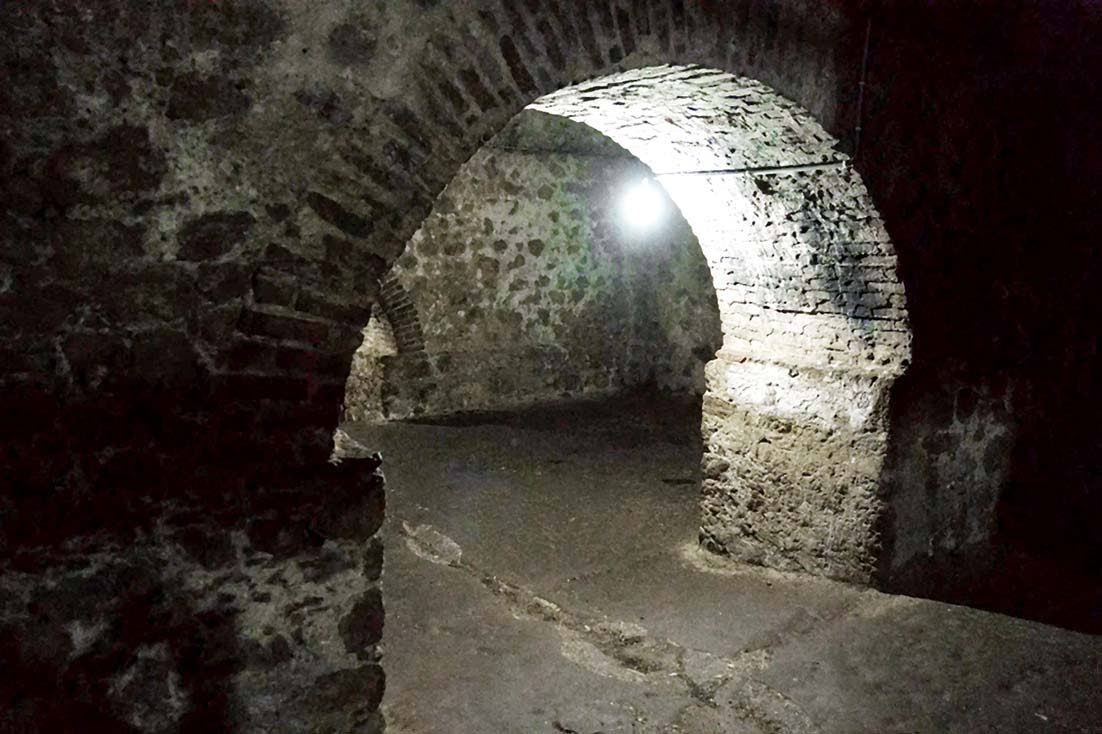 A dungeon at Cape Coast Castle, a ‘slave castle’ used in the trans-Atlantic Slave Trade, is seen in Cape Coast, Ghana.
-
 Peter Espeut
It is an established principle in ethics that, when a wrong is done, there must be reparations. On a personal level, God forgives sin but he also requires reparations for sin: extensive prayer and maybe fasting and other self-sacrifice (what we Catholics call “penance”). If money was stolen, it must be returned; if someone was injured, medical care must be provided; if someone’s reputation was damaged, it must be repaired as best as possible.
The same principle exists in international law, which defines the principle of reparations, asserting that any state or party that commits a wrongful act or human rights violation has a legal duty to make full amends and repair the harm caused. The main goal of reparations is restorative justice. This means putting the injured person, group, or nation back into the exact same position they would have been in if the wrongful act never happened. International standards say that an apology alone is not enough if the harm is not also repaired, and repairs are not complete without acknowledging the wrong.
There are well-known instances of reparations being paid in an attempt to redress wrongs:
• Holocaust survivors: Germany paid billions in financial compensation and pensions to Holocaust survivors and the state of Israel following World War II.
• Japanese Americans: The United States (US) government paid US$20,000 to each surviving Japanese American incarcerated in camps during World War II.
• Apartheid victims: South Africa provided financial compensation and support to individuals and communities harmed under apartheid.
• Forced sterilisation: North Carolina and other US states provided monetary compensation to people who were coercively sterilised by state eugenics programmes.
• The Mau Mau uprising: The United Kingdom made an out-of-court financial settlement and expressed regret to elderly Kenyans tortured during the 1950s uprising.
• The Coral Gardens ‘Bad Friday’ Massacre, 1963: In April 2017, Jamaican Prime Minister Andrew Holness issued an official government apology in Parliament, condemning the State’s actions against Rastafari as a grave injustice. The Government established a trust fund, pledged financial reparations, and transferred Crown land to the Rastafari Coral Gardens Benevolent Society to support survivors and elders.
To my mind, the transatlantic slave trade, and slavery itself, were serious crimes against humanity; I believe any serious ethical analysis would find that the 10 million to 12 million Africans trafficked to the Americas from the 16th to the 19th centuries are owed substantial reparations.
So, too, are the hundreds of millions of Indigenous Americans, including the Tainos (often called Arawaks in error), Kalinagos (the Caribs), Mayas, Incas, Aztecs, Apaches, Sioux, Algonquins, Hopis, Mohawks, Cherokees, Navajos, and hundreds of other Amerindian peoples. Land was stolen, people were enslaved, women were raped, and treasures were confiscated.
Millions of people now living have inherited intergenerational wealth from the exploitation of the ancestors of hundreds of millions of people now living.
It was 14 years ago, but I will never forget: during the celebration by the Roman Catholic Church of 500 years of witness in Jamaica held at the National Arena on 24 June 2012, the preacher, the Most Rev Charles Gabriel Palmer-Buckle DD, Archbishop of Accra, Ghana (from where many of our ancestors originate), ascended the podium, took off his mitre, and faced the congregation; looking directly at us, he declared: “I apologize for the acts of my ancestors in selling your ancestors into slavery”. It made the front page of The Gleaner.
There is enough guilt and responsibility to go around.
In all the cases of reparations money actually paid listed above, all the recipients were personally the victims/survivors of crimes against humanity, not their descendants. Nevertheless, I believe that one can make the case that modern-day poverty, illiteracy, homelessness, unemployment, and degradation have their origin in the days of slavery.
Therefore, those who have inherited intergenerational wealth going back to those days owe a debt to those who have inherited intergenerational poverty from those days.
What I don’t understand is why the Jamaican Government is trying to take into its coffers the reparations money owed to Jamaican black people.
CARICOM REPARATIONS PLAN
The CARICOM 10-Point Plan for Reparations (search for it online) calls for debt cancellation and monetary compensation. In Jamaica’s case, at Independence in 1962, we inherited a national debt of zero. All our present national debt, some J$2.2 trillion, with a debt-to-GDP ratio of 67.7 per cent, was contracted by successive Jamaica Labour Party (JLP) and People’s National Party (PNP) governments. They borrowed money in our name to build schools, for example; and how would you assess the way they have spent our money? Instead of building top-quality high schools so more children could pass the Common Entrance Examination/GSAT/PEP to enter them, they built 80 schools to accommodate those who failed those selection examinations. Jamaica’s top high schools are owned and operated by churches and trusts, not by the government!
In a real way, modern-day poverty, illiteracy, homelessness, unemployment, and degradation have their origin in the policies and actions of the JLP and PNP. In my view, the JLP and PNP owe Jamaican black people billions in reparations money for how they have squandered our Independence.
Not one cent of Jamaican black people’s reparations money must go to the Jamaican government for them to waste it, and increase their already bloated salaries and benefits, and travel to foreign places living high on the hog.
Tief!
Any reparations money we get must directly benefit the descendants of slaves.
Now, if you seek reparations for British colonialism, that is another crime against humanity, with a different set of victims (some of whose ancestors were never enslaved), who must get a different payout.
Please do not mix up reparations for slavery with reparations for colonialism.
Peter Espeut is a sociologist and development scientist.