Tony Deyal | Cocoa tea
Loading article...
-
-
 Tony Deyal
(This is to remember the great Colvin George Scott, the best Jamaican reggae singer and songwriter, born on September 3, 1949, and who died on March 11, 2025. And Zeno Obi Constance is by far the best in the Caribbean and beyond. This article is part of an attempt to reach, teach, and increase our knowledge and commitment to our development.)
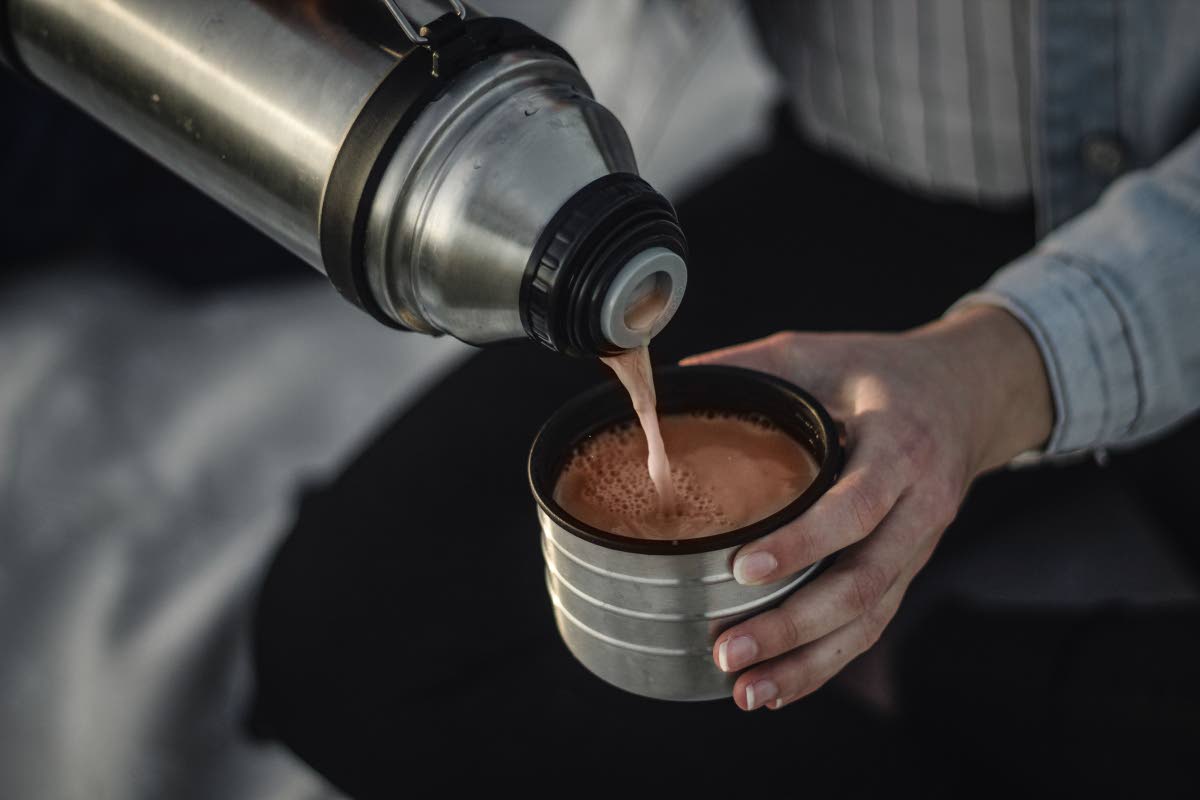
Cocoa tea is a traditional Caribbean hot beverage made by simmering grated or pounded pure cocoa balls or sticks with water, aromatic spices, and milk. As a three-year-old boy in my grandma’s house, I got my breakfast with three options: coffee, cocoa, and tea. I told everyone that tea was for babies. I was born to drink either coffee, cocoa, or both together.
Throughout the Caribbean, some had their cocoa with nutmeg, manilla, and cinnamon. Some, like the Jamaicans, talk about cocoa powder and “wulf” for a hot beverage. Another came up with flour “seastrongbakush”, which is really a strong baker’s flour; and in Guyana, there is coco tea as well as coffee tea. More, one group calls it cocoa tea even though it includes farine inside.
LORD RELATOR AND COCOA PANYOL
Actually, the best way to understand, learn, and agree about the “mix”, so to speak, is to listen to Lord Relator, who they say is decked out across performances in traditional colourful calypsonian wear, through the classic black-and-white bow-tie look to the usually elegant tan-coloured suits and a beret, as he first talks about the “COCOA PANYOL 2001” and afterwards goes for the “Señorita” and even “Señoritas” ready to rumble.
He started with: “Now, um, um, we have a cocoa panyol. What is a cocoa panyol? A cocoa panyol is very light-skinned with very dark hair. Now, this lady is light-skinned, but she has kind of reddish hair, the lady in the third row. But a cocoa panyol would look like that lady there in white. You see her? In Trinidad, in Trinidad, we have a lot of cocoa panyols, you know? And the first girlfriend that I had was like that lady there, you know? But the relationship didn’t last as long as the Red House fire ...”
Then Lord Relator, having written a song about the relationship with a Spanish Señorita, explained: “So I wrote a song about how the relationship went. She was a Spanish Señorita. And this is how it goes.”
The song lyrics should remain exactly as submitted and are, therefore, not edited.
COCOA HUMOUR
That mix of humour and egging on the Spanish made a few people join the humour about Cocoa Tea, including comments such as: “Why did the cocoa laugh? It was stirred up”; “What did the cocoa say to the marshmallow? You’re sweet!”; “Cocoa told me a joke yesterday. It was really rich”; and “Chocolate comes from cocoa, which comes from trees. That makes it a plant. So chocolate officially counts as a salad.”
Then there are a few more, such as: “Why is chocolate cheaper than therapy? Because you don’t have to make an appointment, and it works faster”; “Chocolate is like duct tape. It fixes everything”; “What’s a chocolate lover’s idea of a balanced diet? A chocolate bar in each hand”; “I could give up chocolate, but I’m not a quitter!”; “My doctor told me I needed more magnesium, so I’ve stocked up on dark chocolate!”; “Put the chocolate in the bag, and nobody gets hurt!”; and, “It’s not that chocolate is a substitute for love. Love is a substitute for chocolate. Chocolate is, let’s face it, far more reliable than a man.”
COCOA AND CARIBBEAN SLANG
For many of the cocoa folks, it might be totally true, especially when the “coco” (or “coconut”) is used as regional slang for sex and fun. It is said that there are two types: the “spelling coconut”, or “sexual technique”, where women were told that while on top (the cowgirl position) they would move their hips to trace the letters “C-O-C-O-N-U-T”; and the “appeal to writers”, whereby bloggers and musicians use this slang for “fun” and raunchy content because the circular and back-and-forth hip motions are physically designed to provide optimal stimulation, especially in music hooks and romance articles.
The slang “coco” or “koko” in regional Caribbean dialects like St Lucian Creole and French Patois refers to the male and female genitalia. ‘Coco bread’, in Jamaican culture, is a beloved staple food, but in literal and comedic writing, it is sometimes used as a playful or provocative double entendre regarding physical intimacy and bodies.
Just to understand who is doing what and to whom, Kes the Band, with ‘Make Me Reel Swell’, included: “When I’m feeling under the weather/ You make me feel sweet/ The C te use the sugar/ And together we are complete …”
Then there is ‘Mysterie’ with “Coco Sticks/Coco for Sale ...”
Added to it are “Talking on the Phone”, “Coco Chanel, Coco Chanel, coco for tail, cooking for tail” and “Coco, coco you an get it ... Who buyin it, who buying it.”
And there was Tallish, the humourist, with ‘More Cocoa’: “I don’t know what to say about Mina ...”
RETURN TO LORD RELATOR
And to go back to Lord Relator: “I plan to go down Venezuela/ On holiday by the Spanish Señorita ...” The quoted lyrics and performance excerpts have been preserved as submitted.
Tony Deyal was last seen with a Spanish Señorita at a pretty party, but nowhere close to the Caribbean. Send feedback to columns@gleanerjm.com