Imani Tafari-Ama | The State cannot continue to ‘Serve and Protect’ through fear
Loading article...
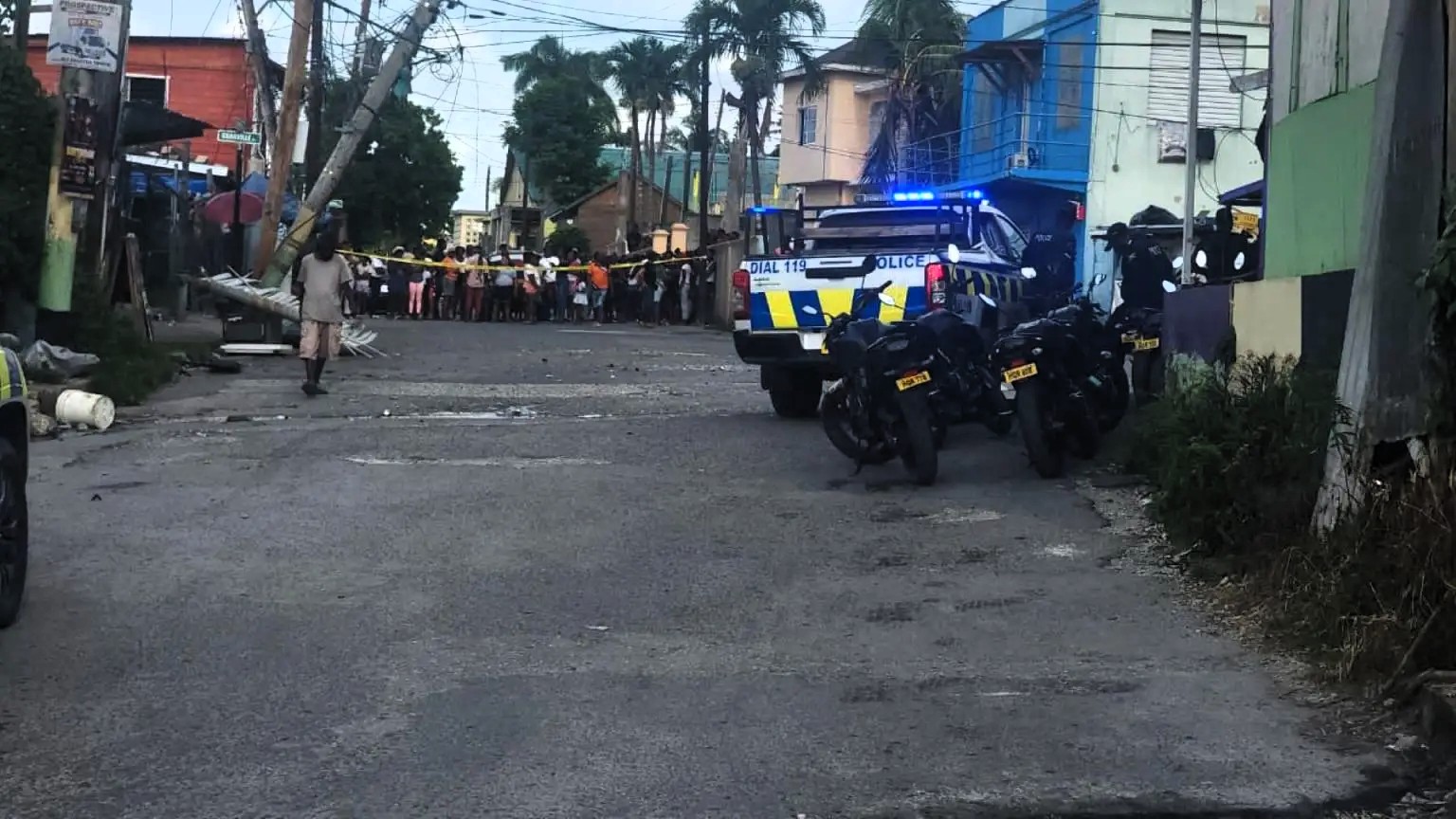
The public killing of Latoya Bulgin in Granville, St James, was a chilling reflection of the deep contradictions embedded within Jamaica’s policing culture and its enduring crisis of state accountability.
In death, Bulgin has become a national symbol of police excess and institutional inhumanity. Her killing stands in stark contrast to the Jamaica Constabulary Force’s heavily marketed slogan: “To Serve and Protect”. For many, especially those living in impoverished and heavily policed communities, the events captured on camera in Granville suggest that the State’s security apparatus often interprets “service” through domination and “protection” through violence.
The irony is impossible to ignore. On a day globally associated with honouring women, nurturing, and motherhood, a Jamaican woman was publicly shot, dragged, discarded, and treated with a level of indignity that has outraged the conscience of the nation.
In the absence of body-worn cameras — a reform measure civil society advocates have unsuccessfully demanded for years — CCTV footage became the silent witness that exposed the horrifying sequence of events. Without that video evidence, the public might never have known what transpired between armed police officers and the woman seated inside a black Toyota Voxy van.
The footage revealed something profoundly disturbing in the police handling of the confrontation.
Bulgin was among a group of residents in Granville who had gathered to protest the police killing of another young man in their community. The atmosphere was already tense with grief, mistrust, and anger. During the encounter, Bulgin exited her vehicle and appeared to converse with the officers. She then returned to the driver’s seat. With her foot reportedly still on the brake, the vehicle moved slightly forward before one heavily armed officer discharged a fatal shot through the windscreen into her chest.
The encounter lasted mere seconds. Yet the aftermath was even more horrifying than the shooting itself.
Public outrage intensified as Jamaicans witnessed the treatment of Bulgin’s body after her death. Uniformed officers dragged her limp body from the van and dumped her onto the roadway. She was then hoisted into the back of a pickup truck beside discarded tyres. Before the vehicle sped away, the tailgate was repeatedly slammed against her body before finally falling open.
These reflect a frightening collapse of empathy and professional restraint within sections of the security forces. At no point in the footage did the officers appear to recognise the humanity of the woman whose life had just ended before them.
Even Marlene Malahoo-Forte, member of parliament for the area, publicly acknowledged her distress at what appeared to be a miscarriage of justice. Her call for intervention from the highest levels of authority signalled that this was not a matter that could simply be dismissed as “standard procedure” or buried beneath institutional defensiveness.
The Granville tragedy bears disturbing similarities to incidents elsewhere in the African Diaspora, where state agents routinely deploy excessive force against black civilians while claiming to maintain public order. One haunting parallel is the killing of Renee Nicole Good in Minneapolis, where law-enforcement officers similarly responded to a non-lethal situation with deadly force. In both cases, individuals who posed no imminent threat were treated as enemies rather than citizens.
These incidents force us to confront an uncomfortable truth: some law-enforcement officers appear unable — or unwilling — to de-escalate tense situations without resorting to violence. The weapon becomes the first language of authority rather than the last resort of protection.
That reality should alarm everyone.
The debate, however, cannot end with demands for the prosecution or dismissal of a single offending officer. While accountability is necessary, focusing solely on individual punishment ignores the larger machinery that produces and normalises these behaviours.
What Jamaica requires is a forensic audit of the entire culture of policing.
The State must question how authority is taught, exercised, and psychologically internalised within the security forces. Officers entrusted with lethal power should not be socialised into seeing poor black communities as hostile territories requiring military-style domination. Yet this is precisely the perception many citizens believe shapes modern policing practices.
This is simply about power.
Too often, the policing of Jamaica’s underserved communities carries unmistakable remnants of colonial governance — systems historically designed not to protect populations but to control them. The plantation model of authority did not disappear with independence. It merely changed uniforms.
In contemporary Jamaica, class and colour continue to influence whose humanity is recognised and whose suffering is disposable. Affluent, lighter-skinned citizens are often afforded the courtesy of patience, negotiation, and procedural respect. Poor black Jamaicans from inner-city communities are far more likely to encounter suspicion, aggression, and force.
The disparities are impossible to ignore.
This is why Bulgin’s death has struck such a deep emotional nerve across the country. Many people saw the public performance of a hierarchy of human value — one in which certain bodies can be brutalised without immediate regard for dignity or rights.
Mandatory body-worn cameras would certainly improve transparency and provide critical evidentiary safeguards. But technology alone cannot cure a dehumanising institutional culture. Cameras may record abuse. They do not necessarily prevent it.
What is urgently needed is the retraining and resocialisation of law-enforcement personnel around the principles of democratic accountability, conflict de-escalation, and human dignity. Police officers must understand that they are public servants accountable to the citizens they police — not occupying forces exercising unchecked dominance over them.
Marcus Garvey warned Jamaicans about the dangers of mental slavery more than a century ago. Today, his warning remains painfully relevant. A society that unconsciously accepts the routine humiliation and violent disposal of black bodies cannot genuinely claim to be free.
Latoya Bulgin’s death should not become another fleeting headline swallowed by public fatigue. It must force a deeper examination of who is protected by the State, who is feared by it, and whose lives are treated as expendable in the pursuit of “law and order”.
Until that reckoning occurs, the promise to “serve and protect” will continue to ring hollow in far too many Jamaican communities.
Imani Tafari-Ama, PhD, is a Pan-African advocate and gender and development specialist. Send feedback to i.tafariama@gmail.com and columns@gleanerjm.com.