Nekeisha Burchell | What is the mission of our generation?
Loading article...
-
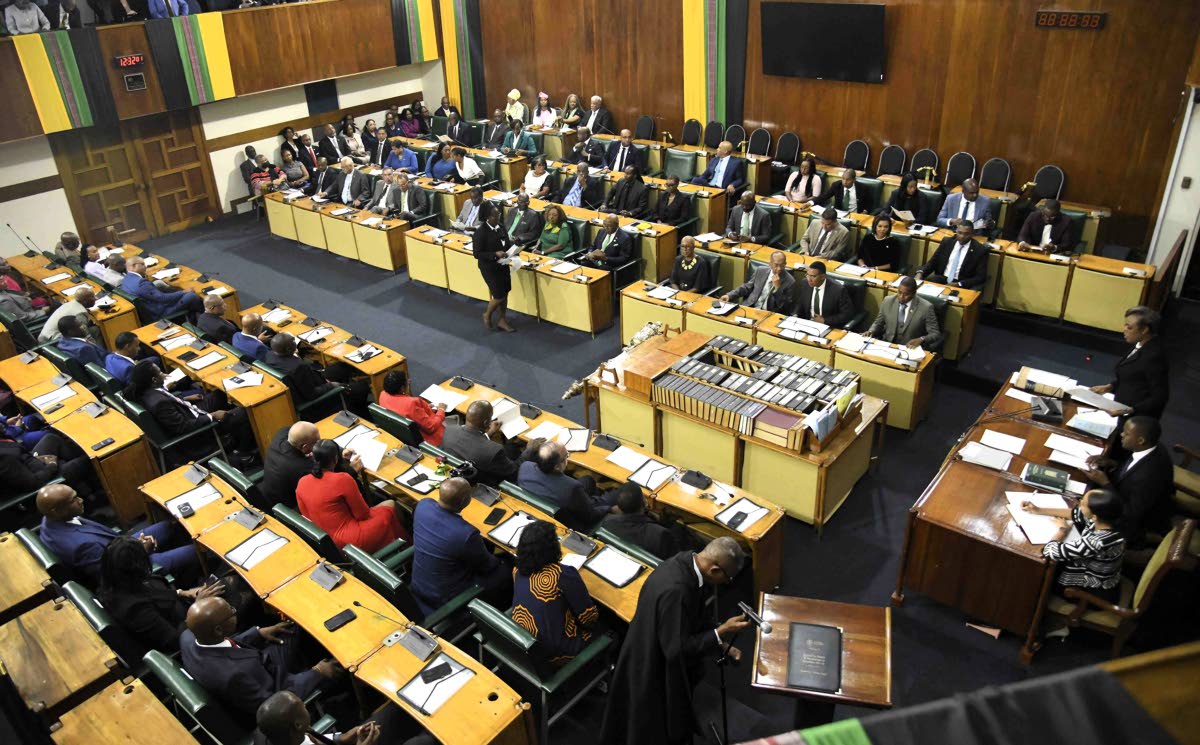 Members of Parliament before at the swearing-in ceremony for members of the upper and lower houses of Parliament held on September 18, 2025 in Gordon House. Photo - File
-
Members of Parliament before at the swearing-in ceremony for members of the upper and lower houses of Parliament held on September 18, 2025 in Gordon House. Photo - File
-
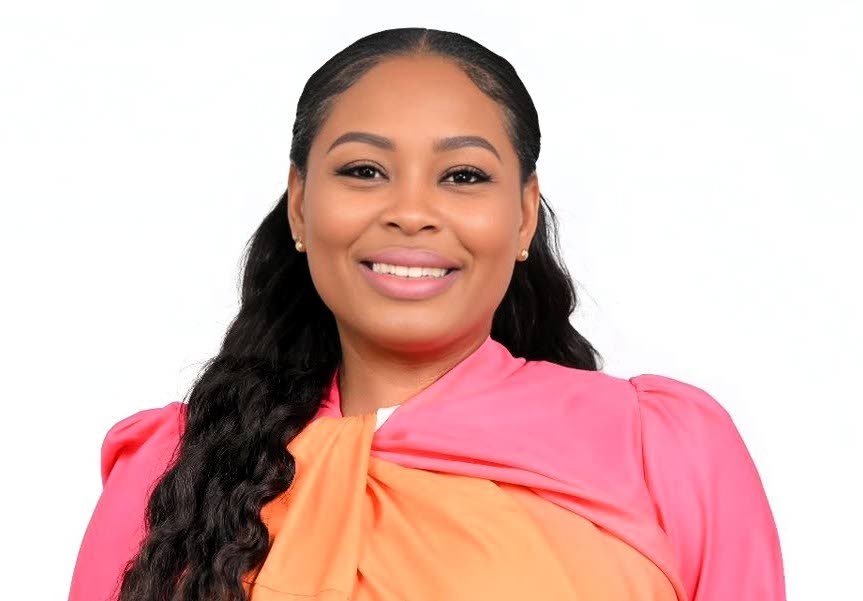 Nekeisha Burchell. Photo - Contributed
Prime Minister Dr Andrew Holness has indicated that he intends to seek a fourth consecutive term in office, saying he wants to continue in government to “do what is right by the people”.
That caused me to ask during my recent State of the Constituency presentation in Parliament: What great Jamaican problem would another term be organised to solve? I was not being facetious. I did not want simply to account for what we had done in South St James. I wanted to put on the table what our experience was telling me about what Jamaica still needs to solve.
And that took me back to Norman Washington Manley.
In his final public address, Manley looked back at the struggle for self-government and political power and declared: “Mission accomplished for my generation.” He then turned the question forward: what would be the mission of the generation coming behind him? That idea has stayed with me.
Every generation should know its mission. By mission, I do not mean a manifesto or a collection of projects and programmes.
A mission is bigger. It is the stubborn national condition a generation decides it will not simply manage, explain, patch around or hand over unchanged to the generation behind it. And a national mission does not have to be a new idea. It requires the determination to take an old, stubborn problem and finally solve it.
So, what are we trying to solve?
This is bigger than one prime minister, one Cabinet or one political party. But those who hold executive power carry a particular responsibility. Government directs the machinery of the State and the priorities around which public resources are organised. The test cannot simply be whether Government has done things. Of course it has.
The harder question is: What condition that once constrained Jamaican life became materially less defining because we decided, as a generation, that we were going to solve it?
Hurricane Melissa brought that question into sharp relief for me, it was a stress test of how Jamaica works.
Could we move capital quickly when small businesses needed to restart? Could we get farmers producing again while livelihoods could still be recovered? Could we restore critical infrastructure at the speed people needed? Could our institutions reorganise themselves when ordinary procedures were plainly too slow?
These are practical questions in western Jamaica. People live the consequences of the answers. Could ours be to break the relationship between geography and opportunity?
Could we unlock the productive capacity of the whole country so that where a Jamaican is born, lives or chooses to return to does not determine the ceiling on what he or she can build, earn or become?
That is bigger than another rural development programme.
It would mean organising public investment around a national objective: making more of Jamaica capable of producing, attracting investment, creating good work, and sustaining thriving communities.
Then water is not simply a water problem. A road is not simply a road problem. Broadband, housing, energy, transport and access to capital are not disconnected concerns. They are the infrastructure of productivity.
A farmer without reliable water cannot produce at capacity. A small business cut off by a failed road cannot compete at capacity.
For too long, we have celebrated the extraordinary ability of Jamaicans to compensate for systems that do not work well enough. We call ourselves resilient because, somehow, dem will find a way. And we will.
But the resilience of Jamaican people is not proof of the resilience of systems.
Our ambition cannot simply be to make people better at surviving conditions that better systems should prevent, withstand or resolve.
Could we instead build a Jamaica where staying home, or going home, does not mean going backward? Where more communities can produce wealth and sustain opportunity? Where more parts of Jamaica can carry the country when another part is under stress?
Not moving opportunity away from Kingston or Montego Bay, but building more Jamaica.
Protect and strengthen the centres we already have. Keep them growing but create more places from which Jamaican growth can come.
The Jamaica Labour Party (JLP) has governed Jamaica for roughly 15 of the last 20 years. Prime Minister Holness has been in office continuously since 2016 and, if this term runs its course, would have had close to 15 uninterrupted years as prime minister. Yet, just over a year into his third consecutive term, he is already contemplating a fourth.
That makes the question of political time important. Time is one of the most valuable resources a democracy gives its leaders. The question is: What would no longer define Jamaican life at the end of it?
And the same standard must confront those of us on the other side. If we seek government, what are we organising ourselves to solve?
Ultimately, this is about what this generation of Jamaican leadership does with the political time it has been given. What would we use that time and power to make fundamentally different? What would we refuse to hand, unfinished, to the generation behind us?
Norman Manley could look back on the central struggle of his political generation and declare its mission accomplished.
When our political time is finished, what will we be able to say? What are we organising ourselves to solve so fundamentally that Jamaicans will be able to look back and say: that problem used to define us and now it does not? I am inside that question too.
Nekeisha Burchell is the member of parliament for South St James. Send feedback to mp.southstjames@gmail.com.