Olga Isaza | Jamaica’s recovery must put children first
Loading article...
-
 UNICEF Jamaica
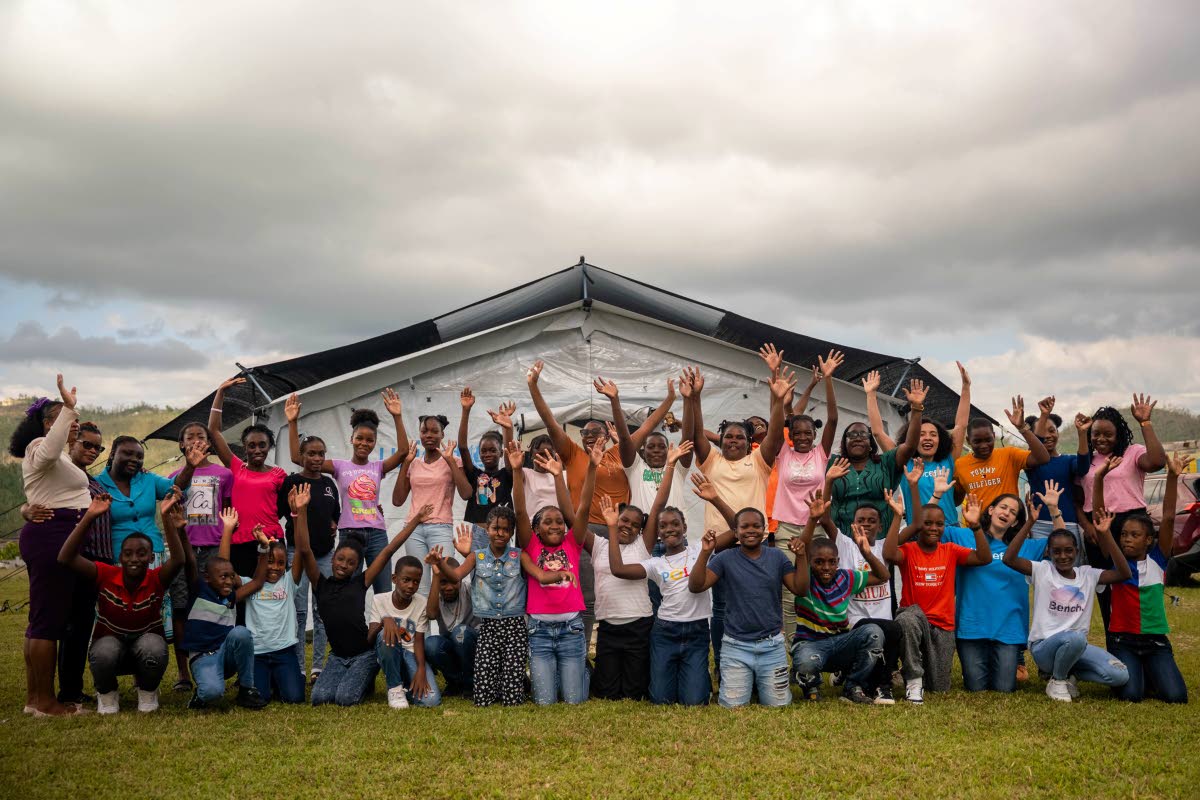
Children, facilitators, and community members gather outside a UNICEF-supported temporary learning space.
UNICEF Jamaica
Children, facilitators, and community members gather outside a UNICEF-supported temporary learning space.
-
 Olga Isaza
Almost four months after Hurricane Melissa struck Jamaica, the headlines are understandably moving away from response priorities. Electricity is returning, and daily life is resuming, but for thousands of Jamaican children, the storm is far from over.
Across the hardest-hit parishes, children are still learning in tents or damaged classrooms. Some attend school on rotation because there are not enough safe spaces. Others are staying with relatives, separated from friends and routines that once anchored their stability. Many get agitated when it rains, a reminder of a trauma that has not yet lost its grip.
When UNICEF teams visit these communities, however, we see something remarkable. What shines through children’s eyes is extraordinary determination and resilience. That determination places a responsibility on all of us to ensure that Jamaica’s recovery is not just about rebuilding infrastructure, but about safeguarding children’s futures.
After Hurricane Melissa, more than 280,000 children across Jamaica needed humanitarian assistance with about 100,000 outside formal social protection coverage. Working closely with the Jamaican government, we along with national and international partners, have supported the transition from immediate response to early recovery for children including those with disabilities.
Safe water has been restored for more than 53,000 people, hygiene supplies have reached 26,000, temporary learning spaces and school materials have benefited over 55,000 students, and more than 1,500 children have received psychosocial support while another 100,000 people have been reached with health and nutrition supplies to prevent critical deficiencies. These numbers matter but what they represent matters even more …ensuring every child has a chance to survive and thrive.
CANNOT BE LEFT BEHIND
Any serious effort to put children first must confront the disproportionate impact of Hurricane Melissa on children with disabilities and their families. These households face higher care and transport costs at a time when livelihoods have been disrupted, yet existing social protection programmes were not designed to fully absorb these additional burdens.
Working with the Ministry of Labour and Social Security, UNICEF has prioritised cash support designed to help families meet urgent needs after a disaster. In parallel, a new digital voucher system developed with the Jamaica Council for Persons with Disabilities (JCPD) is providing targeted assistance to families of children with disabilities, reducing barriers to access and ensuring support reaches those most at risk of being left behind. This approach is not only helping families cope now; it is strengthening Jamaica’s social protection system for the future.
Progress after Melissa cannot be sustained without reliable water and sanitation. Disrupted systems and widespread flooding triggered a surge in water- and vector-borne diseases, including cases of leptospirosis, dengue and other illnesses. These are not abstract public health threats. They are daily risks for children whose immune systems are still developing.
UNICEF’s WASH interventions, water trucking and treatment plants, hygiene kits, and rehabilitation of water systems, have helped stabilize conditions in the most affected communities. But with connections still awaiting full restoration, and with damaged facilities in schools and health centres, the job is not finished.
LEARNING RECOVERY
Schools reopened at the start of January yet access to quality education remains uneven. Exam-grade students are prioritised for daily instruction, while younger children often attend on rotation or learn from home with limited support. The risk is clear as prolonged disruption can turn temporary learning loss into permanent disadvantage for many children. If children disengage now, Jamaica risks losing them to poverty, violence and long-term exclusion.
Learning recovery must therefore be bold and comprehensive for every child. It is not enough for some children to be physically present at school. They must be learning, supported and motivated to stay. UNICEF’s work in providing 92 classroom tents and 1,000 tarpaulins to schools in western Jamaica, learning kits benefiting 3,500 children, along with teacher training and play-based psychosocial support, is helping ensure that children can continue learning, heal from trauma, and regain a sense of normalcy. Scaling these efforts requires sustained investment and coordinated policy decisions that prioritize education as a cornerstone of national recovery.
HEALING INVISIBLE WOUNDS
The emotional toll after the hurricane is less visible than damaged roofs and livelihoods, but just as real. Children who experienced displacement, loss or fear carry those experiences into classrooms. Left unaddressed, trauma can undermine learning, behaviour and long-term wellbeing.
UNICEF and partners have supported psychosocial care through child-friendly spaces, community outreach and training for teachers and volunteers in psychological first aid. Children cannot learn if they do not feel safe, emotionally as well as physically. Without support, displaced children face not only emotional and learning challenges but also an increased risk of exploitation and violence, making interventions more urgent.
Recovery efforts that overlook health and nutrition risk leaving the youngest and most vulnerable behind. We have been working with the Ministry of Health and Wellness and local partners, to train health and community workers to fight acute malnutrition, support infant and young child feeding, and deliver high-energy protein biscuits to protect pregnant and lactating women from deficiencies. Mobile clinics are restoring health services in the most affected areas.
Our work in the aftermath of Hurricane Melissa has been made possible through strong partnerships with government, international donors, civil society groups, and communities, underscoring that no single actor can respond effectively alone. Sustained donor support has translated into the rapid restoration of critical services and meeting immediate needs. These partnerships are also strengthening national systems, enabling institutions to recover faster, respond better, and build resilience.
Sustainable recovery stands at a decisive crossroads. As the humanitarian response transitions to long term rebuilding, choices made now – through budgets, policies, and partnerships – will define Jamaica’s path forward.
Government, partners, and decision makers have a unique opportunity to invest in children – not only to restore what was lost, but to build stronger, more inclusive systems that safeguard every child’s right to learn, be healthy, and protected.
Applying a child lens to recovery means placing children’s needs, rights, and potential at the centre of planning — from rebuilding schools and health facilities to restoring water systems and social protection networks. When recovery starts with children in mind, every dollar spent today lays the foundation for Jamaica’s long term growth and human development. Keep children at the heart of recovery, Jamaica’s present and future depends on it.
Olga Isaza is the representative of UNICEF Jamaica. Send feedback to columns@gleanerjm.com