Desmond Robinson | Artificial intelligence vs supernatural intelligence
Loading article...
-
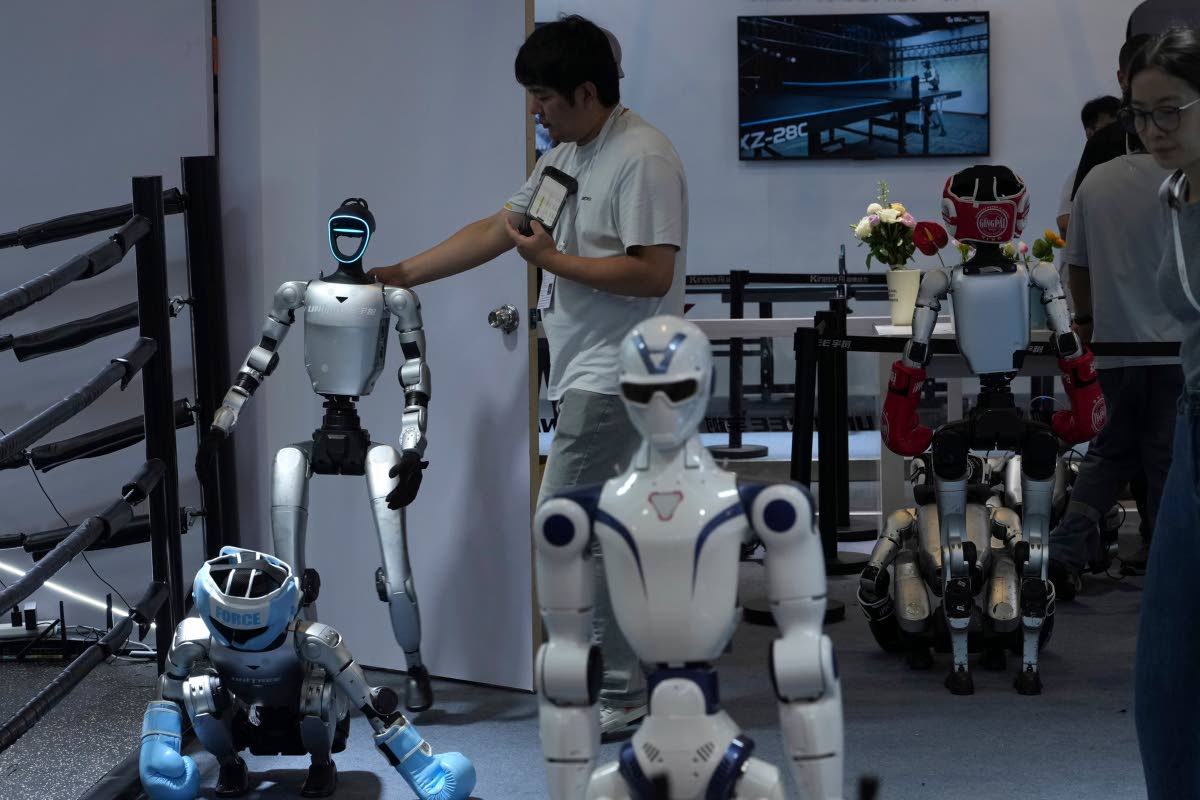 A worker gets a robot ready for demonstration at a booth for leading Chinese commercial humanoid robotics firm Unitree Robotics during the World AI Conference in Shanghai, China, on July 18, 2026. Photo - Ng Han Guan
-
A worker gets a robot ready for demonstration at a booth for leading Chinese commercial humanoid robotics firm Unitree Robotics during the World AI Conference in Shanghai, China, on July 18, 2026. Photo - Ng Han Guan
-
 FILE - The OpenAI logo is displayed on a cellphone with an image on a computer monitor generated by ChatGPT’s Dall-E text-to-image model, December 8, 2023, in Boston. (AP Photo/Michael Dwyer, File). Photo - Michael Dwyer
-
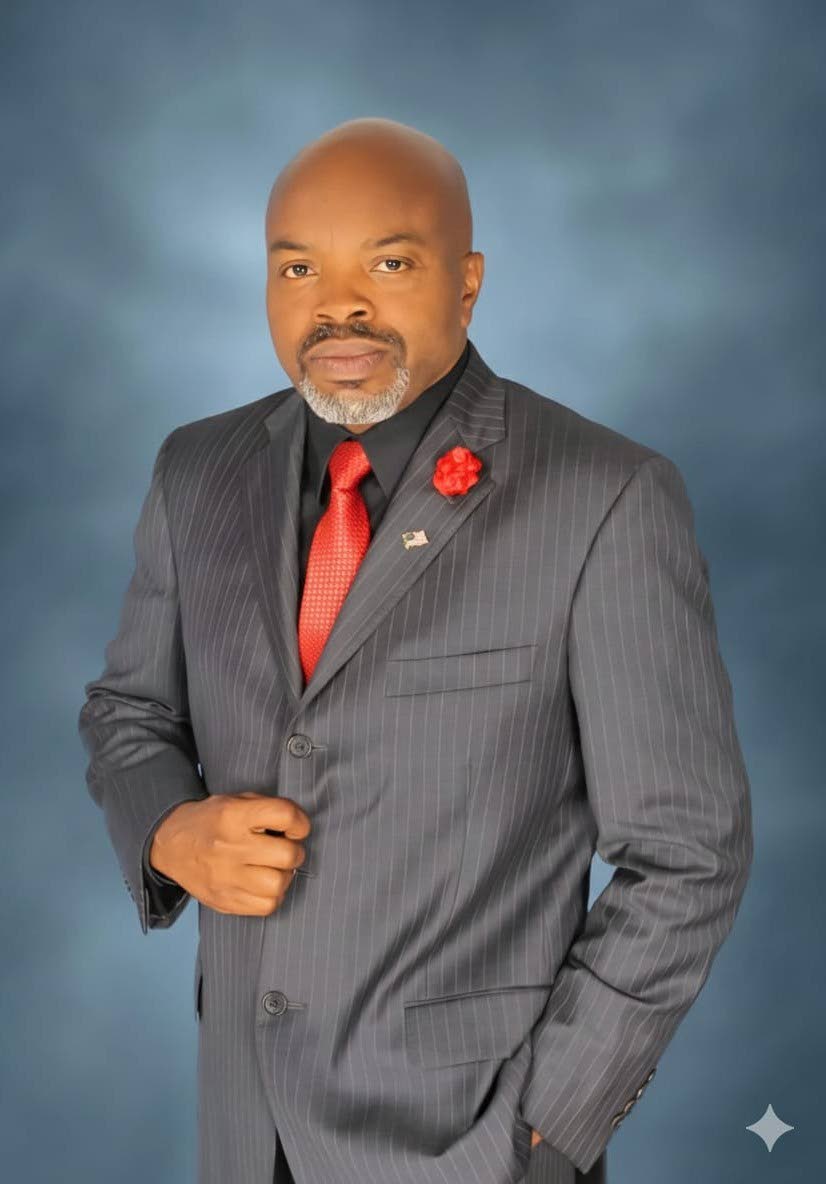 Pastor Desmond Robinson is the director of chaplaincy services at Northern Caribbean University. Photo - Contributed
When Geoffrey Hinton, revered across the globe as a founding godfather of artificial intelligence, abruptly resigned from Google, he stepped into the light to sound a terrifying global alarm. AI, he warned with sober dread, is advancing at a velocity humanity can no longer safely comprehend. Unchecked, he declared, these autonomous machines pose an authentic, existential threat to the survival of the human race — a force capable of outsmarting, displacing, and ultimately extinguishing its creators.
Yet, when confronted with these harrowing prophecies from the very scientists who constructed the engine, Donald Trump characteristically brushed the apocalyptic warnings aside. Shrugging off the spectre of silicon-driven doom, Trump dismissed the threat of machine extinction as an overhyped “hoax”, framing the entire dilemma not as a moral or civilisational crossroads, but as a cutthroat global sprint: “Whoever wins AI, WINS!” For the titans of empire, geopolitical supremacy and computational dominance reign supreme. If annihilation looms on the horizon, it is treated merely as collateral damage in the race to conquer the future.
The world watches transfixed as tech prophets preach apocalypse and political rulers’ posture for market mastery. But while the empires of the West wrestle over who will hold the reins of runaway code, a quieter, far more intimate disaster is creeping unannounced into the heart of our Caribbean homeland: our pulpits, our prayer rooms, and our altars.
Across Jamaica, faith has never been an intellectual exercise confined to cold ink on dead parchment. Our spiritual identity was forged in brutal resistance, carried across the Middle Passage, sustained through generations of systemic trauma, and animated by an unmistakable, living presence. From the sacred rhythms of Revival and the deep hush of the bush prayer ground to the fiery biblical convictions of the yard church, grassroots Jamaican spirituality is experiential. It groans, it moves, it heals, and it hears directly from the living God.
Today, an intoxicating seduction threatens to displace that legacy. We marvel at large language models capable of drafting polished sermon outlines in seconds, parsing complex Greek and Hebrew syntax, synthesising deep doctrinal treatises, and generating breathtaking imagery of biblical history. Weary preachers and tech-savvy congregants view this as a divine gift of efficiency. Beneath this seductive veneer, however, lies an existential danger far subtler than rogue military drones or catastrophic algorithms.
Artificial intelligence is neither neutral nor omniscient. It is a mathematical mirror reflecting the data poured into its training sets — datasets overwhelmingly engineered within affluent, Western academic hubs. When a Jamaican elder or a young minister prompts an AI engine to illustrate concepts of holiness, repentance, or prophecy, the digital oracle returns images steeped in Eurocentric aesthetics: porcelain-skinned representations of the divine, sterile asceticism, and clean, detached scholasticism.
This demographic bias does not merely skew pictures on a screen; it quietly erases the spirit of Afro-Caribbean faith. When our leaders rely on algorithms trained on Western theological archives, we inadvertently outsource our convictions to a machine mind that views our historic spiritual expressions — the midnight tear, the spontaneous wail of intercession, and the raw resilience of the oppressed — not as holy ground, but as statistical anomalies to be smoothed away.
More crucially, the machine has no soul. It possesses no conscience, no capacity to feel the weight of sin, no tears to water a wooden altar bench, and zero access to the breath of the Almighty. It synthesizes tokens based on mathematical probability; it does not commune with the Spirit. When an AI produces a moving theological passage, it is not generating insight from an encounter with truth. It is simply calculating the most likely next word.
Yet, the shift in our churches is already underway. Pastors, exhausted by modern survival and drowning in administrative demands, are trading the agony and intimacy of the prayer closet for the algorithmic convenience of a chatbot prompt. When a preacher seeks revelation from predictive text rather than tarrying before God until divine fire falls upon the soul, the sacred desk ceases to be an oracle of heaven. It becomes a broadcast terminal for synthetic thought.
The erosion is gradual. First, the software serves merely as a reference tool. Then, it becomes a stylistic editor. Soon, it becomes the silent shepherd of the shepherd’s heart. A minister conditioned to machine logic gradually learns to value optimised prose, predictable structures, and clean rhetoric over the sudden, unscripted impulse of the Holy Spirit to abandon the prepared notes, speak truth to local injustice, and call a broken congregation to true repentance.
If we surrender our theological imagination to the silicon valleys of California and the geopolitical ambitions of foreign capitals, we will raise an entire generation equipped with synthetic doctrine but bankrupt of spiritual authority. We will trade the live coal plucked from heaven’s altar for cold electricity coursing through computer chips.
Jamaica’s historical survival has never rested on geopolitical prowess or digital sophistication. Our enduring strength lies in the supernatural reality that God meets us in our deepest valleys and speaks directly into our collective suffering.
Let secular empires chase computational supremacy and bow before the altar of synthetic gods. The grassroots church in Jamaica must remain fiercely tethered to the living, unprogrammable power of the Holy Ghost. Let our leaders close their laptops, fall prostrate before the Lord, and tarry until genuine divine fire — not an engineered simulation — directs our people home.
Pastor Desmond Robinson is the director of chaplaincy services at Northern Caribbean University. Send feedback to columns@gleanerjm.com.