Editorial | CARICOM dithers on Cuba
Loading article...
-
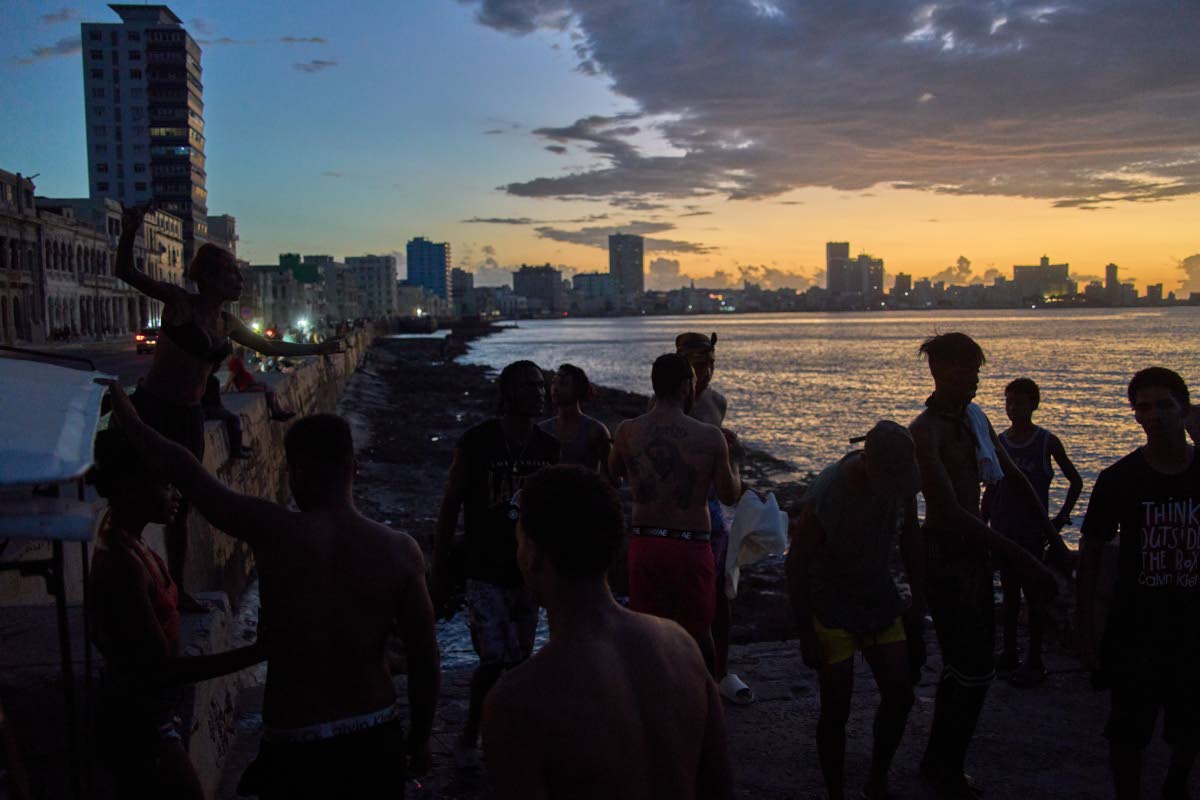 People watch the sunset from the Malecón during a blackout in Havana, Monday, March 16, 2026. Photo - AP
-
People watch the sunset from the Malecón during a blackout in Havana, Monday, March 16, 2026. Photo - AP
-
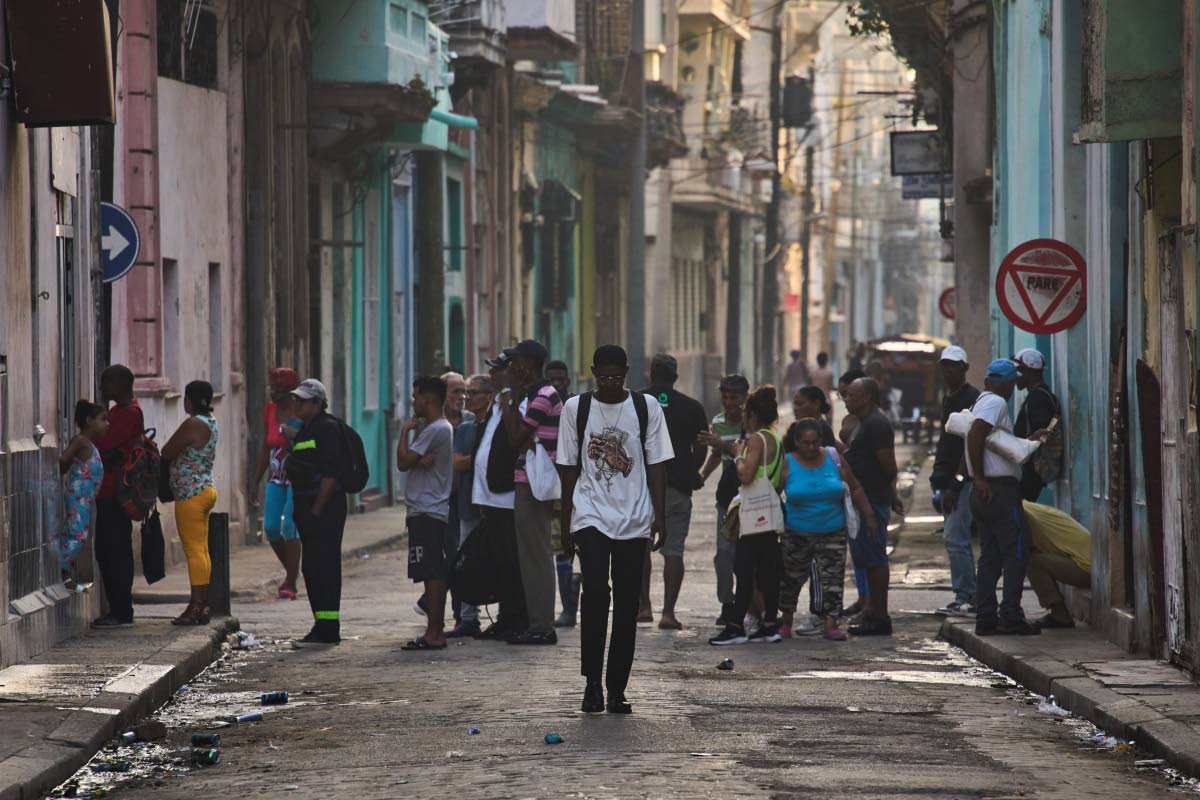 People line up in the street to buy bread in Havana, Cuba, Friday, March 13, 2026. Photo - AP
As the Cuban economy crumbles and the future of his revolution grows increasingly fragile under the weight of America’s pressure, the jury remains out on Fidel Castro’s expectation of being absolved by history.
For the Caribbean community, the verdict is near, and already the outcome doesn’t look bright for the region. CARICOM may eventually dispatch humanitarian aid to Cuba, but history will remember that CARICOM dithered and prevaricated on the issue when the Cuban people faced dire straits.
As it now stands, the 15-member community is being perceived as too afraid to act on a matter of principle and conscience, and as showing rank ingratitude to the Cuban people. And this is a matter that transcends ideology and geopolitics.
Unlike CARICOM’s mostly multiparty liberal democracies, Cuba is a one-party socialist state, ruled by the Communist Party of Cuba. Divergent ideologies notwithstanding, Cuba and its Caribbean neighbours have, at least for the better part of half a century, enjoyed good-neighbourly relations.
In times of natural and other disasters, Caribbean countries, and other nations in the Global South, could depend on Havana’s relief and technical assistance, as well as moral support. In better times, Cuba built schools in the region – of which Jamaica was a significant beneficiary – and it provided scholarships to Caribbean students to study in the country. With its expertise in the medical field, Cuba sent its doctors and nurses to work in the Caribbean, Africa, and elsewhere.
But, in the 67 years since the triumph of Castro’s revolution, Cuba has never reached an accommodation with the United States, which abhorred the presence of a communist country in what Washington holds to be America’s backyard. From the start, the United States maintained an economic embargo against Cuba, the removal of which CARICOM supported in annual votes at the United Nations. Jamaica went further. Each year, for nearly two decades (the last time was in October 2025), the island’s Parliament passed resolutions calling for the removal of the embargo.
Instead, since the return of Donald Trump as America’s president 14 months ago, the United States has overturned all overtures towards a normalisation of relations between Washington and Havana, and has decidedly tightened the screws on Cuba. The Trump administration instructed Caribbean governments to end medical partnership agreements with Cuba, ostensibly because it was discovered, after nearly a half-century, that the doctors, nurses and medical technicians who served in the programme were victims of human trafficking. The collapse of these schemes will leave big holes in the health systems of several CARICOM countries.
Depriving Cuba of foreign exchange earnings from the medical programme is relatively minor in comparison to the Trump administration’s other tactics against the Cuban government. It has, for instance, imposed a blockade on the shipment of oil to Cuba.
Without fuel to fire its generators, Cuba’s power grid has collapsed. There is no electricity to light homes, run factories, hospitals or farm machinery. Without the ability to refuel at the island’s airports, foreign airlines have stopped flying to Cuba, bringing the Cuban tourism industry to a halt. Jobs are being lost. So, too, the earnings from the industry.
The effect is felt primarily on the Cuban people, disproportionally on the elderly and the very young. Cuba faces a political and economic crisis and is edging close to a humanitarian disaster.
A disorderly implosion in Cuba is good for no one, including the United States.
Washington, apparently, is beginning to appreciate this fact. Its seeming intent, now is manoeuvring Cuba to become a client state, similar to what it achieved in Venezuela. In the meantime, ordinary Cubans continue to bear the brunt of the embargo.
At their summit in St Kitts and Nevis in February, CARICOM leaders committed to providing humanitarian assistance to Cuba, but were hazy about what this meant. They expected that it would all be worked out “within a month”, according to CARICOM’s chairman, the St Kitts and Nevis prime minister, Terrence Drew. Subsequent to the summit, Dominica’s prime minister, Roosevelt Skerritt, said CARICOM was coordinating with Mexico on the matter. Again, no clarity, no timeline.
Following the summit, and CARICOM’s imprecision about its Cuba strategy, this newspaper reminded the community that, in the context of Cuba’s humanitarian crisis, a month was the ‘long run’, and of the economist Keynes’ aphorism: “In the long run, we are all dead.”
Two things were obvious at the Basseterre summit:
• That CARICOM was divided on Cuba – between those countries wishing to hasten the collapse of the Cuban government, and those that, while cognisant of the power of the United States, wished to move quickly on humanitarian assistance; and, second
• Some members were keen to assert the concept of variable geometry within CARICOM – in this case on foreign policy.
These tensions, and concerns about America’s likely attitude towards sending aid to Cuba, are apparently a source of paralysis in the community. At the least, they have seriously slowed the pace with which the group has acted on the matter. Yet, the Cuban people are into the ‘long run’, whose effects continue to worsen.
Providing humanitarian assistance to suffering people should not be complicated by geopolitical considerations – especially when the key protagonist has publicly said it won’t object. But, in this case, in these circumstances, CARICOM’s dithering won’t be remembered kindly.