Editorial | Anti-gang-type law for farm theft
Loading article...
-
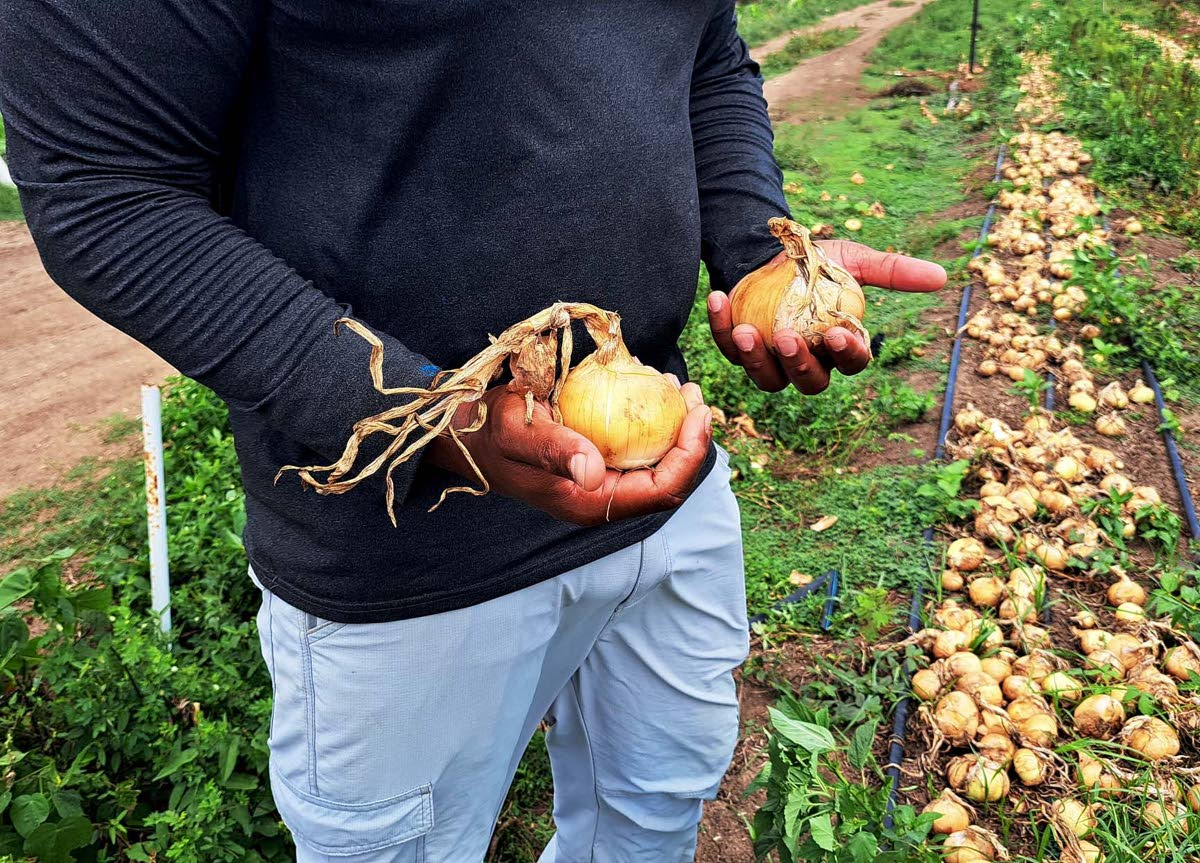 Global warming and climate change are radically altering the dynamics of agriculture.
-
 The Jamaica Constabulary Force now characterises praedial larceny as grand larceny.
Although they have provided no comparative data on arrests, cases closed, or the number of convictions, we welcome the report by the police that their year-old Agricultural Protection Branch (APB) has made significant progress in “dismantling the criminal networks” of farm thieves.
The Gleaner’s Editorial Board is heartened, too, by the apparent shift in the narrative around what the law formally refers to as praedial larceny, a term that conveys the impression that Jamaica’s long-standing problem is merely one of petty theft. The Jamaica Constabulary Force (JCF) now characterises the issue as grand larceny.
However, the board, as we have long insisted and reiterated in these columns 15 months ago, believes that theft from farms has evolved into organised crime and should be treated as such. In that regard, several of the APB’s reported initiatives are highly commendable. However, the question remains whether the Major Organised Crime and Anti-Corruption Agency (MOCA), which combats highly sophisticated criminal enterprises, ought not to be more intimately involved in the effort to eliminate, or substantially reduce, farm theft.
Perhaps, too, the Government, in support of this initiative, should consider legislative changes to formally bring agricultural theft above a certain value, and involving two or more persons, within the ambit of organised crime. The drafters of such legislation could borrow elements from the anti-gang law, including provisions that criminalise knowingly accepting benefits derived from agricultural theft, as well as harbouring farm thieves. Conspiracy offences might also form part of the proposed law.
Should there be any doubt about the importance of agriculture or the sector’s value to the Jamaican economy, several statistics underscore the point.
First, agriculture accounts for approximately eight per cent of Jamaica’s gross domestic product (GDP). Studies have consistently shown a strong correlation between growth in agriculture and growth in the wider economy.
Further, the sector employs nearly 200,000 people, or 14 per cent of the island’s workforce. The livelihoods of many Jamaicans are at stake when a significant share of agricultural output is systematically stolen.
Indeed, it is estimated that between 10 and 20 per cent of farm output is stolen annually. At the lower end of that range, the losses amount to approximately US$55 million (J$8.7 billion) each year. Few enterprises, except regulated entities permitted to pass costs on to consumers or firms receiving direct state subsidies, could sustain losses of this magnitude for long without collapsing. Put another way, farm theft imposes additional, non-production costs on farmers, some of which are ultimately passed on to consumers.
Beyond the economic and commercial implications of this problem, Jamaica has important strategic and geopolitical reasons to address the crisis of farm theft, as well as the wider issue of the sustainability of the agricultural sector.
Global warming and climate change, for instance, are radically altering the dynamics of agriculture. Weather patterns have become increasingly unpredictable. Countries and regions are experiencing more frequent and prolonged droughts, unseasonal rainfall, more intense storms, and recurrent flooding. Farmers are being forced to adjust long-established techniques and accepted practices for growing crops. They must also embrace new farming methods and technologies, often while operating within narrow economic margins. Jamaican farmers are unlikely to escape these realities.
At the same time, geopolitical shifts are undermining the production and distribution certainties that accompanied globalisation. As international trade increasingly coalesces around geopolitical alliances, supply chains have been disrupted, and questions about food security have returned to both global and domestic agendas in ways that appeared to have faded with the advent of globalisation. It is no longer simply a matter of whether a country can afford to import food, but whether, given climate shocks and geopolitical tensions, supplies will be available or willing sellers can be found.
Such concerns have recently been highlighted and accelerated by the US-Israeli conflict with Iran and Iran’s temporary closure of the Strait of Hormuz, through which roughly one-fifth of the world’s sea-borne oil passes. This caused sharp spikes in global oil prices, affecting the cost of a wide range of goods and services, including agricultural inputs.
Higher prices, however, are not the only consequence for agriculture. Countries along the Strait of Hormuz are major producers of ammonia, a key ingredient in nitrogen fertilisers, as well as fertilisers themselves. Scarcity, therefore, is an increasing concern.
Jamaica faces numerous agricultural challenges if it is to modernise the sector, reduce food imports, and strengthen food security. Farm theft is one of those challenges and, fortunately, among the more readily addressable ones.
The Gleaner’s Editorial Board takes the JCF at its word that the APB is making progress, but would appreciate specific, verifiable data to support that claim. At the same time, the board looks forward to seeing the authorities translate their declarations about agricultural transformation into tangible and measurable strategic outcomes.