Leroy Fearon | Stop asking teachers to be resilient and start building a system that supports them
Loading article...
-
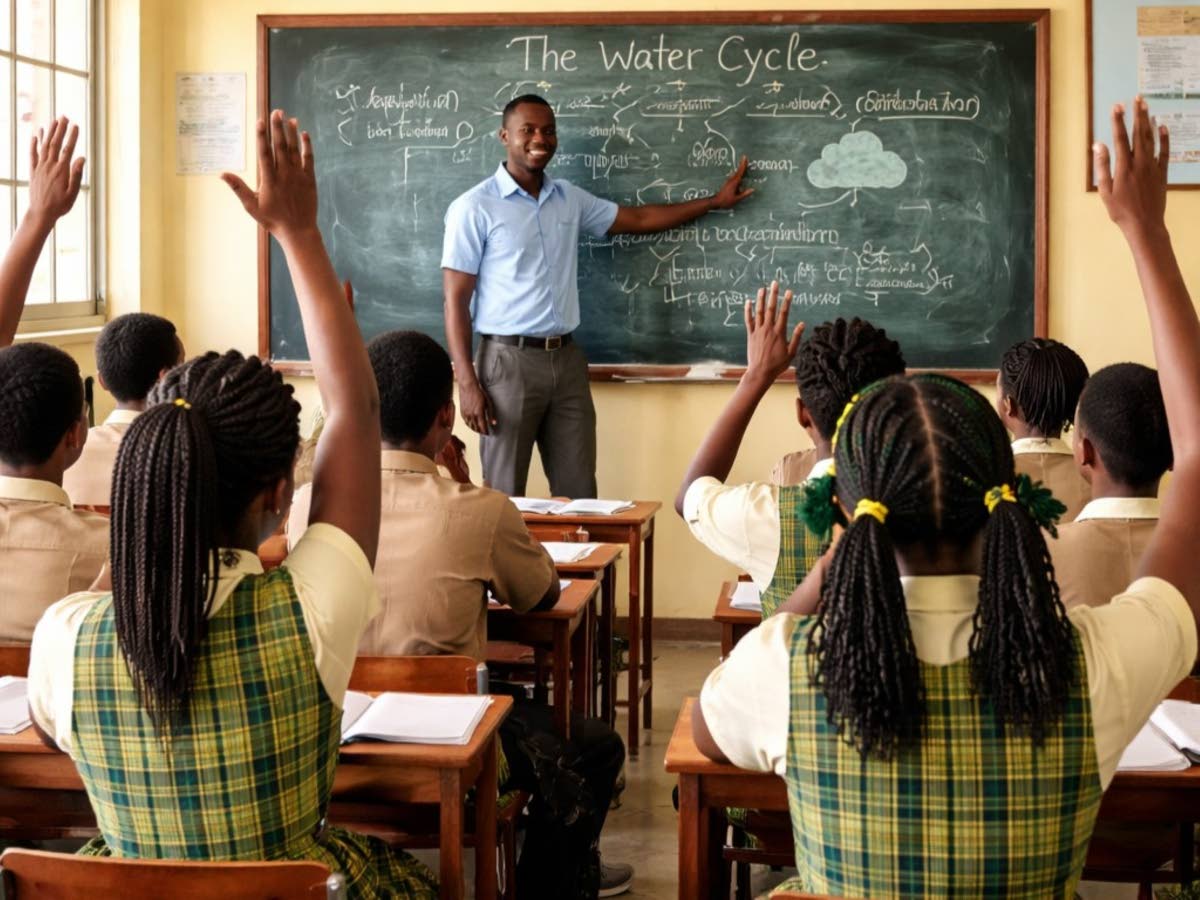 A resilient teacher is a valuable asset to any education system. But an education system that depends excessively on the resilience of its teachers is revealing something about itself.
-
 Leroy Fearon
There is something admirable about resilience. It speaks to courage, endurance and the human capacity to continue when circumstances become difficult.
In Jamaica, our teachers have demonstrated resilience repeatedly during periods of disruption, institutional change, natural disasters and the everyday pressures of educating young people in an increasingly complex society.
But there is a point at which constantly praising resilience becomes a substitute for providing support. We should be careful not to romanticise the ability of teachers to endure difficult circumstances.
A resilient teacher is a valuable asset to any education system. But an education system that depends excessively on the resilience of its teachers is revealing something about itself.
The question Jamaica must increasingly confront is not simply whether our teachers are resilient enough. The more important question is whether our education system is sufficiently supportive of those we continue to ask to carry its greatest responsibilities.
Recent events have again demonstrated the extraordinary commitment of Jamaican educators. In the aftermath of Hurricane Melissa, for example, teachers and education officers in the Ministry of Education's Region Four organised an online enhancement programme to help students whose schooling had been disrupted. What began as a targeted intervention expanded into a six-day-a-week initiative involving 36 volunteer educators and education officers.
That is a remarkable demonstration of professional commitment. But it should also cause us to pause. When teachers give their weekends, evenings and personal time to ensure that students do not fall behind, the appropriate national response should be gratitude. However, gratitude should not be the end of the conversation.
We must also ask what systems, resources and support structures are necessary to ensure that extraordinary effort does not become an ordinary expectation.
Teachers are no longer being asked simply to teach. Increasingly, they are expected to be counsellors, social workers, technology specialists, behavioural interventionists, mentors, emergency responders and, in some cases, the first line of defence against the social difficulties that follow children into the classroom.
They are expected to respond to learning loss, changing curricula, technological disruption, declining attention spans, concerns about student mental well-being, family instability and widening inequalities.
At the same time, the classroom itself is changing. Artificial intelligence is altering how students access information and complete assignments. Teachers must now think differently about assessment, academic integrity and how to ensure that students are genuinely learning.
Research reported by The Gleaner this year found that 96 per cent of secondary students surveyed and 100 per cent of tertiary students surveyed were using generative AI tools for academic-related tasks. The same research found that 86.7 per cent of faculty respondents were using AI to prepare classes and support professional tasks.
This is not a criticism of technology. It is a recognition that teachers are being asked to navigate one of the most significant changes in education in generations, often while policies and professional guidance are still evolving.
We cannot simply introduce new expectations into the education system and assume that teachers will absorb them. That approach is neither sustainable nor fair. If Jamaica expects teachers to prepare students for a rapidly changing world, then Jamaica must be equally serious about preparing teachers for that responsibility.
PROFESSIONAL DEVELOPMENT MUST BECOME MORE THAN AN EVENT
Too often, professional development is treated as something that happens at a workshop, conference or training session. Valuable as these opportunities may be, the development of teachers must increasingly become a continuous and strategic process.
Teachers need time to learn. They need opportunities to collaborate with colleagues, engage with research, experiment with new pedagogical approaches and develop the confidence required to use emerging technologies effectively.
Professional development should not be something added to an already overwhelming workload. It should be embedded into the professional life of the teacher. A teacher cannot be expected to transform learning while having insufficient opportunity to transform his or her own practice. This is particularly important as Jamaica confronts the growing influence of artificial intelligence.
Teachers must be equipped not merely to operate new technologies but to understand their educational implications. They must be able to help students distinguish between information and knowledge, convenience and learning, and technological assistance and intellectual dependence. That requires investment.
TEACHER WELL-BEING IS AN EDUCATION ISSUE
We also need to speak more honestly about teacher well-being. When teachers are exhausted, overwhelmed or professionally isolated, students are affected. Teacher well-being is therefore not a peripheral human-resources concern. It is central to educational quality.
A system that wants students to flourish must pay attention to whether its teachers are flourishing. This does not mean that teaching will ever become an easy profession. It should not be reduced to that simplistic expectation. Teaching is demanding because the work is important. But there is a difference between the natural demands of a profession and unnecessary institutional strain.
Administrative burdens should be examined. Teachers should be given meaningful access to professional support. Technology should be used to reduce unnecessary workload rather than simply creating additional expectations. School leaders should have the resources and capacity to support their staff. Most importantly, teachers should have a meaningful voice in the decisions that affect their work.
RESILIENCE SHOULD BE THE RESULT OF SUPPORT, NOT THE SUBSTITUTE FOR IT
Jamaica should continue to celebrate its teachers. They deserve every commendation for the commitment they demonstrate to children and communities. But celebration must be accompanied by structural support.
The teacher who remains late to assist a struggling student should be appreciated. The teacher who volunteers time during a national crisis should be honoured. The teacher who adapts to a new curriculum, a new technology or a changing classroom should be recognised. But we should not build an education system that quietly assumes teachers will always compensate for what the system fails to provide.
Resilience is a virtue. It should never become a business model. If Jamaica is serious about transforming education, we must move beyond the comforting language of resilience and towards the harder work of building a system that supports those expected to deliver that transformation.
The future of Jamaican education will not ultimately be determined by how many times our teachers are able to recover from difficulty. It will be determined by whether we build an education system in which they have fewer unnecessary difficulties from which to recover.
- Leroy Fearon Jr, J.P, M.Sc., is a lecturer, multi-disciplinary researcher, author, geography specialist, columnist, Governor General's Achievement Awardee '24 and Governor General I Believe Initiative (IBI) Ambassador '24. Email feedback to columns@gleanerjm.com and leroyfearon85@gmail.com. ONLINE ONLY COMMENTARY.