Akshai Mansingh | World cricket risks withering away
Loading article...
-
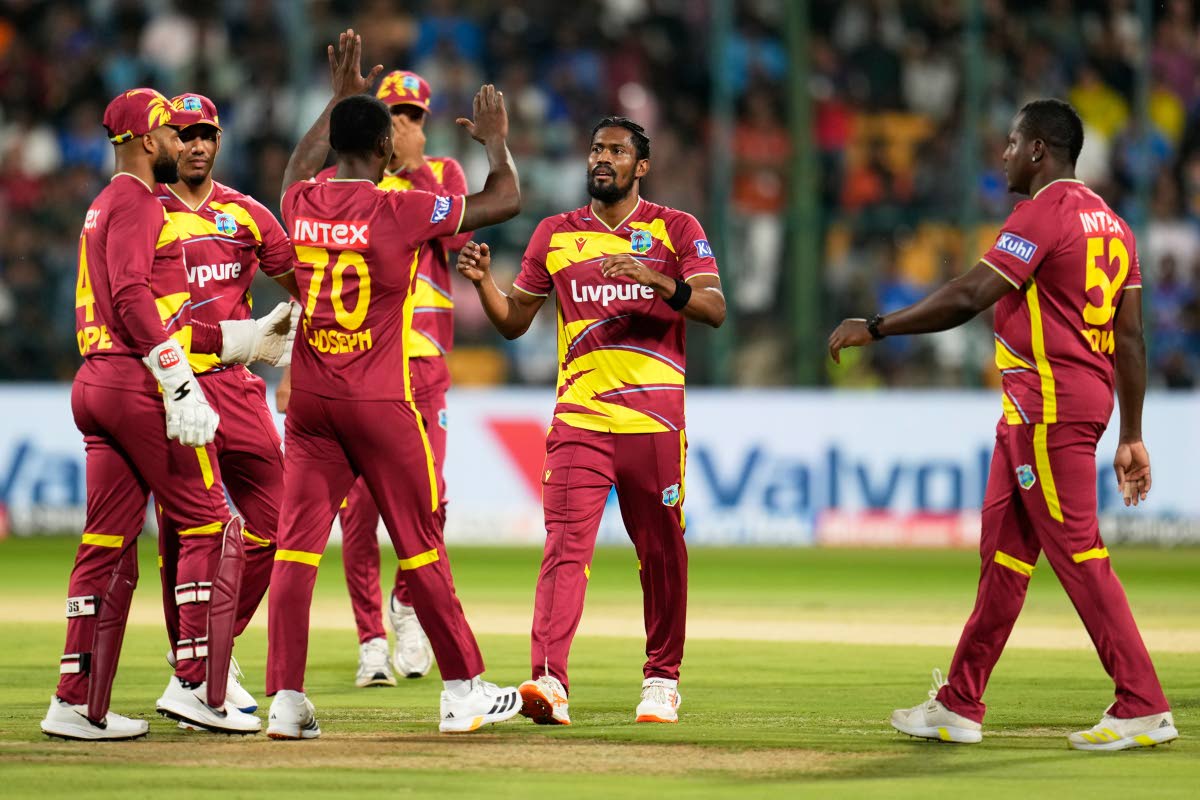 West Indies’ Keemo Paul (second right) celebrates with teammates the dismissal of India’s Abhishek Sharma during the fifth T20 International cricket match against India in Bengaluru, India. Photo - AP
-
West Indies’ Keemo Paul (second right) celebrates with teammates the dismissal of India’s Abhishek Sharma during the fifth T20 International cricket match against India in Bengaluru, India. Photo - AP
-
 Dr. Akshai Mansingh. Photo - Contributed
At a time when the global sports industry generates close to US$3 trillion annually, cricket risks undermining its own future through governance and financial policies that weaken competitiveness and restrict development. Unlike most major international sports, cricket remains concentrated in a relatively small group of countries. Instead of consistently expanding participation and strengthening weaker members, the structures governing the game have often reinforced inequalities that threaten long-term growth.
Many of these challenges are rooted in history. For more than a century, the International Cricket Council (ICC) was dominated by England and Australia, which wielded a veto power over most major decisions. Countries such as Sri Lanka and Bangladesh waited years for full membership and access to play Test cricket. It wasn’t until 1993 that it had its first non-white chairman, Clyde Walcott.
A major transformation began under Jagmohan Dalmia, who became ICC president in 1997. At that time, the ICC’s assets were reportedly just US$20,000. By 2000, they had risen to approximately US$15 million, placing the organisation on a path of unprecedented financial growth. In 2025, the ICC had a reported surplus of US$543.3 million.
Traditionally, cricket finances revolved around bilateral tours. Visiting teams negotiated fees with host boards, while revenue came mainly from ticket sales and sponsorship. Until 1999, profits from Cricket World Cups belonged largely to host countries. Dalmia changed this arrangement by establishing the World Cup as an ICC-owned event, creating a central pool of income that could potentially benefit the global game.
Even under the old system, financial inequalities existed. Stronger teams such as England, Australia and, during the 1980s and 1990s, the West Indies could command substantial touring fees from other nations while paying comparatively little to weaker opponents. Yet, the emergence of India as cricket’s dominant commercial power transformed the scale of the imbalance.
The growth of television rights, sponsorship and broadcasting revenues has made India the financial engine of world cricket. Estimates suggest that Indian cricket now generates about 80 per cent of global cricket revenues. In 2006, the ICC voted nine to one to abolish touring fees, with the West Indies as the sole dissenting member. Thereafter, countries became dependent on revenues generated from home series. It was clear that the declining West Indies could not attract the sort of TV rights or sponsorship, and the same was true of other smaller nations.
One might have expected the enormous wealth generated during this period to be distributed in a manner that encouraged development and competitiveness across all cricketing nations. Instead, the opposite occurred. In 2014, India, England and Australia, the so-called Big Three, promoted a governance and revenue-sharing model that reflected their financial contribution to the ICC. The arrangement allocated a substantial proportion of ICC income (27.4% of gross revenue) to those boards. The remaining 72.6% was used to run ICC events (such as World Cups, youth World Cups, etc, but not bilateral series), and what was left over was split among other members. Inexplicably, this received an 8-0 backing from Full Members. The West Indies voted for this system. We are yet to publicly hear why the West Indies board voted for this.
Although modifications were introduced in 2017, the current revenue-sharing structure remains heavily concentrated. Between 2024 and 2027, India receives 38.5 per cent of ICC revenues, England 6.89 per cent, Australia 6.25 per cent and Pakistan 5.75 per cent, while other Full Members receive less than five per cent each. More than 90 Associate Members share only 11.2% of total revenues.
The consequences are visible throughout world cricket. Many countries struggle to finance domestic programmes, maintain development pathways, and sustain international schedules. South Africa, despite holding the title of World Test Champion, went 18 months without hosting a home Test match.
For the West Indies, another pivotal development occurred in 2014 with the introduction of a professional franchise system in domestic cricket. Territorial teams were largely replaced by franchise structures, and players were offered higher salaries and greater mobility between teams.
The system depended on 60 per cent funding support from Cricket West Indies, and 40% was to be raised by local franchises. Yet, many territories were already struggling economically and lacked the sponsorship base required to sustain the model. Consequently, local boards redirected scarce resources towards maintaining franchise teams rather than investing in grassroots development.
In Jamaica, resources previously devoted to youth development programmes were diverted. Training camps for Under-15, Under-17 and Under-19 players were reduced or discontinued. Programmes that had helped Jamaica dominate regional competitions gradually disappeared. Funding shortages spread through local cricket, affecting competitions, coaching initiatives, and participation levels. Similar trends emerged throughout the wider Caribbean.
Supporters of the current ICC system argue that the largest contributor should receive the largest reward. That position has some merit. However, the broader question is whether cricket benefits when wealth becomes concentrated in a handful of boards while the majority struggle to maintain competitive structures. A global sport cannot thrive if most participants lack the means to develop players, attract supporters, and stage meaningful competitions.
The leading nations must decide whether they are satisfied competing primarily among themselves or whether they recognise the value of a stronger international ecosystem.
I have long held that cricket has earned more for Jamaicans than any other sport. Yet, participation continues to decline while local boards face mounting financial constraints. The solution is not to dismantle Cricket West Indies but to advocate strongly for a fairer distribution of global revenues alongside other disadvantaged members. World cricket is not short of money; it is short of vision. Being a region that many claim fights injustice, this is where we can show leadership. And this is where regional governments can raise awareness on a global stage. Otherwise, cricket will wither.
Dr Akshai Mansingh is a cricket commentator and analyst. He is an orthopaedic surgeon and sports medicine physician at the University of the West Indies. Send feedback to akshai.mansingh@uwi.edu.