Kristen Gyles | Life has lost its simplicity
Loading article...
-
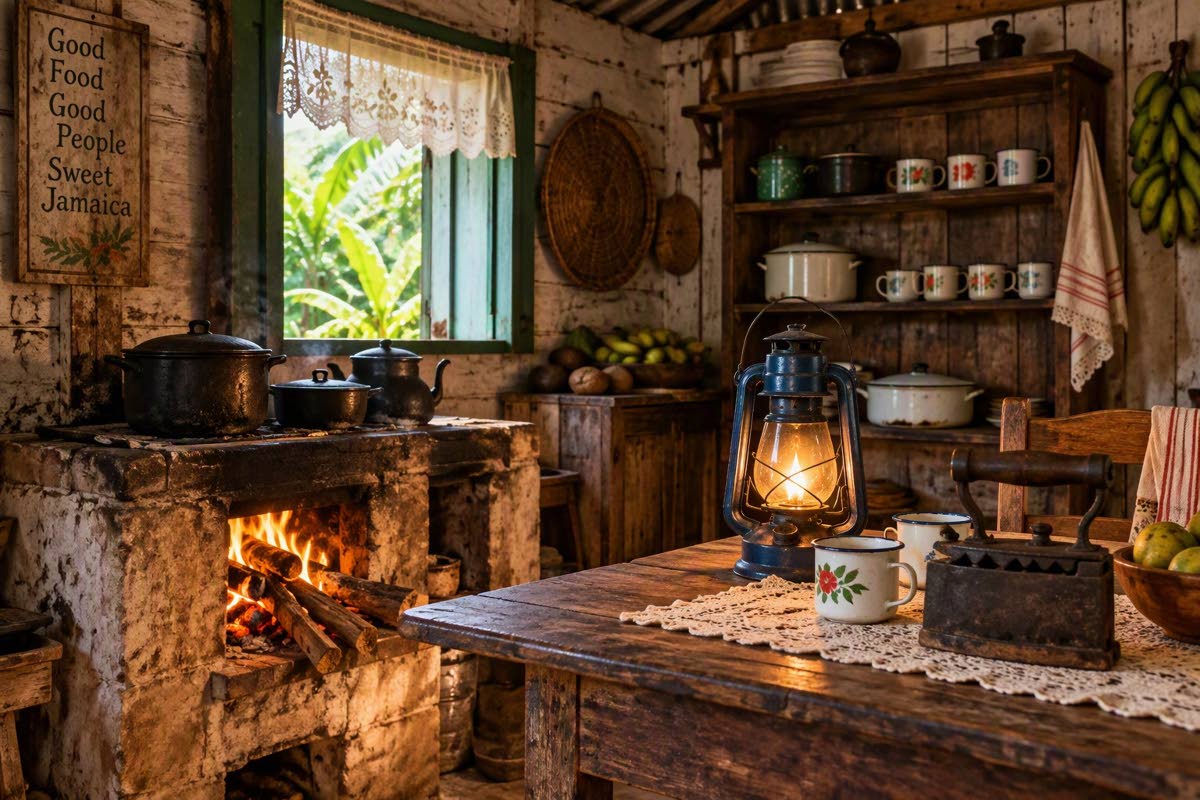 Representational image of old time Jamaican kitchen generated by Microsoft Copilot. Photo - Copilot
-
Representational image of old time Jamaican kitchen generated by Microsoft Copilot. Photo - Copilot
-
 Photo - File
We invented so many devices and created so many systems to “save time” and yet, somehow, we are still always so busy. For many of us, our grandparents and great-grandparents never seemed so consumed with hurrying to get anything done. Yet, everything got done.
They never ran out of time to cook, do laundry, run errands or do their income-generating work, and that is despite having no washing machine, no clothes dryer, no air fryer, no microwave, no smart oven, no electric kettle, no vacuum, no smartphone, and no car to carry them around. What changed?
Life has become so much more saturated and crammed. That’s what changed. Just look at how much physical baggage now forms a part of the lived experience for the average person living in the Western Hemisphere. Just packing to move house is now a several-day-long affair because, aside from the furniture in the house, we have Home Depot inside our storage closet with several bath towels, bathroom rugs, bedsheets, blankets and those heavy living-room drapes that probably only see the light of day at Christmastime. In times gone by, it was unheard of that one individual would own 30 pairs of shoes, 20 work suits and hundreds of other individual pieces of clothing. Today, it is not strange.
Naturally, doing laundry after one week is an entire production, since so much gets used in one week. Laundry that once required two hours of hand-washing has turned into several machine loads divided into coloured clothes, white clothes, bedsheets, towels, etc. Obviously, the washing machine made us more efficient at washing, but what use is efficiency when we are only going to keep increasing the volume of work to fill the extra time created by the ‘efficiency’?
Remember when ‘Granny’ used to grate coconut to get fresh coconut milk for the rice and peas? And when she would get a few stalks of escallion from the backyard to put in the ‘salting’? All that hard work to produce enough dinner to feed almost an entire community took just about two hours. Now, despite the coconut milk arriving to the kitchen ‘ready-made’ in a tin from the supermarket, and despite the escallion having already been picked and packaged for immediate use, the cooking still takes two hours. Why? Because, now, a good meal must consist of three or four different dishes, each containing an extensive list of ingredients. And so, the meal that could have been cooked in a jiffy still takes as long as Granny’s cooking, because the meal is now as complicated as a Rubik’s cube.
Each invention was supposed to make life easier. Yet, somehow, the more time we save, the less time we seem to have. We have turned saved time into extra work, extra responsibilities and extra expectations. Instead of enjoying the minutes we have gained, we collectively decided instead to spend them proving how much more we can accomplish. There is a need to maximise every single, solitary minute and fill it with ‘productivity’.
The other interesting thing is that the mindset that has us wanting to do more and achieve more constantly, seems to be the same mindset that has us wanting to own more and consume more too. It no longer feels good enough to have food to eat now and food to eat later. We need to have enough food in storage for the entire month before we can be comfortable, and we need to have a variety of options to choose from. Of course, to facilitate all this, we obviously can’t rely too much on whole foods which will start to rot after a few days. So we are happy to purchase as many ultra-processed foods that will never go bad. That way, we can stockpile food for the seven years of famine that must be coming.
We have actually become professional hoarders. The concept of always having an abundance is a comforting one because it gives us a kind of confidence about the level of stability that we have in life. But it is this same mindset of extravagance and excess that has been causing us more and more stress. The chase towards ‘more’ and ‘bigger’ and ‘greater’ is a tiring one.
And then there is the darn phone.
Our phones keep us connected to almost everyone, everywhere, at any time. At first, that sounded wonderful, but now, being reachable has become the expectation. Emails are arriving later and later after working hours, and some modern-day ‘Backra Massas’ actually expect us to answer them at 11:42 p.m. when they come in. WhatsApp messages now come with the demand of an immediate reply and social media has us scrolling long after we should have been in bed. Even our moments of rest have become crowded with information, entertainment and the pressure to keep up.
It’s all too much. I suppose our greatest shortage is probably not time, but attention. After all, how many things can one human mind attend to at a time before it starts to overheat and give processing errors?
Life has lost its simplicity. Who knows whether that is good or bad? We just know humanity complains more about stress and tiredness now than it did 50 years ago.
In order to reduce the stress, we’ll have to find ways to reduce the clutter. Sometimes less is more.
Kristen Gyles is a free-thinking public affairs opinionator. Send feedback to kristengyles@gmail.com and columns@gleanerjm.com