Peter Espeut | Watch the youth of Serbia
Loading article...
-
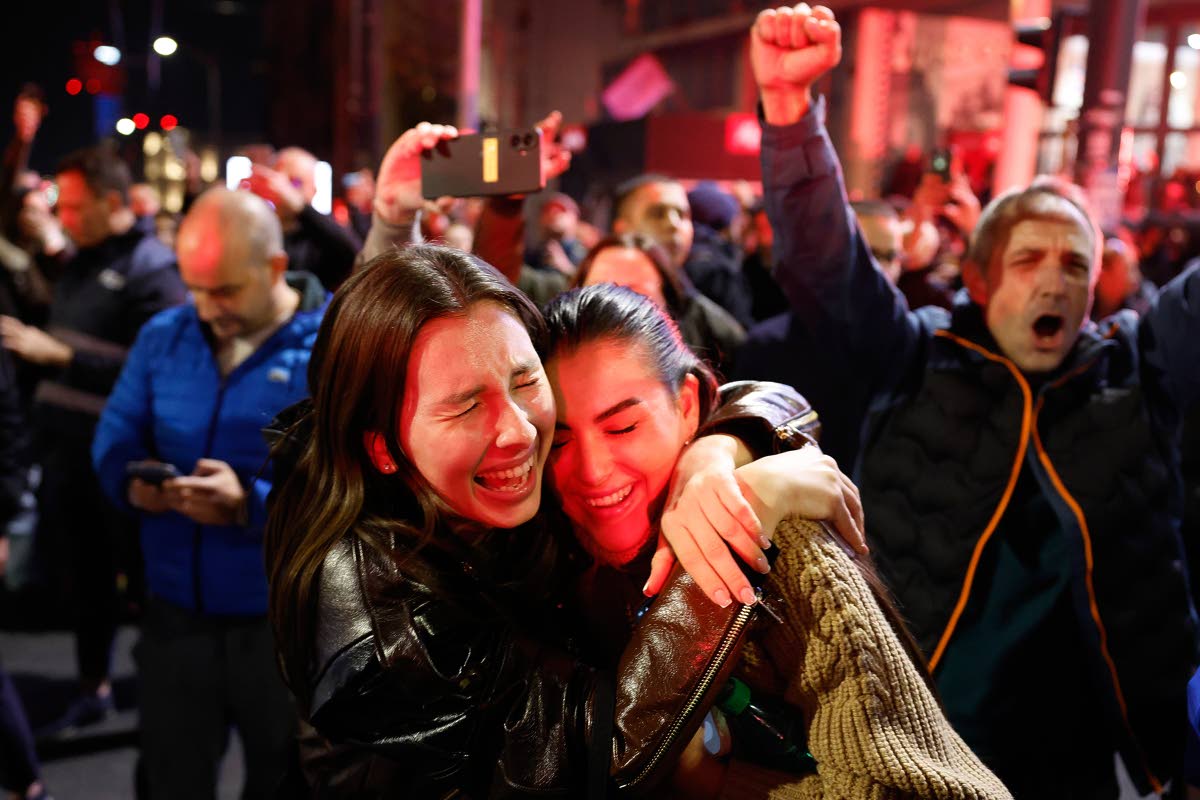 People celebrate after Aleksandar Vucic, leader of the right-wing Serbian Progressive Party (SNS) conceded defeat in the parliamentary election in Belgrade, Serbia. Photo - AP
-
People celebrate after Aleksandar Vucic, leader of the right-wing Serbian Progressive Party (SNS) conceded defeat in the parliamentary election in Belgrade, Serbia. Photo - AP
-
 Peter Espeut. Photo - File
Jamaica is said to have endured more slave revolts than any other slave society, suggesting a strong militant spirit among the oppressed. Yet, save for the gas riots of 1999 (led by the middle class), there has been relatively little public dissent over the decades protesting the high and rising cost of living, abysmally poor education for poor urban and especially rural people, and widespread and pervasive political corruption.
Why did Jamaicans not take to the streets in 2023 when the politicians gave themselves a whopping 200-300% salary increase while offering public sector workers only a measly 7.5% increase which did not even make up for the accumulated inflation over the previous decade?
Why did Jamaicans not take to the streets in 2024 when it was announced that a total of eight politicians were under investigation by the Integrity Commission for illicit enrichment, in the context of absolute secrecy surrounding asset declarations, political donations, and the awarding of government contracts?
Why did the long-suffering residents of western Jamaica earlier this year not take to the streets to protest the fact, revealed in the Auditor General’s Report of May that, out of J$1.44 billion in cash donations collected to relieve the sufferers, as of February 23, only J$26 million or 1.8 per cent had actually been spent?
Why have Jamaicans, especially those in the west, not taken to the streets a year after the devastation caused by Hurricane Melissa with very little relief offered to them? Especially when the head of NaRRA, the entity touted as the government’s Melissa recovery agency, revealed that the early projects on NaRRA’s agenda include the Hermitage Dam, Kingston’s sewerage system, and the Palisadoes Road?
We Jamaicans are so docile, aren’t we? So much apathy. Like compliant slaves. No Tacky, Sam Sharpe or Paul Bogle in sight!
Yet, earlier this month, demonstrations and protests against poor school and economic conditions by high school students clogged the streets of Paris (France) and developed into a nationwide mobilisation involving students, teachers, parents, political organisations and trade unions, with an estimated 550,000-800,000 people participating nationwide.
Maybe we got our independence too easily, not having to “storm the Bastille”. The Jamaican government is not afraid of (does not respect) the Jamaican people.
Then the demonstrations spread Europe-wide, including protests in Belgium, Albania, Greece, Italy, Portugal, Spain, Austria, Ireland, Serbia and Germany.
Students have cited teacher shortages, overcrowded classrooms, run-down buildings, and limited public investment in social programmes and infrastructure. Protesters in France and across Europe complained of high inflation, rents, fuel costs, and unemployment, coupled with social spending cuts.
Don’t we have the same problems in Jamaica?
Have you been following events last week/this week in Serbia, led by their popular student movement? The student movement grew out of anger at President Aleksandar Vucic and his government, since 16 people were killed in 2024 when a concrete canopy collapsed at the train station in the city of Novi Sad. That set off a wave of youth protests that blamed the collapse on high-level corruption and cronyism during renovation work at the station.
High-school and university students launched blockades starting at the Faculty of Dramatic Arts in Belgrade in November 2024, followed by daily 16-minute “Serbia, stand still” silent traffic blockades honouring the 16 victims. The movement grew through direct-democracy student assemblies and citizens’ assemblies, leading to massive anti-government demonstrations in Belgrade in March 2025 and the resignation of the prime minister.
Last month when former president Aleksandar Vučić announced snap elections, the student movement decided to take part, to challenge government corruption. Instead of running professional politicians, the movement compiled the ‘Student List’ featuring 250 academics, doctors, actors, and public figures to contest the 250 seats in the Serbian parliament.
The Student List ran on an 11-point manifesto, including:
Eradicate corruption by forming a police unit to arrest those responsible for it.
Purge officials in the internal affairs ministry of anyone linked to organised crime.
Reform Serbia’s skewed media scene and free the public broadcaster of political control.
Stop recruiting party loyalists to head public enterprises.
In the elections which took place on October 25, the Student List won roughly 52.7% of the vote, sidelining both the ruling party and the widely distrusted opposition parties.
Serbia does not have a constituency system; each contesting entity submits a candidates list, and the parliamentary seats are apportioned according to the popular vote. Final projections by independent polling groups CeSID and Ipsos indicate that 141 people on the Student List have won seats in parliament. Their lead candidate was Ilija Srdanović, a cardiology professor in Novi Sad. Also gaining seats were ex-basketball star Dejan Bodiroga (24th on the list), renowned actor Tihomir Stanić (8th), opera singer Nikola Mikić (46th), former National Bank of Serbia governor Dejan Šoškić (27th), and a rather large number of university professors.
This is a case of the youth asking civil society leaders to offer themselves for public service. This is one way of shouting: “A pox on both your houses!” The non-hierarchical, leaderless ‘Student List’ movement is preparing for government formation talks focused on institutional reform, accountability, anti-corruption measures, and the rule of law.
Serbia: the world is watching!
In Jamaica, we consistently vote in parties with solid track records in corruption, vote buying, political thuggery and underworld links. Both parties support the asset declarations of politicians made in secret, political donations made in secret, and the Integrity Commission muzzled by the ‘Gag Clause’. Neither party has a serious anti-corruption agenda.
Rather than mobilise to oust corrupt professional politicians, the Jamaican electorate has voted to stay away from the polls: in the last general election (2025), under 40 per cent of registered voters turned out.
Our corrupt political system seems to suit a lot of people, including the donors to the political parties. And our dysfunctional education system is not turning out conscious young people, prepared to advance their country.
Peter Espeut is a sociologist and development scientist. Send feedback to columns@gleanerjm.com