Gordon Robinson | Love thy neighbour
Loading article...
-
 Primary school children carry flowers before throwing them out to sea on the anniversary of the death of Cuban revolutionary leader Camilo Cienfuegos in Regla. Photo - AP
-
Primary school children carry flowers before throwing them out to sea on the anniversary of the death of Cuban revolutionary leader Camilo Cienfuegos in Regla. Photo - AP
-
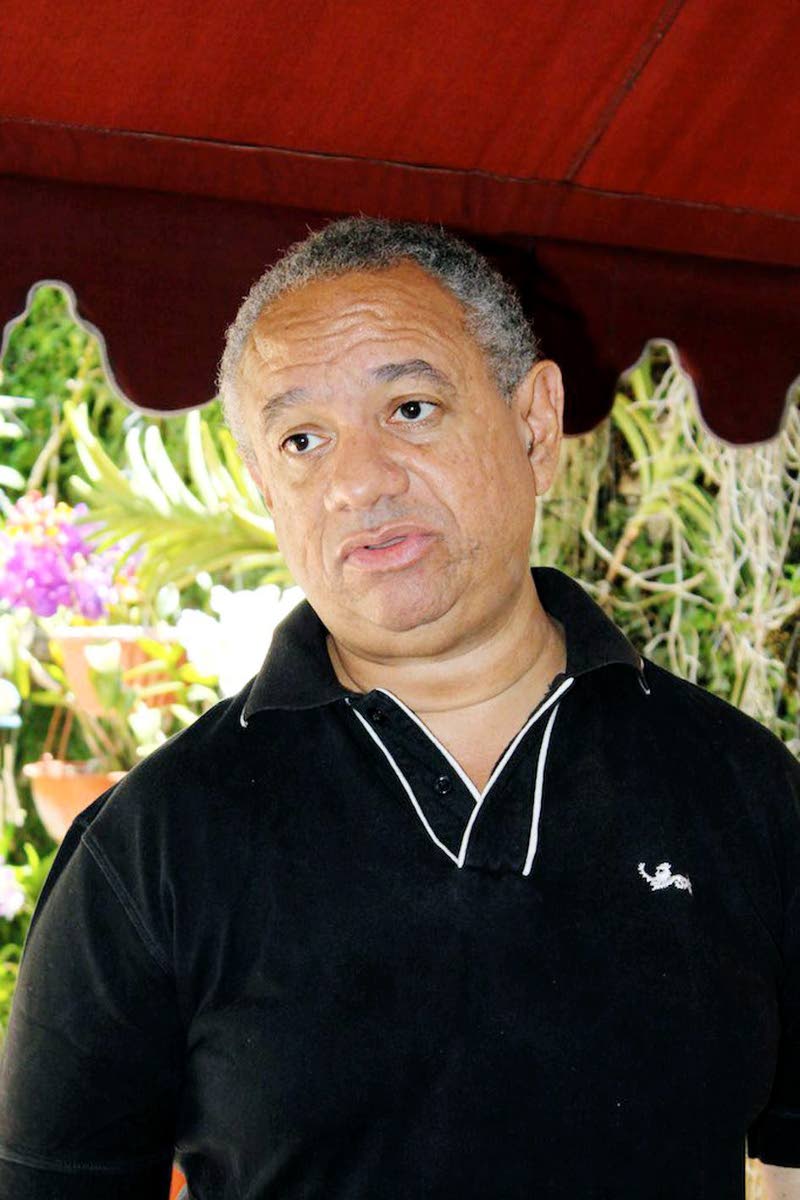 Gordon Robinson. Photo - Contributed
I’ve repeatedly written that God issued no “Commandments” properly-so-called to Moses or anyone else.
Not even the Old Testament, whose reliance on hellfire and brimstone is notorious, uses that word when describing God’s conversation with Moses ( Exodus 20: 1-17). Some English translations (e.g. KJV) records, in Exodus 24:12, that the Lord summoned Moses to the mount “where I will give thee tables of stone and a law and commandments which I have written”
As it turned out, on that visit, God told Moses to pass the plate so that everyone could “bring me an offering.” ( Exodus25:2) God allegedly specified the offering was to be “gold silver and brass” ( Exodus 25:3). Now, to be fair to God about this, Moses had been on the mount for forty days and forty nights without sustenance so might’ve been delirious when reporting to followers. Most of Exodus 25 reads like a Christmas letter to Santa.
Delivery of the actual “commandments” is chronicled in Exodus 20 where the word “commandment” doesn’t appear. The original Hebrew (a sister language to Aramaic) uses “aseret hadevarim” which means “ten words” or “ten statements”. If you read Exodus 20 again, carefully this time, you’ll understand that, as reported by Moses, God was making statements of fact and faith, especially regarding God’s own deity, NOT issuing commandments.
I’ve told you before; I’ll tell you again. Only an idiot grants creations free will and then tries to tell them what to do. God is no idiot!
Jesus, upon whose word we can rely, did support my often expressed view that these “statements” amounted to a unilateral contract whereby God was promising that, if we performed one simple act of love, we’d never commit any of the wrongs that are called “commandments”. Jesus’s confirmation of this interpretation came in response to a query from a lawyer “Master which is the great Commandment in the law?” Jesus said:
“Thou shalt love the Lord thy God with all thy heart, and with all thy soul, and with all thy mind. This is the first and great commandment. And the second is like unto it, Thou shalt love thy neighbour as thyself. On these two commandments hang all the law and the prophets.” ( Matthew 22:37-40)
Now do a quick cross-reference with Exodus 20 and see that Moses’s report, despite somewhat addled (I’m trying to be kind to the Old Testament), was clarified by Jesus.
Love GOD. Love thy neighbour as thyself! Easy peasie.
Since Jesus also taught God resides within us ( John 14:10-20) then the “great commandment” is to love yourself so you can love thy neighbour the same. Because, if you don’t love yourself, and feel towards your neighbour likewise…
And, if you love your neighbour as you love yourself how can you ever bring yourself to hurt your neighbour in any way? This is the essence of God’s unilateral contract with you. If you love thy neighbour, thou shalt not do him/her any wrong.
So the final piece of the jigsaw puzzle is “Who is my Neighbour?” Jesus answers that question, again from a pesky lawyer, in Luke 10:30-37 with the parable of the Good Samaritan. Don’t make me tell it again. You should’ve memorized it in Sunday school.
To cut to the chase, everyone is your neighbour. You mightn’t like what your neighbour does but you must love the person in whatever way the neighbour needs your love.
I told you that long story to tell you this longer story.
Fulgencio Batista was a military strongman and de facto power behind Cuba’s Government from 1933-1940 when he was legally elected President. When his term ended (1944) he migrated to Florida but returned in 1952 to run for President. When it became obvious he’d lose he pre-empted the election by leading a military coup against then President Carlos Socarras.
At that time USA had no difficulty loving its territorial, as well as spiritual, neighbour, despite the way Batista seized power. USA happily loved Cuba as itself. USA offered financial and logistical support as Batista became USA’s puppet in the region. While Batista enjoyed residing in USA’s plush pocket, he suspended Cuba’s Constitution; revoked most political liberties including the right to strike; aligned himself with the wealthiest landowners; and presided over a stagnant economy that worsened the plight of poor Cubans’ while he and his paseros became wealthy as Croesus. Most of the sugar industry fell into USA ownership; 70% of arable land was foreign owned; Batista profited from foreign exploitation of Cuban patrimony.
A guerilla war to overthrow Batista began somewhat feebly in 1953 but intensified when Fidel Castro returned to Cuba in 1956 to lead the revolt. The war was launched from the Sierra Maestra Mountains and Castro’s guerillas gradually gained control until Batista fled the country on December 31, 1958, during New Year’s Eve celebrations. Castro famously came down from the mountain arriving triumphantly in Havana on January 8, 1959.
But USA didn’t take kindly to Castro or his Government despite its legitimacy being established exactly as Batista’s in 1952. USA was finding it difficult to love this particular neighbour and, from as early as 1958, as Castro gained ground, President Eisenhower imposed an arms embargo. In October 1960, after Castro’s government nationalized USA- and British-owned oil refineries, banks, and businesses without compensation, Eisenhower banned US exports to Cuba (except food and medicine) and halted Cuban sugar imports (USA imported 80% of Cuba’s sugar). Eisenhower somehow overlooked Batista’s brutal dictatorship; sweetheart deals with USA investment; and embezzlement of huge sums from the Cuban economy to ordinary Cubans’ detriment.
In January 1961, USA severed all diplomatic ties with Cuba and, in February 1962, John F. Kennedy issued an embargo on all trade with Cuba. In July 1963, USA’s Trading with the Enemy Act was used to freeze Cuban government assets and restrict financial transactions. This has remained essentially the same ever since despite a brief easing of sanctions by Barack Obama followed by a hardening since the coming of Trump Part Deux.
Since 1992, United Nations passed an annual non-binding resolution to end USA sanctions against Cuba. The resolution has enjoyed overwhelming international support but USA (surprise!) and Israel (surprise, surprise!!) have voted against. Last year, Ukraine abstained, probably fearing USA retaliation should it do the right thing.
The Resolution was again presented on Wednesday October 28. A group of eleven former Caribbean Prime Ministers, including Jamaica’s Bruce Golding and P.J. Patterson, wrote an open letter to “All the Nations of the World” urging “all nations” to vote for the Resolution.
The former Prime Ministers wrote “This American imposition is contrary to international law and every civilised precept of life and living.”
Yes it is, especially the “civilized precept” Love Thy Neighbour. But, as V.S. Naipaul succinctly wrote “The World is what it is” so exhorting USA to vote against itself and its sanctions pursued by successive administrations since 1958, is possible in Wonderland but not in this world.
If this world took “every civilised precept of life and living” seriously, instead of just encouragement to fill passing plates on Sunday, sanctions wouldn’t have been imposed in the first place. In USA “Christian” Evangelicals carry more political clout than any other group but, for 70 years, they’ve overwhelmingly supported this atrocity committed by USA against its neighbour on the altar of political ideology.
If the former Prime Ministers were reading today’s worldwide room they wouldn’t have wasted their ink. On Wednesday, USA and Israel had plenty company as the resolution passed with its lowest majority since 1995. Despite a heartfelt plea from Caribbean neighbours to love a Caribbean neighbour as themselves, 17 countries voted against the resolution; 25, including Jamaica, abstained. Only 130 voted in favour down from 160 last year. So, contrary to Christian faith teaching, we only love those neighbours who espouse our political ideology or from whom we can extract oil.
Others we don’t love. At least not as we love ourselves.
Peace and Love.
Gordon Robinson is an attorney at law. Send feedback to columns@gleanerjm.com