NSSC wants greater focus on neurodivergent students’ issues
Loading article...
-
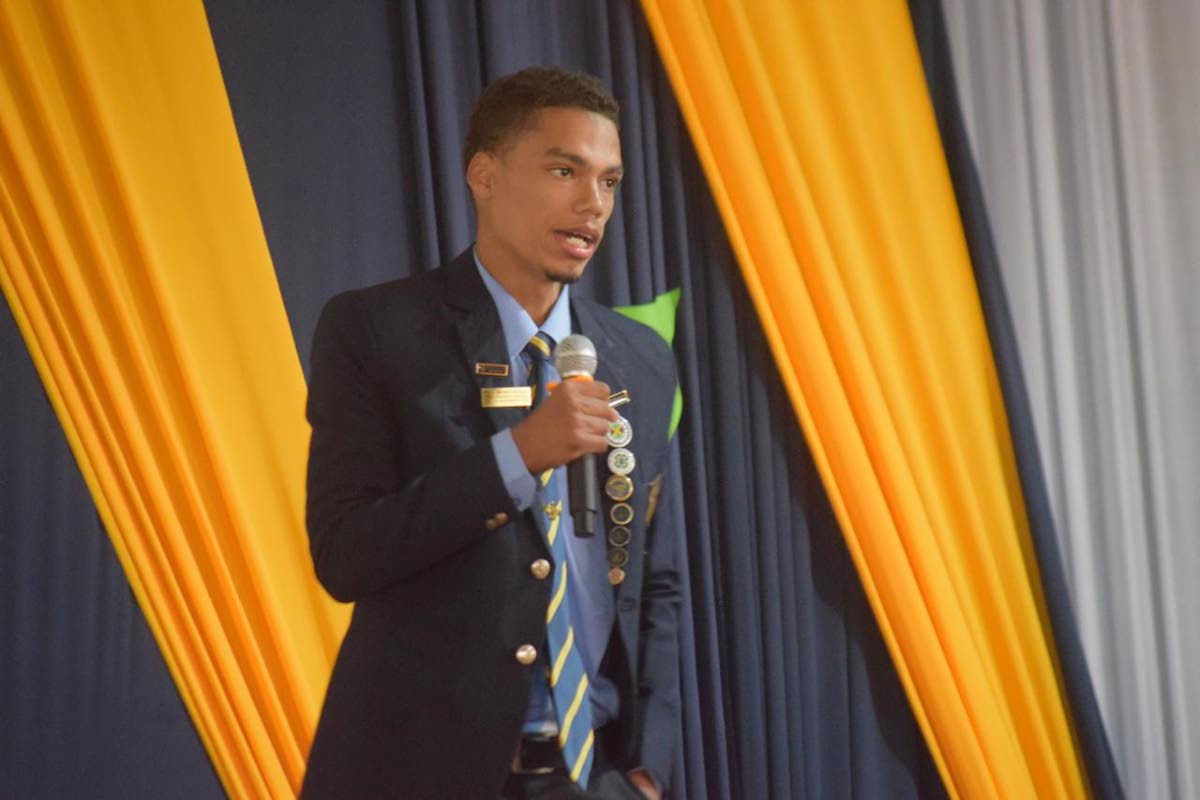 Brian Anderson, the president of the National Secondary Students’ Council.
-
 Maia Chung, the founder and managing director of the Maia Chung Autism and Disabilities Foundation.
WESTERN BUREAU:
The National Secondary Students’ Council (NSSC) is calling for education stakeholders, including teachers, parents, students, and policymakers, to pay greater attention to the issues faced by neurodivergent students in Jamaica’s school system, including those with autism, attention-deficit hyperactivity disorder (ADHD), dyslexia, and other learning challenges.
In an interview with The Gleaner on Friday, NSSC President Brian Anderson said that, based on reports received by his organisation, schools need to create an inclusive environment for neurodivergent students who learn differently from other students.
According to him, the NSSC’s Diversity and Inclusion Task Force had previously stated that Jamaica’s standardised instruction framework may alienate neurodivergent students, whose behaviours include difficulty maintaining eye contact, strong reactions to noises, or needing repetition.
“Neurodivergence remains an underrepresented and often overlooked issue within Jamaica’s secondary school system,” he said. “Behaviours that are sometimes interpreted as indiscipline or lower learning ability actually reflect differences in how students comprehend information or respond to their environment. These students should not be bullied or made to feel excluded.
“Our schools must actively foster inclusive environments where every student feels equally valued and supported. Additionally, teacher training programmes should place greater emphasis on neurodivergence, equipping educators with strategies to effectively support neurodivergent students. With the right understanding, teachers can help ensure that all students are given a fair opportunity to perform to their best ability.”
Anderson cited a recent report made to his organisation where an autistic student, whose name and school were not disclosed, was being shunned by his peers because of his condition and accompanying behaviours.
“We got a report that this student was constantly being bullied and, on one occasion, he randomly ran into a classroom and then suddenly stopped and looked at a girl’s school pins. Everybody tried to move away from him, and they always see him as a very ‘weird’ person,” said Anderson. “It really makes him feel excluded from the typical school environment, because it has him struggling to develop healthy friendships and he is always in constant fear of persons judging him. Because of the way they are stigmatised, such students are afraid to ask for help.”
Notably, last October, Dr Faith Alexander, the former chief transformation officer at the Ministry of Education, Youth, and Information, called for Jamaica’s teacher-training colleges to integrate special education modules into their programmes so as to better equip educators to support neurodivergent learners from kindergarten to high school.
Meanwhile, in commenting on the issue, Maia Chung, the founder and managing director of the Maia Chung Autism and Disabilities Foundation (MCADF), told The Gleaner that the use of terms like ‘neurodivergent’ to describe differently abled individuals should be reduced, as such words complicate efforts to forge solutions for such persons.
“Terms like ‘neurodivergence’ sound like fancy talk, and, in our board’s opinion, it also lends an opaqueness (unclearness) to the issue that is getting worse and worse every day, and the more opaque you make it, is the less likely that we can help them quickly. This whole melee that has erupted around this term needs to be treated like when somebody needs a wheelchair or a hearing aid, especially at the secondary school level, where your core learning is taking place,” she said.
“It is a difference in wiring, so let us figure it out, partner with CARICOM and the World Health Organisation (WHO), and with people who have scientific evidence on this, and call out for help. Treat the matter as if it is the beginning of a solution, stop complicating the issue, and move to solve it, which we should have done 10 years ago,” continued Chung. “The MCADF, in its 18th year, is also calling for mandatory neurodiversity training for secondary school teachers before 2027, because you cannot support what you do not understand.”
April is celebrated annually as World Autism Month, with World Autism Awareness Day celebrated each year on April 2. This year, World Autism Awareness Day was observed under the theme ‘Autism and Humanity – Every Life has Value’.
christopher.thomas@gleanerjm.com