Sean Major Campbell | Ancestors calling for independence
Loading article...
-
-
 Major-Campbell
-
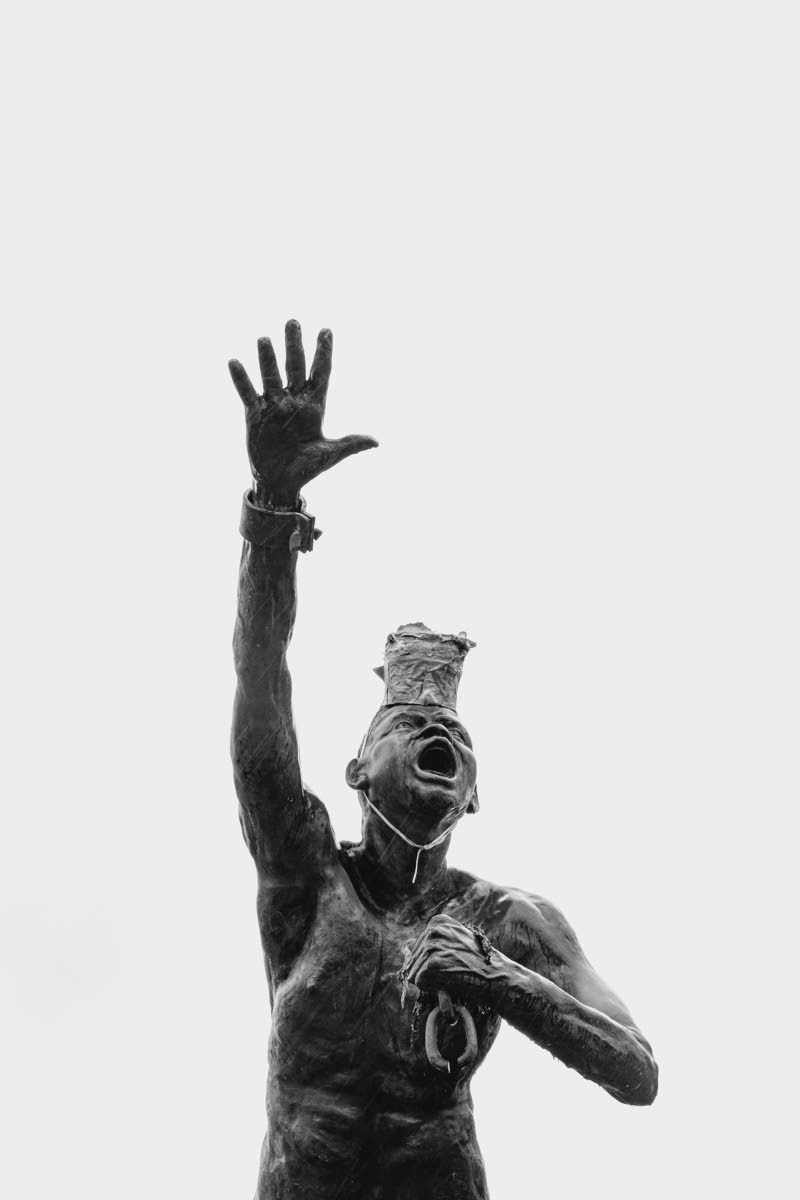
Our African ancestors have questions. The Old Testament reading set in Deuteronomy Chapter 8 is raising questions in the mind. To be more precise, the pericope is verses 11-20. However, the wider context causes critical thinkers to wonder and ponder.
When I read the text in its entirety, I find myself observing that many things about the message to Israel do not apply to Caribbean territories, independent though we may be. The Lord did not promise Jamaica on oath to the ancestors. The Lord may have led the Israelites for 40 years in the wilderness “to test them” but who led the Africans into the 400 years of the transatlantic slave trade?
The text states that the Israelites were being humbled to teach them that they were to live on the word of God and not by bread alone. Was there supposed to be a lesson from the transatlantic crimes against humanity? When the wider context of the lesson declares, “Know then in your heart that as a parent disciplines a child so the Lord your God disciplines you” are the descendants of enslaved Africans to just read on?
This Deuteronomy text is also used for Thanksgiving celebrations in North American contexts. And here in the Caribbean it is used for Independence celebrations. Verse 7 starts with the words, “For the Lord your God is bringing you into a good land … .” Did God really “bring” the ancestors to these lands? I would, however, pause to recognise that Jamaica is indeed “a land with flowing streams, with springs and underground waters welling up in valleys and hills, a land of yams and banana and pumpkin, of guinep and breadfruit trees and jackfruit, a land of star apple trees and honey and ackee and sweetsop and herbs galore.” Suffice it to say that some of these were introduced during the years of the cruel holocaust of slavery.
At best, the text may employ the image of Egyptian bondage to symbolise spiritual slavery. However, there was no divine movement to liberation and independence for our African ancestors who were being shipped from Africa through the middle passage, which saw many meeting a watery grave! Maybe a more understandable image of bondage would be that of the imperial and colonial powers which used religion to launder the transatlantic slave trade.
REVISE THE USE OF THIS LESSON: It may be a gas-lighting experience for the thinking mind to hear a reading that says, “…then do not exalt yourself, forgetting the Lord your God, who brought you out of the land of Egypt, out of the house of slavery, who led you through the great and terrible wilderness, an arid wasteland with poisonous snakes and scorpions.” Should one beware of the literal implications of condemning the Edenic land as a place that was to be escaped and rescued from?
In the call to follow God and the warning to not follow other gods, is there an attack on other spiritualities? A passive reading of the text may indeed yield some traditional religious values. Might the Church, however, consider revising the selection of this lesson for Independence celebrations? Maybe the Caribbean/ ‘West Indian’ church should consider dialogue among indigenous and ancestral spiritualities and Christian hermeneutics.
MEK WI LORN FRAM DI BUK A FAILIIMAN (Let us learn from the Book of Philemon):
On Emancipation Sunday, we noted at Christ Church in Vineyard Town that the Book of Philemon was omitted from the ‘Slave Bible’. One could ill afford to have the enslaved Africans hearing Paul saying to Philemon in verse 10, “ Mi a beg fi mi pikni Oniisimos. Wen mi iina prizn, mi tek im fi mi pikni kaaz a mi elp im fi biliiv iina Jiizas” ( Jamiekan Langwij Bible). (“ I appeal to you for my son Onesimus, who became my son while I was in chains”) ( New International Version).
Verse 16 of Philemon would und erstandably not fit with the wretched ways of inhumane thinking at the time: “Nou im a no jos wan sliev, im a muor dan dat. Oniisimos a yu sliev bot nou im a yu breda tu. Im a yu gud gud breda chuu im biliiv iina Jiizas jos laik wi. Im miin uol iip tu mi an im ago miin nof muor tu yu” (J amiekan Langwij Bible). “No longer as a slave, but better than a slave, as a dear brother. He is very dear to me but even dearer to you, both as a fellow man and as a brother in the Lord” (New International Version).
We need more of these conversations in church and especially in bible study contexts. We need to become more sensitive to how some in the church have conveniently misused the Bible to excuse prejudices, hatred, and crimes against humanity. We need to also be aware of how the weaponisation of Bible and Christianity continue today. Many Christians continue to parade their prayers and Bible verses while despising those with a different colour, class, or creed.
National independence is inseparable from personal independence. Emancipation from mental slavery is inseparable from religious deconstruction, which requires critical thinking processes. And critical thinking refuses to be ensnared by dogma, doctrine, and division often perpetuated in the interest of patriarchy.
There is also the question regarding the meaning of political independence in the prevailing geopolitical dynamics. Will we ever see a Jamaican republic in our lifetime? And will we witness tangible actions in terms of reparatory justice? Pray for reparatory justice.
Paul’s advocacy for Onesimus presents Christians with a paradigm for representing the powerless while speaking with the powerful. Speaking truth to power requires an abundance of psychology marked by intentions for mutually beneficial outcomes. The toxic hype of social media would be antithetical to today’s Onesimuses, whether as an individual or a nation. Peace be with you all. Ubuntu.
Fr. Sean Major-Campbell is an Anglican priest and advocate for human rights and dignity. Please send feedback to columns@gleanerjm.com and seanmajorcampbell@gmail.com