75 years later, the scars of Hurricane Charlie remain
Loading article...
-
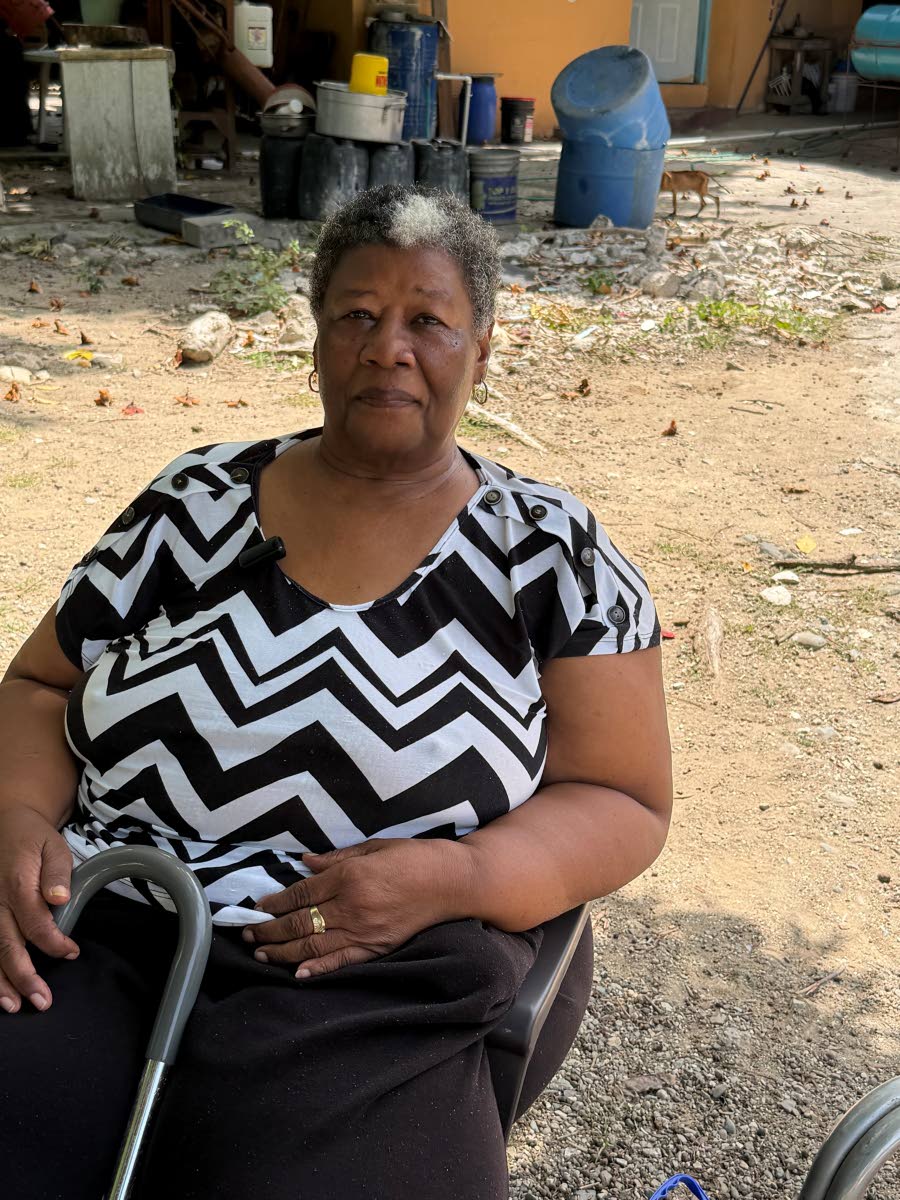 Edna Lindsay Francis
-
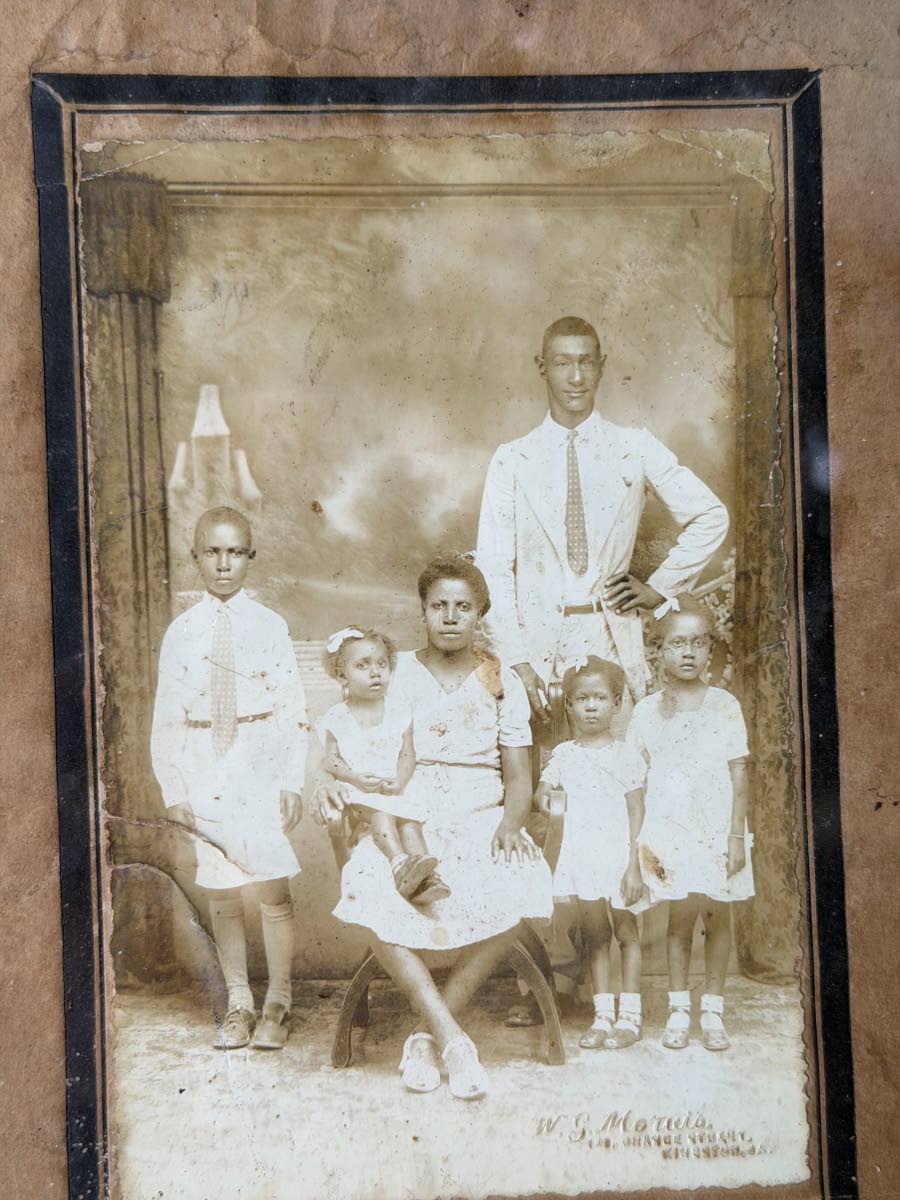 A framed, faded photograph featuring Edna’s father, Aston Lindsay; her mother, Idaline Lindsay; and four young children, a boy, Horace, and three girls, Rosie, Beezy and Monica.
The Gleaner headline of Friday, August 17, 1951, was ominous:
“Hurricane may hit Jamaica today: Bad weather from noon, Crisis in evening.”
It was not a sensational prediction. By the time it was over, more than 150 people had died, many thousands were left homeless, including an estimated 9,000 in the Corporate Area alone, and the trail of destruction included catastrophic infrastructure and business losses that dealt a severe blow to the economy.
The Category 3 storm’s passage across the island began in the east, and it was there, in St Thomas, that its destructive force was initially most concentrated, accounting for more than 50 of those who died.
Ninety-three-year-old Eric Chung still shudders at the memory of the crisis that visited his home that evening.
“We went to bed, and then the breeze started coming. Then it got inside the house and got heavier and heavier until it blow out the window.”
Chung, a schoolboy at the time, was home from boarding school, Munro College in St Elizabeth. Up to that point in his young life, he had no real concept of what a hurricane was. He was now being educated on the intricacies of that definition in real time. It became a heart-pounding, terror-inducing lesson, unfolding bit by terrifying bit.
“Then my brother, who was bigger than me, took me and we went to the centre of the building and, no sooner we went through the door, the roof went.”
They fled to the family’s adjoining shop, which was still intact.
“And then, after a while, I climbed up on a chair and look over. And we were right in front of the market. And I looked there, and there was no market. The building was gone!”
Chung’s family were shopkeepers based in Morant Bay, their property situated directly across from the produce market until that night when Hurricane Charlie tore through the town and severely damaged or destroyed almost every structure in its path.
The destruction and desolation were also evident in nearby White Horses, where Derrick Smith, then just eight years old, lived with his aunt in the teacher’s cottage near the Methodist church.
He later recalled in his memoir, Turning Points, the sense of foreboding that settled over his family on the evening of August 17, 1951.
“ As the sun set … the sky changed from blue to red, a very ominous shade … . We had supper as usual,and, as Maude cleared away the dishes, I took one final look from the veranda at the Methodist church below. Little did I know it was the last time I’d ever see it.”
Now 83, the retired politician, in a recent interview with The Gleaner, relived that night.
“And boy, the hurricane came and lash us, lash us, lash us, lash us, and everybody inside praying and nervous and begging the Lord to spare us.”
During the lull, a couple living next door, whose house had blown down, rushed to his family’s cottage for shelter. By the time they got inside, however, the ferocity of the storm had returned, making it impossible to close the door.
“So the man, the only man in the house, and during the second half of the hurricane, he has to brace the door like this for hours because the door couldn’t lock, and the guy had to spend the rest of the night doing nothing but holding the door like this against the wind.”
Finally, dawn broke and, “much to our amazement, the Methodist church had blown down … the school, gone. Total devastation”.
Then, for weeks following the hurricane, he said, “you would see men carrying injured people on stretcher heading to Morant Bay Hospital (now Princess Margaret Hospital) because roads were blocked. Vehicles couldn’t manage the blocked road”.
It took four days after the storm for Governor Sir Hugh Foot to travel from Kingston to Morant Bay in an army truck, after roads had been sufficiently cleared.
News of hurricane-related casualties in White Horses also became part of the reality that young Derrick Smith had to contend with.
“There were deaths. I can’t quantify, like three or four, but we, we heard discussion by the adults again that so-and-so died or so-and-so drowned.”
The Lindsay family of Norris, a small district farther west in the parish, became the most tragic manifestation of that painful reality.
Retracing a Tragedy
It is mid-July 2026 and we have made the journey to Norris, carefully skirting the 132-year-old Easington Bridge, access to which was rendered impassible by damage caused by Hurricane Melissa in October 2025.
The diversion took us via a ford across the Yallahs River and finally to the gate of Edna Lindsay Francis. At age 72, her face bears the marks of a life lived through good times and bad, but focus on her eyes and you will discern a pain whose origins preceded her own entry into the world.
Shortly after introductions were made under a giant mango tree in her front yard, she dispatched her daughter to fetch perhaps her most precious keepsake: a framed, faded photograph. It features six figures: her father, Aston Lindsay; her mother, Idaline Lindsay; and four young children, a boy, Horace, and three girls, Rosie, Beezy and Monica. Absent from the picture were two other girls, Netty and Patsy.
Born in 1954, three years after the Charlie tragedy, Edna would never meet those five siblings in the flesh, a reality with which she has struggled all her life.
According to the narrative passed down by her mother and father, this was how that tragic Friday evening unfolded. Despite word eventually getting through that a hurricane was likely to hit the island, the couple concluded that, even if it did make landfall, it would not be that night. So Idaline, as was her weekly practice, joined several other vendors on a truck headed for the market in Kingston, leaving Aston behind to care for the children.
However, as the evening wore on, Norris became engulfed in hurricane-force winds and torrential rain.
“And the river come in, break its bank further up the road, and came down on the street, the same street right here,” she said, pointing to the road that runs past her gate.
The river’s flooding would prove decisive in the worst possible way.
Not long afterward, the family’s house was demolished and the father, in desperation, gathered all six children. Together, they rushed into the storm, trying desperately to cross the flooded road and seek shelter in a neighbour’s home. That proved to be their undoing.
“The tree just hit them across the road, down into the river,” Edna explained, recalling the painful story she had grown up hearing.
The following morning, the father and son were found barely alive a considerable distance from their home. Then came the discovery of the bodies of three of the girls. It took several more days for the bodies of the remaining two girls to be found.
The first three were buried at Logwood Cemetery but, by the time the remaining two were found, their physical condition was such that the medical examiner and police determined they should be buried where they were discovered.
“Anywhere they find one of them, they bury them same place. So she was buried under the tree down the road there, a mango tree down there, they say, under a sugar copper; the copper they would boil sugar in. And further down in Heart Ease … they bury she down there.”
The accounts of those interviewed for this review varied in their level of awareness of the imminence of Hurricane Charlie in 1951, but most recalled being taken by surprise.
Communication Challenges
Evan Thompson, principal director of the Meteorological Services Branch in the Ministry of Water, Environment and Climate Change, said that the capacity of his predecessors to determine a storm’s path and issue warnings was significantly more limited than it is today.
“What we had was information coming to the meteorological service, as the system was developing, and then using our channels of communication, we would have communicated that to the general media; the electronic media and the newspapers as well, whatever was available at the time, to just let them know what was developing,” he noted.
However, he conceded that, in 1951, there was far less information readily available on the hurricane’s movement and “not as frequent in terms of the delivery, but we would have, from the meteorological service perspective, continued to move the information from the systems that we had internationally to the local scenario”.
“This system was not one that anybody would have had too much information on previously,” he said, “because communication at the time was not exactly what it is today, in that the message of these systems wouldn’t be communicated in as real time as we are experiencing today with the Internet, et cetera.”
Fateful Decision
Given the lack of readily available, up-to-date information on the hurricane, it is perhaps not surprising that Idaline Lindsay partly relied on folk wisdom to conclude that a storm was coming.
“So my mother told me that, from she was a little girl, her grandmother and mother would tell her that, when hurricane come in, the fowl, the country fowl, they don’t go in anywhere high. They stay down on the ground. So she saw that and she, she said, ‘You know, the hurricane is really coming.’”
Nevertheless, she decided to head to the market in Kingston that fateful day, still confident she would return in time to hunker down with her family in Norris.
It was not to be.
“So. while she was in Kingston now – and the funny thing about it, they didn’t have any radio or telephone to tell her that the hurricane was coming. And while she was at the market is a man ride a bicycle from here, come to Kingston go tell them that the hurricane came and all that she have gone. And she said she walk from Kingston with a pregnant belly. And she said, when she came, everything flat. Walking on the road coming, everything down, everything flat. But, at the time, she did not know what was left here, because the man didn’t tell her (that) the children had washed away or anything. So, is when she came to the spot where the house was, she say, she found out that everything, the house, everything was gone.”
And so, too, were her five young daughters.
editorial@gleanerjm.com