Sean Major-Campbell | Cries from the ocean floor
Loading article...
-
 Major-Campbell
-
Is there a place for forgiveness in conversations around the transatlantic slave trade? Since the Caribbean has a rich Christian tradition, shouldn’t we be more willing to forgive the colonial masters, rapists, murderers, and the various agents of the holocaust of slavery? Isn’t this what Jesus would want us to do?
An exciting event looms later this year (November 12-15) in Montego Bay, Jamaica. It is The Transatlantic Reasonings Conference, which states, “The conference organisers comprise academics and practitioners based in the UK, Jamaica, and the USA, representing the academic disciplines of history, theology, ethnomusicology, and English, in partnership with the Anglican Diocese of Jamaica and the Cayman Islands, The Centre for Reparations Research, Jamaica, and The United Society Partners in the Gospel (USPG). The conference is endorsed by the University of Leeds, UK.”
Who is ready for the theme ‘The Possibility of Forgiveness? Encountering the Legacies of Colonialism in the 21st Century’ ?
I say a resounding “NO” to perfunctory forgiveness. it resonates with early childhood contexts which teach children to say “sorry”, shake hands, and share a hug to show forgiveness and make up. The forgiveness talk in the context of the prevailing darkness of the transatlantic holocaust of slavery is too brutally savage for us to play placating games of Christian niceness.
Today’s evils of systemic racism, white supremacy, white God, White Jesus, and white-washed theologies continue to destroy lives, livelihoods, and a redeemed sense of self for generations yet unborn. The ancestors have fed not merely sour grapes, but centuries of merciless bitter poisons, self-deprecatory stigma, and a restructured DNA that ensures some ongoing degree of self-contempt which informs the challenging quality of all relationships!
The unpardonable crimes of the transatlantic holocaust of slavery require generations of teaching the continued and ongoing beneficiaries of these historic crimes against humanity. They will need a process of re-humanising their character and sense of common humanity before they are able to even appreciate and receive forgiveness. To call on the descendants of the cruelly enslaved ancestors to have a conversation on forgiveness is akin to inviting a sexually abused child to forgive the merciless predator while invoking the lovely will of God.
Psalm 51:10-12 presents us with a lovely prayer in some beautiful words: “Create in me a pure heart, O God,
and renew a steadfast spirit within me.
Do not cast me from your presence
or take your Holy Spirit from me.
Restore to me the joy of your salvation
and grant me a willing spirit, to sustain me.”
Psalm 51:3-4, however, came before: “ For I know my transgressions,
and my sin is always before me.
Against you, you only, have I sinned
and done what is evil in your sight;
so you are right in your verdict
and justified when you judge.”
This is why reparatory justice is not a joke. It can only be exercised by a resurrected humanity that has awakened to conscience that appears to be still lost in so far as the outstanding acts of corporate confession, contrition, and acts of reconciliation are necessities for the process of healing.
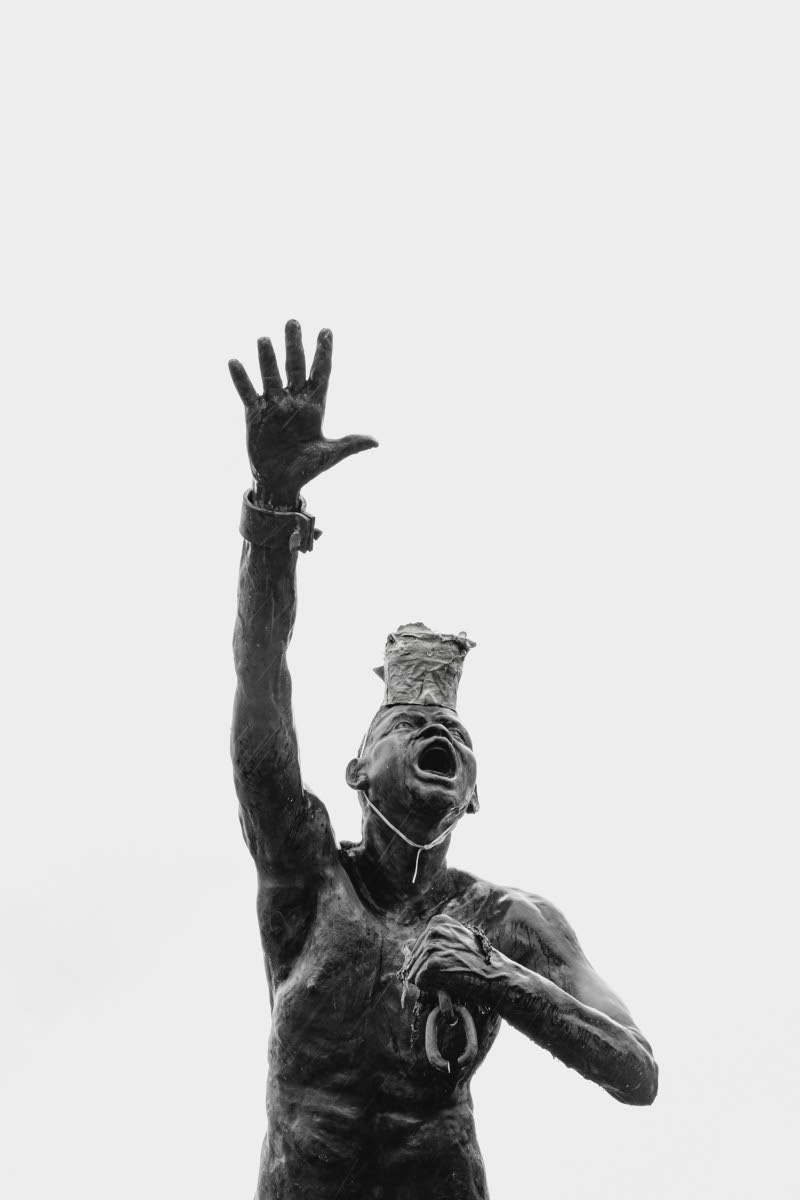
In preparation for the transatlantic reasonings, let us pause for some deeper vibrations from the ancestors who went to the floor of the Atlantic. In chains. A watery grave. A journey imposed. And a return ended! And the one thing the vast oceans still do is to carry history’s truth on the waves. So, for those who admire the turquoise waters of touristy fame, these waters are the mass graves of our dear ancestors screaming, still screaming for justice beyond the grave. When next you touch these beautiful waters, hold a thought for justice.
much needed conversation
This exciting conference on the horizon includes the participation of a Jamaican clergyman who is also the Rector of St Mark’s Anglican Church in Brown’s Town, St. Ann on the north coast of Jamaica. An informative narrative notes, “ The Scottish Episcopal Institute welcomes Rev Dr Garfield Campbell as Research Associate – a member of the project team to deliver the Durham University Seedcorn Grant funded: ‘Teaching the Legacies of Slavery in TEI’s: Exploring teaching practice concerning the transatlantic slave-trade and reparations.’
I could not miss the resonance of the name ‘Campbell’ being associated with the work of the ‘Scottish’ Episcopal Institute and the transatlantic slave-trade and reparations. If your surname is Campbell (from Jamaica), history teaches us the following:
1. You have ancestors who are from Ghana.
2. The said ancestors were bought to serve plantations owned by Scottish planters.
3. Campbell is the most common Jamaican surname.
4. Ghana was a popular source of origin for the slave trade.
5. The Scottish featured significantly in human trafficking in Jamaica.
6. The enslaved given the name ‘Campbell’ were those on Scottish-owned plantations.
(Overlapping repetitions deliberate in my narrative here.)
It is most fitting that Rev Dr Campbell is serving in the capacity of advancing this much-needed conversation. #TransatlanticSlaveTrade #ReparatoryJustice. Distinguished Professors Anna Kasafi Perkins and Matthew J. Smith, Speakers for the Transatlantic Reasonings Conference, will no doubt bring their inspired energy and excellence to this much-needed conversation.
The reader may decide whether Jesus would centre a call for forgiveness or condemn oppression and stand with the oppressed, the poor, the victims of systemic racism and white supremacy.
Let us pray for reparatory justice: God of peace and justice, grant us an awakened conscience. Let the powers know that you are lifting the humble and casting down the mighty. Scatter the proud in the imagination of their hearts. Fill the hungry with good things. And grant that reparations be blessed for the sake of a better humanity on the part of those who owe others, and those who are owed. Àṣẹ. Amen. Namaste. Ubuntu.
Fr Sean Major-Campbell is an Anglican priest and advocate for human rights and dignity. Please send feedback to columns@gleanerjm.com and seanmajorcampbell@gmail.com