Norris R. McDonald | America and CARICOM’S psychology of ‘glad dependency!’
Loading article...
-
 Norris McDonald
-
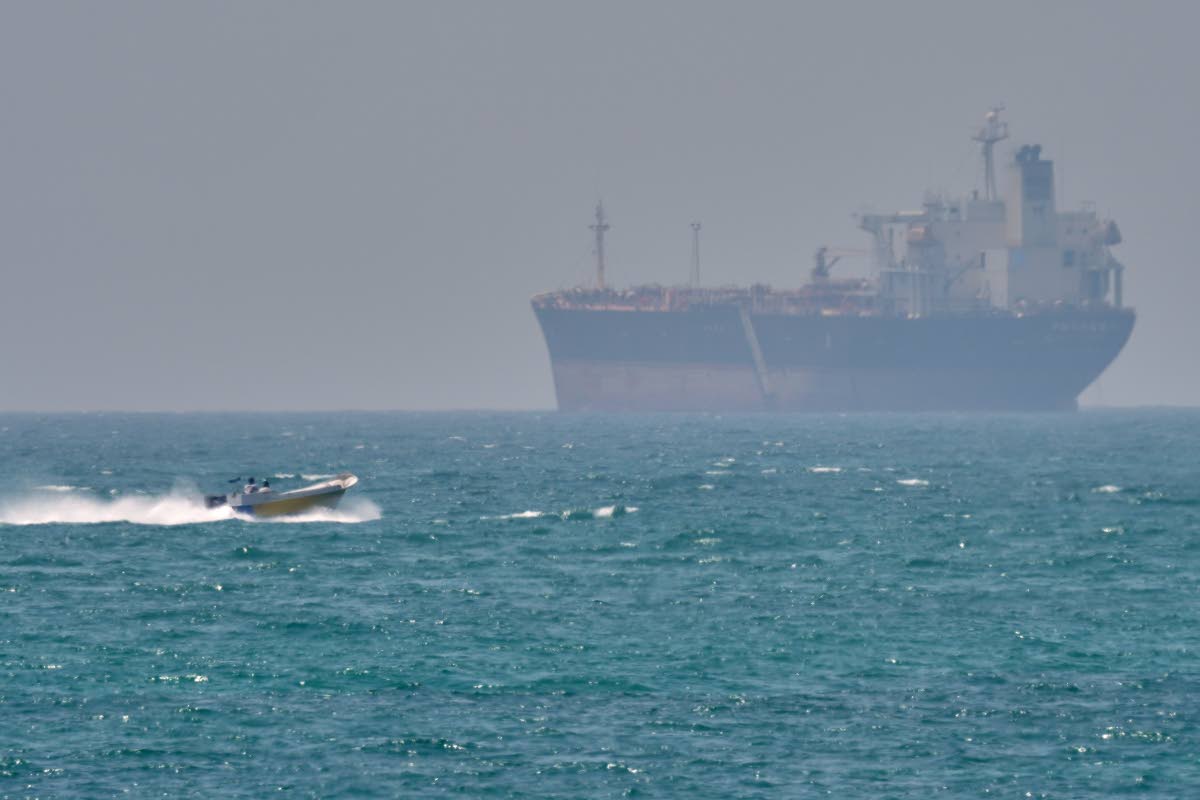 In this file photo, a boat sails past a tanker anchored on the Strait of Hormuz off the coast Qeshm island, Iran, on April 18, 2026.
Dr Eric Williams, in From Columbus to Castro, warned that the Caribbean suffers from a crippling psychological dependence that shapes every aspect of life – economic, cultural, and political. Centuries of colonial subjugation, he argued, left the region perpetually looking outward for validation and resources. He also warned that continued regional fragmentation would be the Caribbean’s downfall.
Fifty years later, this insight remains painfully relevant. Caribbean nations remain trapped in a web of external influence where sovereignty exists in law but is constrained in practice – by pragmatism, fear, or political opportunism, depending on one’s perspective. Caribbean leaders, burdened by this dependency mentality, have only themselves to blame for being boxed into what increasingly looks like an existential crisis.
AMERICAN MILITARISM AND RUMP’S THREATS
Consider the cases of Cuba and Venezuela. Both countries have endured persistent US military threats. We have witnessed the cold, brutal killing of Caribbean and Venezuelan fishermen by the US. We have also seen former President Donald Trump order and instigate the attempted kidnapping of President Nicolás Maduro and First Lady Cilia Flores. Following these acts of bravado, “God King” Trump boasted that Cuba was next.
He later took a detour through Iran and is still wondering how 17 American bases in Gulf Arab states could have been struck in such a short period. America’s strategic military setbacks in Iran have, in my view, significantly reduced the likelihood of further global misadventures. They may also reduce the possibility of any direct military attack on Cuba.
Nonetheless, Cuba once again found itself under intense US pressure, with little meaningful regional support. Faced with an oil blockade and the threat of invasion, modest Russian oil shipments – escorted by military assets – demonstrated that alternative alliances can bypass US coercion. As the old saying goes: duppy know who to frighten.
The embargo, long used as a tool of American domination, is no longer absolute. Yet the geopolitical stakes for Caribbean states remain dangerously high.
Cuba, however, is a cohesive, militarily capable country that continues to enjoy broad popular support for its socialist revolution. This is not an abstract claim. It explains why the Cuban Revolution has survived more than 60 years of economic blockade by the United States.
Trump’s rhetoric toward Cuba reveals the enduring anti-sovereignty impulse of American foreign policy. Yet US setbacks elsewhere, combined with Russia’s engagement with Havana, illustrate the limits of unilateral dominance.
THE POLITICAL ECONOMY OF DEPENDENCY
The Caribbean, despite decades of political independence, remains – just as Eric Williams warned – fragmented and politically dependent on American approval and rewards for “good behaviour.”
Dependency is now systemic. It is not only financial, but institutional and strategic. It operates through three overlapping channels.
First, fragile economies remain structurally dependent on tourism, remittances, and external services, forcing the region to operate with outstretched begging bowls. There is little evidence of cohesive national or regional industrial “break-out” strategies.
Second, due to weak political and economic integration and the absence of strong regional governance structures with enforcement power, Caribbean states are largely unable to resist external dictates.
Third, political vulnerability: Caribbean countries are compelled to absorb the consequences of decisions made in Washington, Beijing, or Moscow, often with little or no influence over the outcomes. This creates a condition best described as managed dependency.
TRADING MORALITY FOR ECONOMIC SURVIVAL
This deep-rooted economic dependence is compounded by what Williams correctly described as psychological dependency. Even without a clear quid pro quo, some Caribbean leaders appear willing to breach international law simply to curry favour with Washington.
Trinidad’s reported statements regarding Venezuelan fishermen – that “America must kill them all”– represent a shocking betrayal of morality, ethics, law, and regional solidarity.
This is precisely what Williams warned against. Caribbean nations can negotiate, hedge, and survive – but genuine autonomy requires confronting the legacies of empire, resisting structural coercion, and cultivating internal resilience.
Williams’ warning rings louder than ever: reclaiming Caribbean confidence, economic initiative, and political agency is the path to true sovereignty.
The central paradox remains clear. Caribbean states are formally sovereign yet structurally constrained. Militarism and economic integration with external powers are not imposed in single acts; they accumulate over decades. Cooperation with the United States can undoubtedly enhance security, training, and economic opportunity – but only within strictly defined limits.
The challenge, as Williams would have insisted, is to distinguish between cooperation that expands autonomy and cooperation that quietly replaces it with moral subjugation and political servitude.
THE PSYCHOLOGY OF ‘GLAD DEPENDENCY’
CARICOM’s perpetual fragmentation, combined with psychological dependence, a lack of self-confidence, and an absence of genuine self-reliance, now reflects the full realisation of Williams’ warning.
Today, the political impotence of Caribbean leadership is paraded before the world.
Yet, if there is a saving grace for Cuba, it is this: following the debacle with Iran, Trump’s bluster toward Cuba appears increasingly hollow. Russia’s ability to break the oil blockade – using a submarine to escort tankers – underscores this reality once more.
Again, duppy know who to frighten.
Lessons from Dr Eric Williams
The lesson Williams articulated remains urgent. The Caribbean must confront both the psychological and structural roots of dependency.
The goal is not to reject engagement with global powers, but to ensure that such engagement expands – rather than replaces – true sovereignty.
The bottom line is simple: while the Caribbean walks a geopolitical tightrope, it cannot trade dignity, political morality, and regional solidarity for a mess of pottage.
Militarism, dependency, and external influence define the terrain. Navigating it demands prudence, foresight, and an unflinching understanding of the forces Williams described decades ago.
Survival may be strategic and pragmatic – but it must never descend into soul-selling subservience.
That is the bitta truth.
Norris R. McDonald is an author, economic journalist, political analyst, and respiratory therapist. Send feedback to columns@gleanerjm.com or miaminorris@yahoo.com.