Mark Wignall | When the dangerous lottery scam sneaks up decently
Loading article...
-
 Representational image. Photo - Julio Lopez / Pexels
-
Representational image. Photo - Julio Lopez / Pexels
-
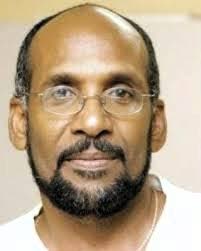 Mark Wignall. Photo - File
The lady rented the two rooms under the accommodation set out on the Airbnb platform, and for two days, the specific guests in question met all of the requirements of basic honesty and the standard that one would expect from the couple as they interfaced with the other guests and the operator of the business – sometimes there, most times absent.
They chatted in the living room, drank rum and smoked ganja, and laughed a lot.
They hardly cooked but ordered food from the huge number of fried-chicken suppliers. For travel, they mostly used Uber. Travel was inexpensive from Meadowbrook. When they interacted with the operator, it was top-class and filled with respect. They were dark-skinned, so they fell between the operator thinking they were ‘one of us’ and allowing her imagination to run wild.
They smiled freely while conversing and giving information. It was difficult to determine exactly where they were from. Mostly, they sounded local or like islanders who had travelled. They occupied two rooms. In one was a couple. The other room was occupied by a big fellow.
And then it happened. The operator was upstairs one day when she saw one of them around the backyard on a bench speaking on the phone and using an accent that jumped out at her. Definitely a cross between Jamaican and American-Jamaican. Even so, they had five more days remaining, so she wanted to give them the benefit of the doubt that they were not choppers and gang-bangers.
The lady host had the spot as her main source of income, and she did reasonably well in her efforts. There were times when she experienced troubles, but in time, when they interacted, the mix of guests and operators usually brought the problems to a reasonable solution. She was aware that in Jamaica, lottery scamming, like gun-running and involvement in gangs, when taken separately, are serious criminal offences punishable by law.
Not only that, but by the business operator’s proximity to the scamming, she could become involved in matters relating to guns and gang activity, with police and gunmen believing that she was in possession of lead lists, and for that reason, worth chasing down and eventually killing.
It stepped up a few days later. A close friend of the business operator was in his room when one of the individuals who formed a couple came out in style, accent, and tenor, saying, ‘All you have to do is send the funds as requested, and you will be presented with exactly as I have set out to you. It’s a surefire guarantee. You have nothing to fear. Within five days you will be on the way to becoming a filthy rich woman, and you’ll be sorry you didn’t grab this opportunity!’
When he told her, she grew apoplectic. “Oh, my God! The little business I have that helps me when my back is against the wall, now it is going to attract police and guns.”
Her business was in Meadowbrook, a very quiet part of St Andrew. One of those places where the demand for accommodation and the rents are always in constant motion.
“Easy, easy, easy. Be quiet. Be calm. No need to fret,” he said. “Just leave it to me. I’ll solve it.”
Her friend had no idea what to do.
The first part of the solution came from a highly unexpected place: the big guy.
“Boss.”
He led him to a section of a verandah.
“Mi nuh inna it. Mi know yu hear when him a chop. Mek mi jus tell you again. Is mi bredrin, but mi not involve.”
The friend of the business owner examined his eyes and his upper and lower body movement.
“I believe you,” he said.
One day he heard the girl, much more expert than her boyfriend.
“What do you think made me and my friends rich? Don’t lose this opportunity, under any circumstances.”
Wow! She was no less expert.
After that, they left the house as if they were about to make a collection. The friend grew nervous. What if the police or scammer adversaries, in vicious modes, should track them and lead them to the Meadowbrook residence? Shoot-out? Death?
At that stage, as far as the friend was concerned, he had to step in.
When they returned, he summoned the couple.
“Yow! All a wi inna wi tings. Wi haffi hol’ on to business. A know what unnu into and mi not fighting unnu. But a begging unnu, keep it away from the house, di lady.”
The couple grew pleasant.
“Boss man. Wi understand.”
Then he offered the man J$100,000.
“Jus a little ting fi you.”
“No, no, no. Are you crazy? Get me involved?” the man said. “It’s OK. Just do yu ting and leave.”
The next day they left. Still, they made the offer, and still it was refused. Accept that offer? And the possibility of being hit in the chest, the head, or elsewhere by a bullet? Absolutely no way!
PM NEEDS TO STEP FORWARD
Earlier this week, PNP President Mark Golding complained that there are those in the civil service who are frustrating government programmes and are a “dense layer of bureaucracy”.
Prime Minister Andrew Holness has been PM for more than 10 years. Why has he not dealt with this “dense layer of bureaucracy” since it is his own observations that identify it? Questions beg themselves. Why did the Hon Prime Minister not make the civil service more efficient? Instead, after more than 10 years in power, he chose in October 2026 to complain about the civil service.
Not knocking the PM, but a true leader, while making errors, will find solutions, inspire those around him to excel and perform, accept responsibility for failures, and make sure the same failures do not happen again. Dr Holness, that is simply the real deal. Less complaining, less blame. Set up the system so that the most gets done. Less suffering. Less shame.
Will there be a terrible political fallout? That remains to be seen. Maybe Melissa has a hell of a lot more hurt to do to a lot more people.
Forward ever, backward never has to be the mantra of PM Holness.
Mark Wignall is a political and public affairs analyst. Send feedback to columns@gleanerjm.com and mawigsr@gmail.com