Schools reopen across Cuba as fuel, water and power shortages persist
Loading article...
-
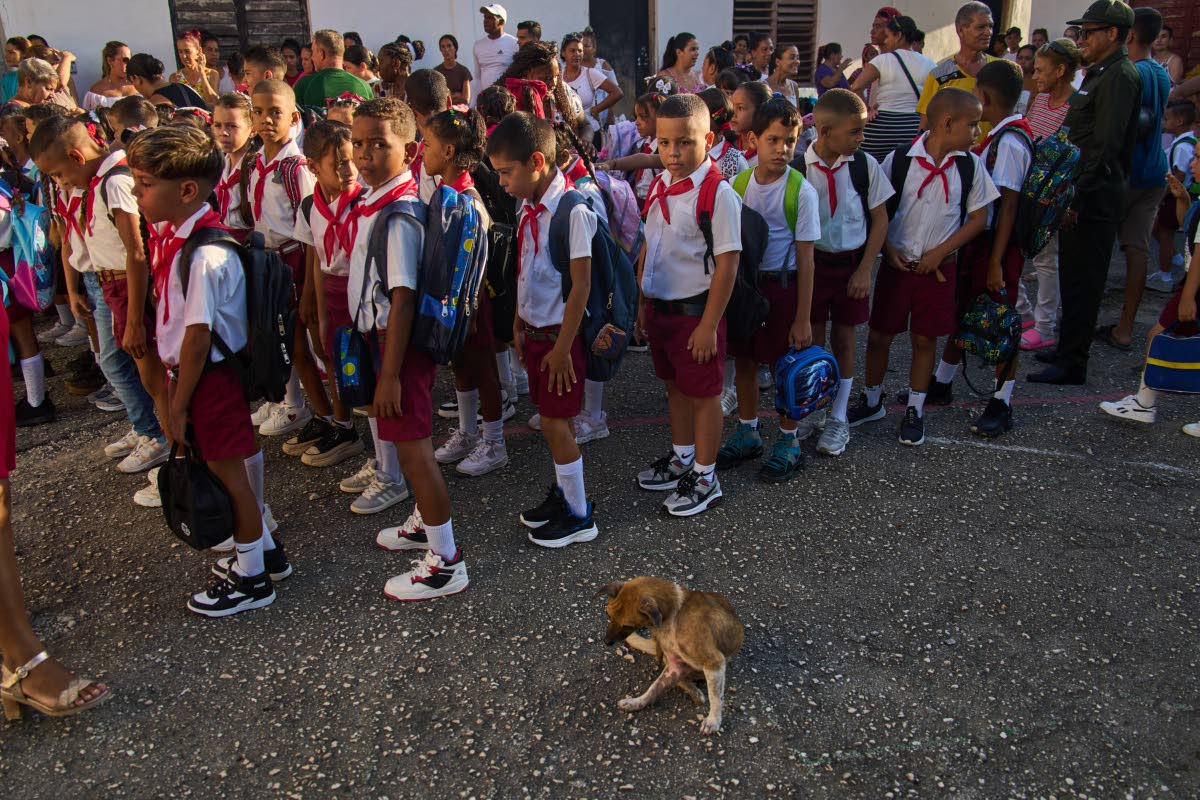 Children line up for their national anthem in the school courtyard where a stray dog sits by on the first day back to school in Minas, Cuba's Havana province, Tuesday, Sept. 1, 2026. (AP Photo/Ramon Espinosa)
-
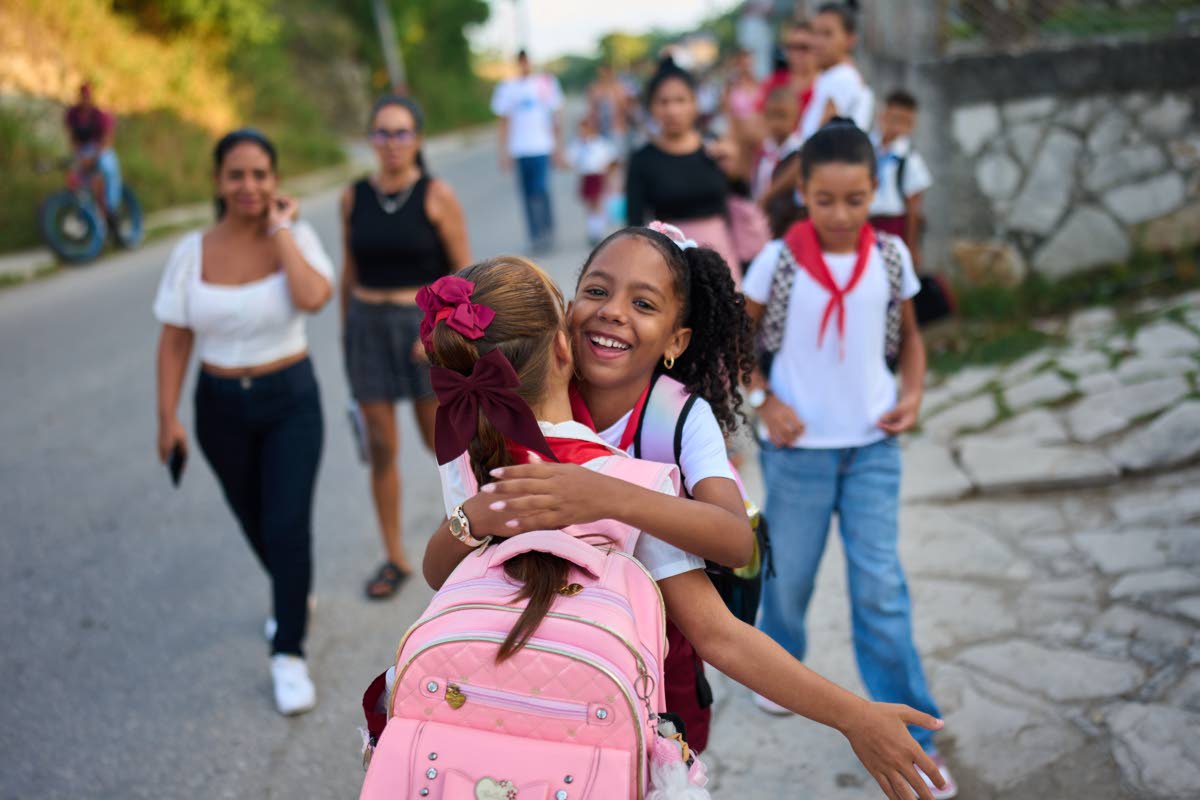 Girls hug as they arrive to school for their first day back to classes in Minas, Cuba's Havana province, Tuesday, Sept. 1, 2026. (AP Photo/Ramon Espinosa)
LAS MINAS, Cuba (AP) — The Barroso family rose at dawn and hitched a cart to a borrowed horse to take their daughters to school on Tuesday, the first day of classes for many students across Cuba.
As the crisis deepens on the island, thieves recently stole the family’s horse and killed it for food, so the Barrosos now rely on a borrowed animal for transportation because school buses aren’t running.
Fuel, teachers and uniforms remain scarce as the new school year begins.
More than 10,000 schools were expected to open their doors on Tuesday, welcoming an estimated 1.4 million children and more than 135,000 teachers.
The island’s education minister acknowledged ongoing challenges, calling the reopening of schools a “heroic act” for an island whose free and universal education system was long considered a crowning achievement of the 1959 revolution.
But the island’s multiple crises forced the government to end the previous school year in June — one month early. Conditions have only worsened, with persistent power, water and fuel shortages compounded by a US oil embargo and longstanding sanctions.
“This academic year has been the most disastrous one,” said Leanete Barroso, mother of two daughters.
As schools reopened, President Miguel Díaz-Canel touted the achievement, writing on X that it was something “the empire sought to prevent with its plan of strangulation.”
Cuban Foreign Minister Bruno Rodríguez echoed those sentiments.
“No energy blockade, threats, intensified embargo, or secondary sanctions will prevent us from continuing to preserve and develop the achievements of the Revolution, attained under the leadership of Commander-in-Chief Fidel Castro Ruz,” he wrote on X.
As students entered their respective schools, they saluted the Cuban flag and sang the national anthem, which includes this line: “To die for one’s country is to live.”
A widespread lack of professors prompted the government to send more than 3,000 teachers from Cuba’s eastern provinces to schools in Havana as teacher coverage fell to 73% across the island. The vacancies are blamed on low salaries and emigration.
Education Minister Naima Trujillo Barreto implored Cubans to help fill the gaps, calling on university students, professionals and even retirees.
“Everyone is invited — anyone who has something to contribute,” she said at a recent news conference. “You might be at home, perhaps retired, and eager to meet a group of children who need lessons in the very subject you know better than anyone else.”
Librarian Sura Victorero Llerena answered the call. She retired this year but rejoined the school where she worked for 39 years: “I came back because I want to help. ... We are like a family. We all pull together to make sure things turn out well.”
Meanwhile, parents and those in the private sector are expected to help provide school meals, with some schools only reporting a 15-day supply of food, according to state media.
School uniforms also were largely unavailable as the new school year began, meeting only 12% of demand at the primary level.
“No workshop can operate without electricity. Without fuel, we cannot transport fabric from one part of the country to another,” Trujillo Barreto said. “Without money or the ability to import, no fabric comes in either.”
Follow The Gleaner on X, formerly Twitter, and Instagram @JamaicaGleaner and on Facebook @GleanerJamaica. Send us a message on WhatsApp at 1-876-499-0169 or email us at onlinefeedback@gleanerjm.com or editors@gleanerjm.com.