Jamaica shifts on Cuba
Loading article...
-
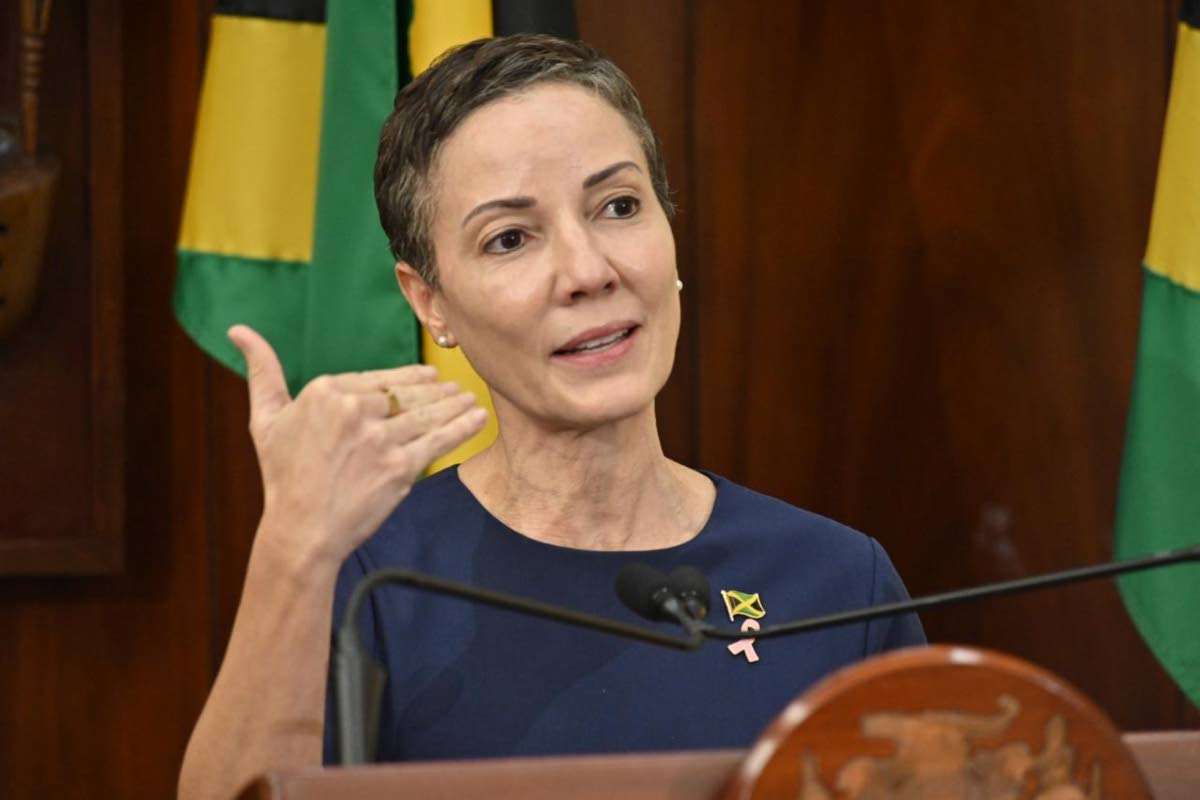 Senator Kamina Johnson Smith, minister of foreign affairs and foreign trade, addresses yesterday’s post-Cabinet meeting at Jamaica House in St Andrew. Photo - Rudolph Brown/Photographer
-
Senator Kamina Johnson Smith, minister of foreign affairs and foreign trade, addresses yesterday’s post-Cabinet meeting at Jamaica House in St Andrew. Photo - Rudolph Brown/Photographer
-
-
 Damion Gordon
-
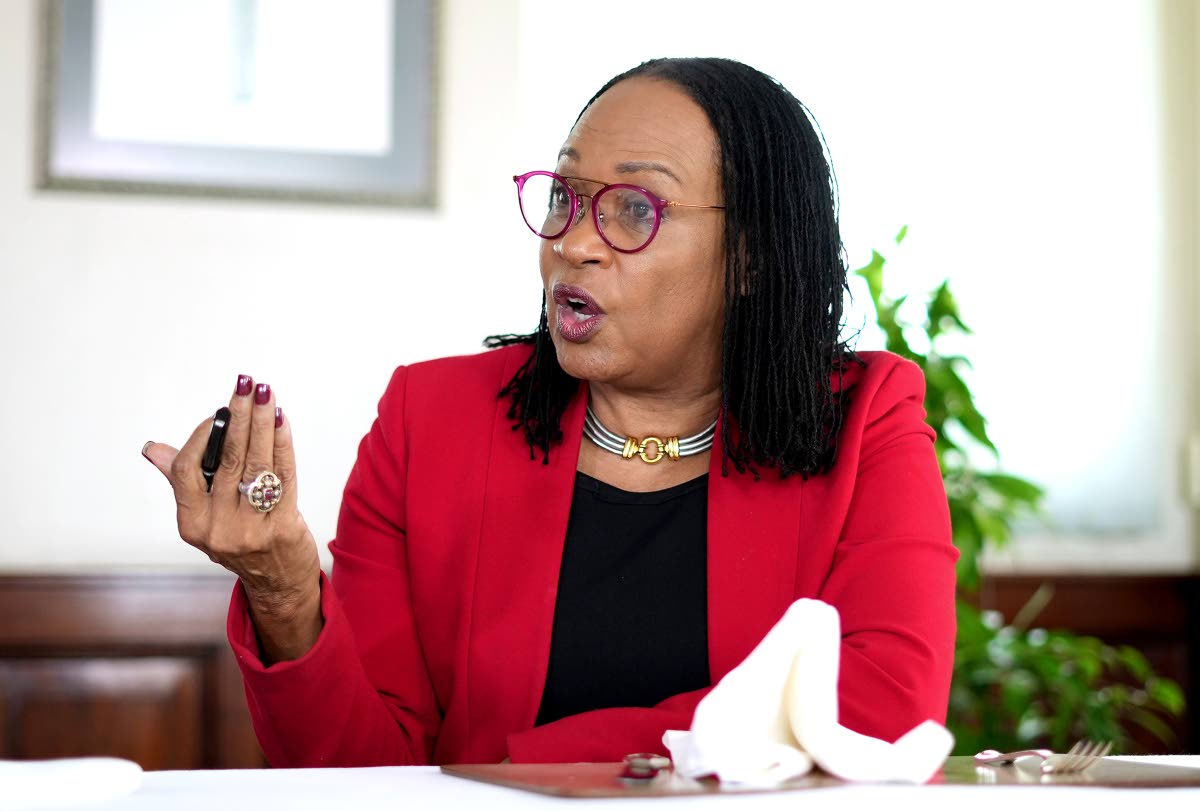 Donna Scott-Mottley, opposition spokesperson on foreign, regional and diaspora affairs. Photo - Gladstone Taylor/Multimedia Photo Editor
The Government of Jamaica owes its citizens a better explanation for why it abstained from the United Nations General Assembly vote on the United States’ (US) embargo against Cuba, a political analyst has contended, arguing that Foreign Affairs Minister Kamina Johnson Smith’s explanation does not adequately justify the “radical” shift in policy.
University of the West Indies lecturer in the Department of Government Damion Gordon said the vote continued a pattern of policy shifts regarding Cuba and departed from the historical solidarity ties shared with Jamaica’s closest neighbour.
“It didn’t start with this resolution. We also saw a suspension of the medical arrangement we had with Cuba. And then people were asking questions at that time as well,” he said.
“It’s a pattern. It’s not a one-off thing,” he continued.
Gordon noted that this was the first time Jamaica had abstained from the resolution since it was introduced in 1992.
Johnson Smith announced Jamaica’s decision at Wednesday’s post-Cabinet press briefing, explaining that the Government had been reflecting on the matter for some time.
She said the decision represented a shift in policy, while emphasising that Jamaica remained concerned about the worsening humanitarian situation in Cuba and supported dialogue between Washington and Havana.
“We did not vote ‘against’ because we do not support unilateral action in accordance with the UN Charter, and we did not vote ‘for’ because it is clear that continuing to do the same thing each year to support the resolutions, simplicita, with not only no improvement in the circumstances, but in fact a deepening of the humanitarian crisis and suffering, this does not serve the benefit of the Cuban people,” she said.
The minister highlighted a parliamentary motion moved on Tuesday expressing deep concern about Cuba’s economic and humanitarian situation. It also advocated internal economic and human rights reforms and supported constructive US-Cuba dialogue to reduce economic restrictions and facilitate Cuba’s progressive integration into the global economy rather than keep it isolated under the embargo.
“These broader concepts are not included in the resolution before the United Nations, and there is no scope to adjust the language of the resolution. We therefore abstained,” she said.
MORE THAN INTERESTS
However, Gordon countered that the realities outlined by the minister had confronted the Cuban people for decades, yet Jamaica had consistently voted in favour of the resolution calling for an end to the embargo.
He contended that Jamaica’s vote aligned with the broader direction of its foreign policy, with the country prioritising its relationship with the US, which carries significant economic, security and diplomatic importance.
“The challenge, however,” he noted, “is that foreign policy is not only about strategic interests. It’s also about the values and principles that countries have historically defended.”
The vote came amid an intensifying campaign by US President Donald Trump’s administration to pressure the Cuban Government to change its political and economic system.
Washington has sought to persuade countries to oppose the resolution, arguing that the embargo is necessary to hold Cuba’s communist government accountable for corruption and alleged human rights abuses.
Information Minister Senator Dr Dana Morris Dixon told journalists yesterday that the Jamaican Government had not been pressured by the US to abstain.
“There was no one influencing Jamaica. Jamaica is a sovereign nation, and Jamaica made a decision to abstain,” she said.
Gordon also highlighted the unusual shift in CARICOM’s voting pattern.
While the region has historically supported resolutions calling for an end to the embargo, only seven CARICOM countries supported the measure this time. Trinidad and Tobago voted against it, while Guyana and Haiti were among those that abstained.
“CARICOM’s traditional unity on this matter has been clearly weakened,” he said.
He noted that the shift came at a time when the US was placing greater emphasis on transactional relationships with CARICOM over issues such as immigration and security, visa policies and other areas of functional cooperation.
“Several of the countries that have either abstained or voted against the resolution or did not participate have significant engagement with Washington,” he said.
The US has maintained an embargo against Cuba for 66 years, while the UN General Assembly has voted for 34 years to call for an end to it.
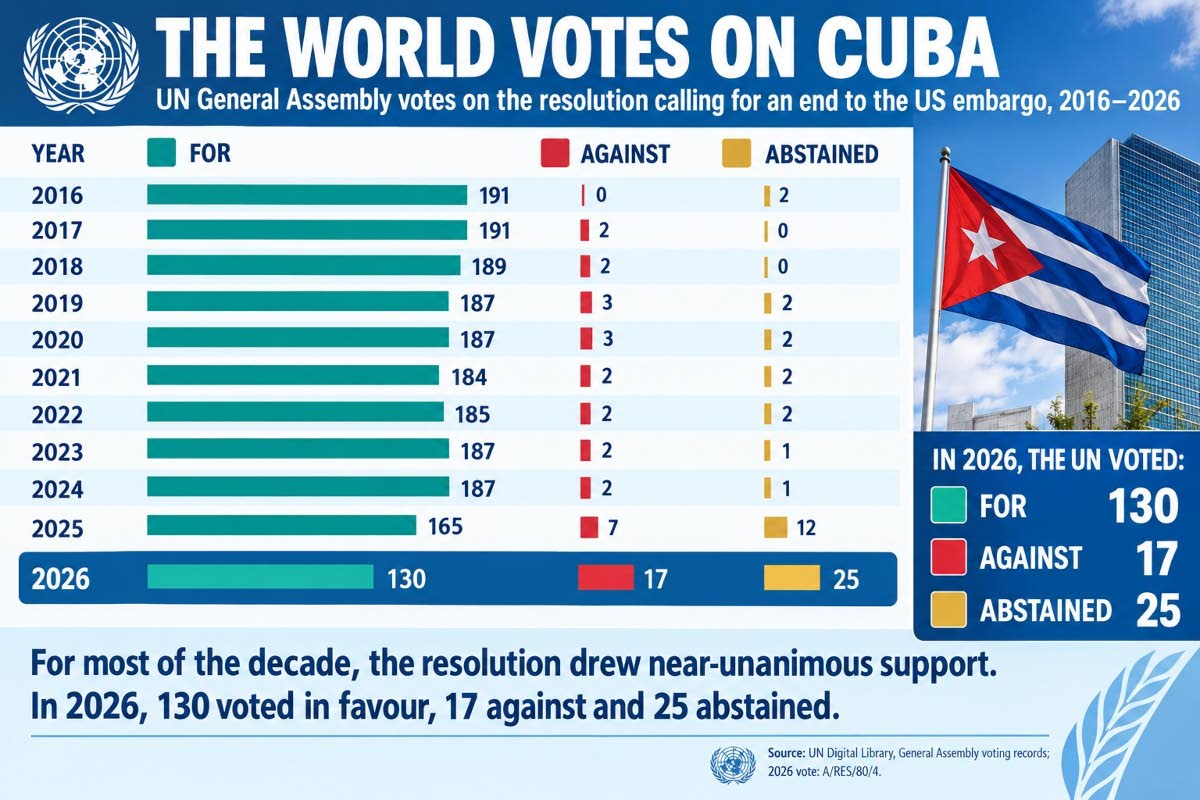
The General Assembly voted 130 to 17 in favour of the resolution on Wednesday, with 25 abstentions, marking a significant decline in support compared with last year, when 165 countries backed the measure, seven voted against it and 12 abstained.
Although General Assembly resolutions are not legally binding, they are widely regarded as an indicator of international opinion.
Gordon also chastised the Jamaican Government for what he described as a dereliction of its duty to uphold international human rights and help bring an end to what he characterised as a policy of collective punishment against the Cuban people.
“The reality on the ground in Cuba is that the people are experiencing serious challenges including shortages of food, shortages of medication, fuel, and they don’t have access to many basic amenities that we take for granted here in Jamaica,” he said.
Cuba’s humanitarian crisis has been exacerbated by a US-imposed fuel blockade that has sharply restricted the island’s access to oil, worsening fuel shortages and contributing to widespread power outages and disruptions to essential services.
The Opposition People’s National Party is also demanding answers from the Government, describing the decision as a matter of grave concern.
In a statement yesterday, Opposition Spokesperson on Foreign, Regional and Diaspora Affairs Donna Scott-Mottley said the principles of sovereignty, non-interference and respect for international law remained especially important to small states such as Jamaica.
“For decades, Jamaica has joined the overwhelming majority of the international community in calling for an end to the embargo against Cuba. That position has transcended changes of administration and has reflected our commitment to sovereignty, self-determination and the right of nations to pursue their development free from external coercion,” she said.
sashana.small@gleanerjm.com