Ruthlyn James | Development without environment is an illusion
Loading article...
-
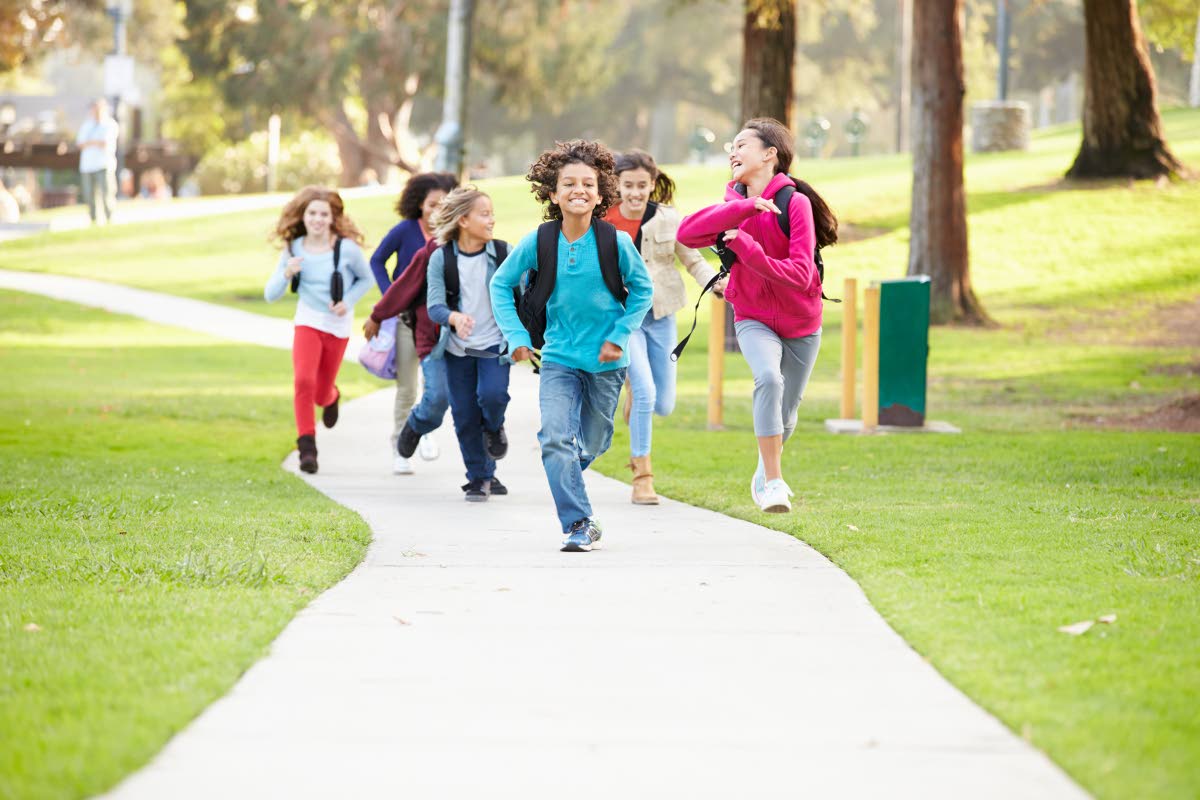 Representational image of children running in a park
-
Representational image of children running in a park
-
 Ruthlyn James. Photo - Contributed
We often speak about saving our children. We speak about discipline, literacy, violence and values. We call for accountability in classrooms and homes. Yet beneath these conversations lies a more uncomfortable question: where, physically, are our children supposed to grow?
In 2002, Emancipation Park was opened as a national gift, a deliberate act of public investment in shared space. It was a recognition that Jamaicans needed somewhere to walk, to gather, to breathe, to exist outside the pressures of work, school and survival. Today, however, the question must be asked: was Emancipation Park the beginning of a national philosophy, or merely a singular moment of vision?
Jamaica is not without spaces. Hope Gardens, Devon House and Emancipation Park remain important examples of what intentional public space can look like. But the existence of a few well-maintained locations does not equate to national accessibility. These spaces are limited in number, unevenly distributed, and for many communities, not within daily reach. Development cannot depend on occasional exposure. It requires consistent, proximate and equitable access.
The data tells a more uncomfortable story. Open public space accounts for only a fraction of what is internationally recommended. In practical terms, this means that for many children there is no safe, accessible and consistent place to run, to explore, to self-regulate, or simply to be a child outside structured environment. That absence matters more than we are willing to admit.
WORK OF CHILDHOOD
Children learn through modelling. Through observation. Through adult prompted behaviours. Our children watch the parties. They see the late-night gatherings of adult life. They absorb language and response patterns long before we attempt to correct them. Yet true childlike availability appears only occasionally. Sometimes the circus comes to Jamaica. A birthday party with a bounce about for a few hours. Then it disappears.
Play is not a luxury. It is the work of childhood. It is how children build social understanding, negotiate conflict, test boundaries, develop language, strengthen cognition and practise critical thinking. It is how they learn to solve problems without instruction, to collaborate and imagine beyond what is given. Play is where regulation begins.
When play is limited, those developmental opportunities do not disappear. They reappear differently, as impulsiveness, aggression, withdrawal or anxiety. We label it indiscipline. We call it attitude. Yet often it is unmet developmental need.
In Jamaica, access to meaningful play is not equal.
In some communities, visibility often takes the form of round robins, street dances and open corners where children are present in adult spaces, absorbing adult behaviour without filter. In more affluent communities, weekends present a different reality. Yacht outings. Bird bush, golf or polo. Structured exposure to leisure that builds patience, observation, regulation and social positioning. Two Jamaica. Two childhoods.
Even within our formal systems, we understand the importance of play. The Early Childhood Commission has long established clear expectations for early childhood institutions, including designated outdoor play areas, appropriate surfaces such as grass or pea gravel and equipment that supports physical development such as swings, climbing structures and open movement spaces. They are recognised as developmental requirements within regulatory standards of education.
This understanding is not isolated. It aligns directly with Jamaica’s national development framework. Vision 2030 does not define development as academic achievement alone, but as the creation of environments that support wellbeing, socialisation and the full development of human potential. It recognises that the spaces in which people live, move and interact are inseparable from how they think, behave and participate in society.
Within this framework, safe, accessible and developmentally appropriate environments are not aspirational. They are expected.
Playground and recreational spaces, along with suitable equipment, infrastructure and aesthetic quality, remain limited across many institutions. There are children whose access to play is reduced to roadside corners and informal playing spaces or the entrance to a dust-covered football field lined with running sewage. We have the policy. We have the standards. We understand what children need. But access to those conditions is uneven.
NATIONAL RESPONSIBILITY
Is it a national expectation that children must fall into one reality or the other? That development is determined by geography and income? Or do we have a responsibility to create a middle ground, cost effective and accessible spaces where all children can experience both structured and unstructured play, safe exploration and social belonging?
Globally, organisations such as UNICEF and the World Health Organization have already established what we are still hesitant to acknowledge. Access to safe, green, shared public spaces is directly linked to mental wellbeing, physical health, social cohesion and positive child development outcomes.
Violence grows in environments where regulation is weak, where social learning is inconsistent, where children are exposed to adult realities without developmental buffering, and where opportunities to practise being children safely are limited. We cannot continue to respond to violence solely with discipline and enforcement while ignoring the environments that shape behaviour long before it becomes visible.
Do we understand that these spaces are not merely national assets, but developmental necessities? Do we recognise that access to safe, intentional, everyday play spaces is as critical as access to education?
Accessibility is not only about cost. It is about proximity, safety, design, inclusion and frequency. It is about whether a child can step outside and encounter a space that invites exploration rather than risk.
We must establish a national expectation that every child, regardless of background, has access to safe, green, culturally relevant spaces for play, connection and growth. Not occasionally. Not as a reward. But as an integral part of daily life.
Children are always watching. Always learning. If we do not give them space to be children, they will learn to be adults far too soon.
Ruthlyn James is the founding director of Adonijah Group of Schools Therapy and Assessment Centre. Send feedback to columns@gleanerjm.com