Editorial | FIFA’s new stench
Loading article...
-
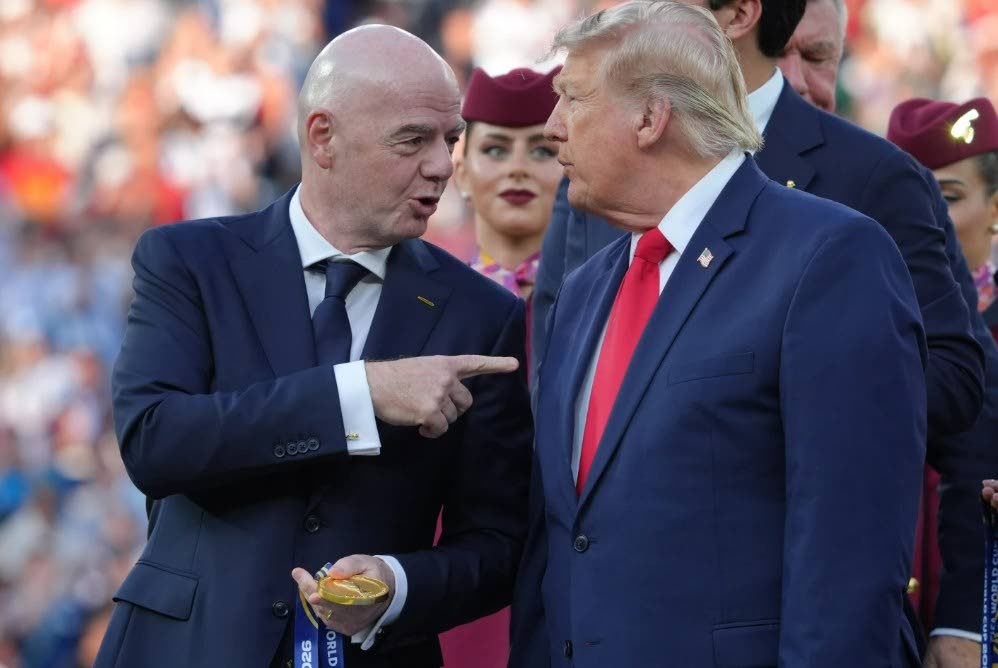 FIFA President Gianni Infantino (left) and President Donald Trump talk as they wait to congratulate the Spanish players after the World Cup final between Spain and Argentina in East Rutherford, New Jersey on Sunday, July 19, 2026.
-
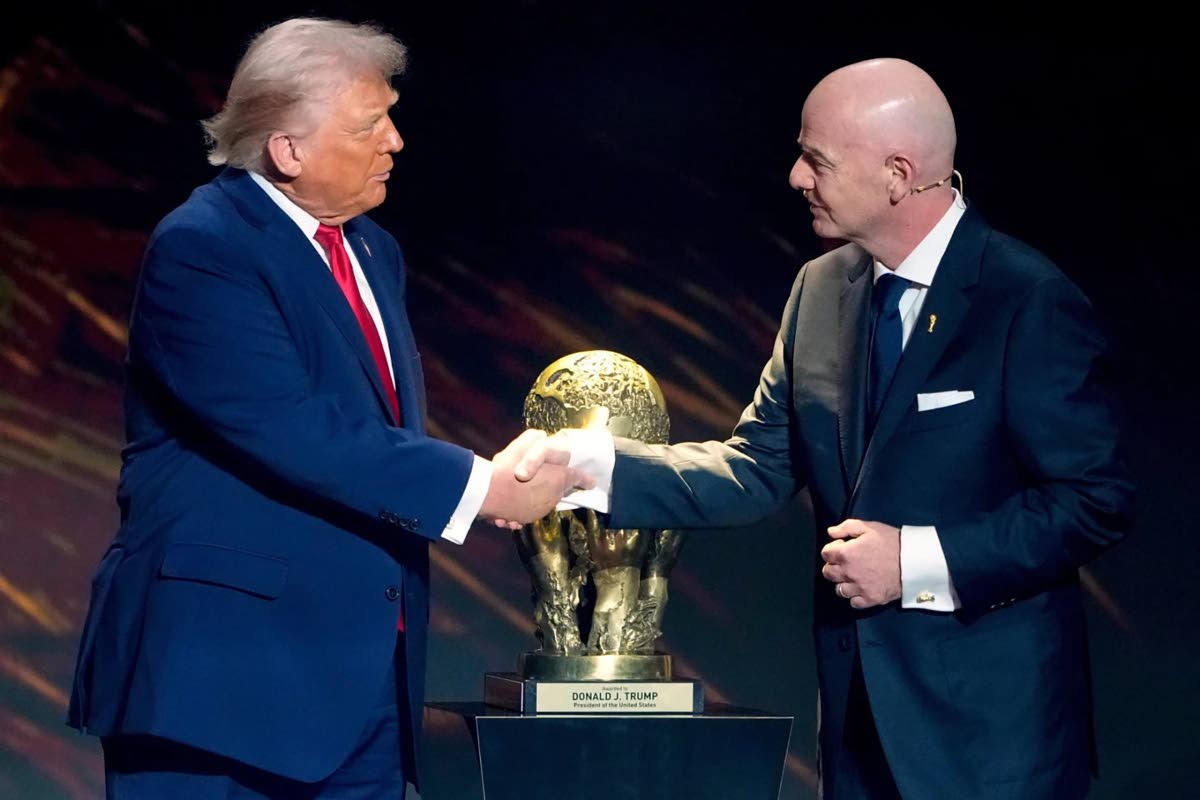 FIFA President Gianni Infantino (right) awards President Donald Trump with the FIFA Peace Prize during the draw for the 2026 soccer World Cup at the Kennedy Center in Washington, on December 5, 2025.
-
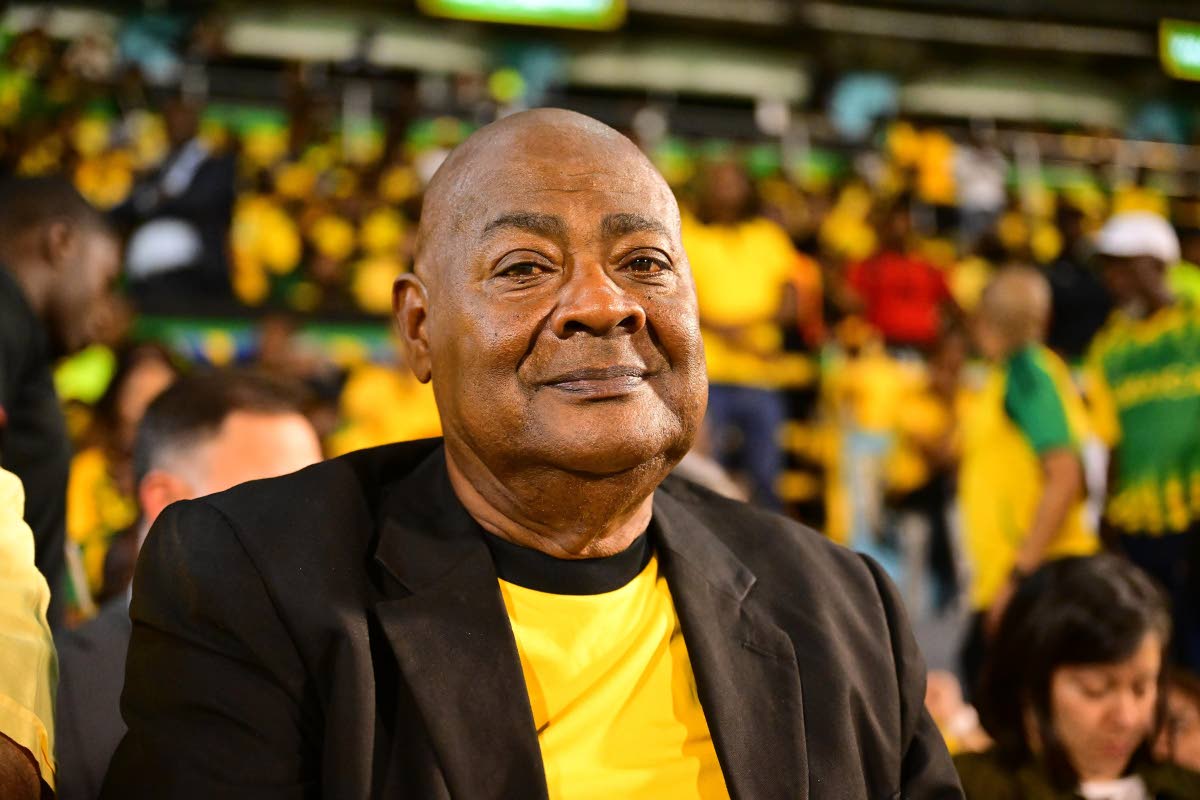 Jamaica Football
Federation president
Michael Ricketts.
Jamaica Football
Federation president
Michael Ricketts.
After registering their objections to FIFA’s lack of transparency in its deal to sell a stake in future World Cups to private investors, the expectation is that the majority of national football associations will accept Gianni Infantino’s offer of a quick US$20-million payout to endorse the arrangement. A second tranche would follow.
The Jamaica Football Federation (JFF), despite expressing tepid reservations about the process, is likely to be at the forefront of Concacaf members urging its approval.
“I have not discussed it with my directors, but my personal feeling is that, on the face of it, I don’t think anything is wrong with it,” JFF President Michael Ricketts said on Wednesday as he prepared for a meeting of Concacaf heads. “In fact, I think it is workable.”
No doubt, Mr Ricketts is focused on the possibility of nearly J$3.2 billion flowing into the cash-strapped coffers of the JFF, which itself is often accused of lacking transparency and accountability in its operations.
Moral and ethical questions, and even motives, be damned. That, this newspaper presumes, is part of Mr Infantino’s calculation. The power of patronage appears set to secure his third term as FIFA president at the federation’s congress in Rabat, Morocco, next March.
The latest controversy centres on Mr Infantino’s plan for FIFA to establish a new private company, FIFA Forward Enterprises (FFE), to assume commercial management of future World Cups and other FIFA tournaments. The company would be valued at US$20 billion, with 20 per cent sold to private investors.
It is more than curious whom Mr Infantino has chosen as FIFA’s partner: a fund manager called Thrive Eternal. Thrive’s founder is Joshua Kushner, brother of Jared Kushner, who is married to Donald Trump’s daughter, Ivanka.
Jared Kushner was a senior White House adviser during Mr Trump’s first administration and is currently a lead negotiator for the US president on a range of global issues, including the Russia-Ukraine war and the US-Israeli conflict with Iran. Of particular ethical concern to many is the perception that Jared Kushner leveraged his association with Mr Trump to attract billions of dollars into his investment company from governments, particularly in the Middle East, with which he engaged while acting on behalf of the United States. Allegations of conflicts of interest have been widespread.
Mr Infantino, who earns US$6 million annually from FIFA, has drawn himself firmly into Mr Trump’s orbit, particularly in the years leading up to the recently concluded World Cup, hosted primarily by the United States. He has travelled extensively with the US president and even arrived late for a FIFA congress in Paraguay because of one such trip.
When Mr Trump complained about not being awarded the Nobel Peace Prize, Mr Infantino created the FIFA Peace Prize and, last December, made the US president its inaugural recipient.
During the World Cup, Mr Trump protested a red card shown to USA forward Folarin Balogun in a Round of 32 match against Bosnia-Herzegovina. The dismissal should have resulted in Balogun being suspended for America’s next game. Mr Trump called Mr Infantino and the penalty was overturned.
In Trump’s world, every virtue is a tradable asset, capable of being bought and sold for cash. Even during the scandal-plagued years of Sepp Blatter’s FIFA presidency, there was an assumption that certain boundaries would not be crossed.
There may be legitimate debate about how to further monetise football’s premier tournament, the World Cup, which generated an estimated US$15 billion during its most recent edition. However, there is a striking crassness and lack of philosophical reflection underpinning Mr Infantino’s proposal. This has only deepened anger and frustration over the plan.
As UEFA, European football’s governing body with which Mr Infantino has had a testy relationship, observed: “The soul and governance of football are not assets to trade – especially with zero transparency as to who gains financially. None of us are the owners of football. It is not FIFA’s to sell.”
Britain’s Prime Minister Andy Burnham echoed the sentiment: “Dress the deal up however you like. Once you have sold a piece of it, you have sold out.”
Mr Infantino had given FIFA’s members until September 19 to agree to the deal and appeared to suggest that associations declining to support it would receive less than the proposed US$40 million, should it proceed. The approach carries the unmistakable whiff of a rushed and strong-arm tactic.
Faced with resistance, including suggestions that UEFA might propose a World Cup boycott, Mr Infantino has attempted to characterise his initiative as “a democratic process, a consultation process”.
“Above all, it is an opportunity, not an obligation and, as I said, it kicks off the consultation process,” he said on Wednesday.
This issue highlights two realities. First, FIFA, at least from the outside, bears uncomfortable similarities to organisations better known for patronage and insularity than transparent governance. Second, it remains badly in need of the reforms Mr Infantino promised when he succeeded Sepp Blatter in 2016.
The best outcome would be for UEFA to hold its ground and build coalitions with receptive regional and national football associations to field a credible, genuinely reformist challenger to Mr Infantino at the Rabat congress.