Kristen Gyles | Weekend holiday
Loading article...
-
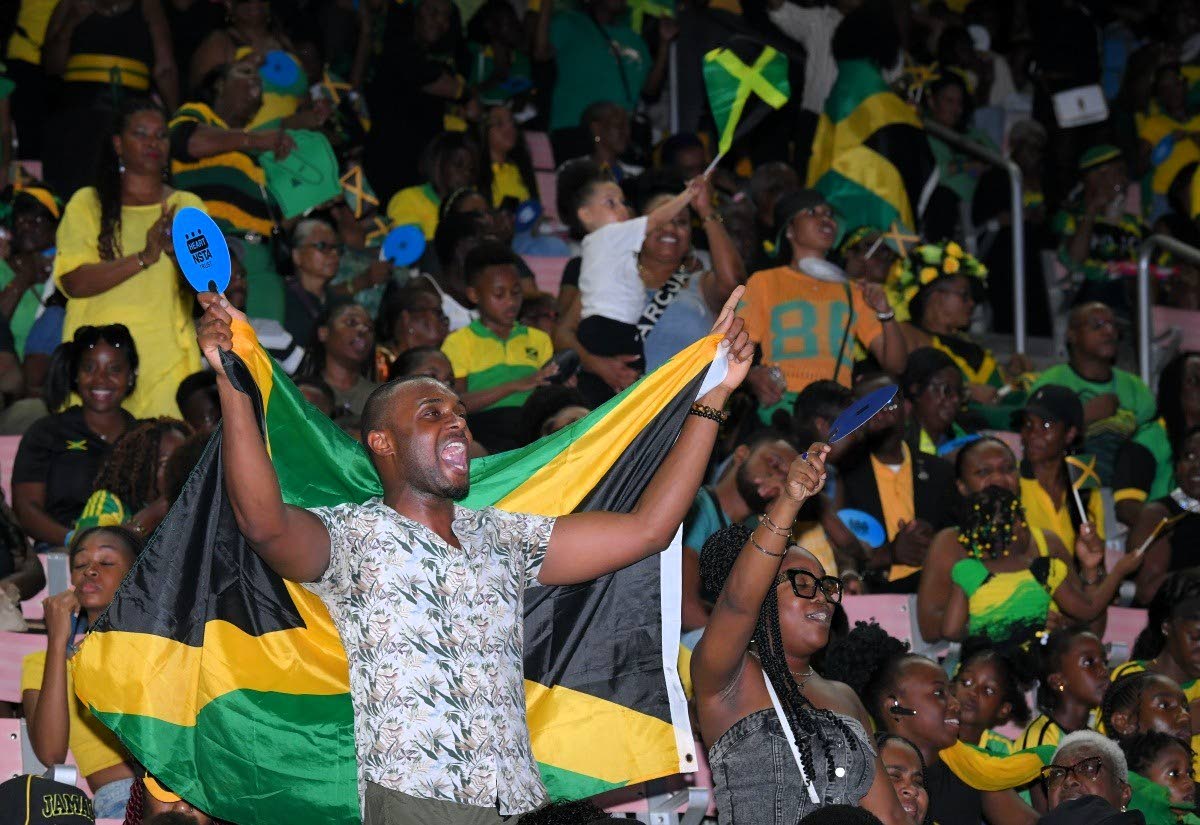 Patrons participate in the Grand Gala festivities.
-
 Kristen Gyles
The Holidays (Public General) Act outlines the list of public holidays to be observed in Jamaica. There is no clear code or system that is relied on across the board for determining when a holiday should be observed. Instead, different rules apply for different holidays. As a result, Jamaicans often find themselves confused when the dates for certain holidays approach because, without referring to the act, it is difficult to keep track of the rules governing the timing for certain holidays.
For example, Labour Day is celebrated on May 23 except when it falls on a Saturday or Sunday, in which case it is celebrated the Monday after.
However, Emancipation Day and Independence Day are celebrated on the first and sixth of August, respectively, except when either falls on a Sunday. Then, and only then, would the holiday be celebrated on the Monday after. So, whenever Emancipation Day falls on a Saturday (as it does this year), it is observed on the Saturday in keeping with the act. Christmas Day and Boxing Day follow similar rules. Where Christmas falls on a Sunday, the 26 and 27 are public holidays. Otherwise, if Christmas falls on any other day, including Saturday, that day is observed as Christmas and the day after as Boxing Day. New Year’s Day is also celebrated on the first of January, only if that date does not fall on a Sunday.
This is pointless going by the very definition of what a holiday is. A national holiday is an official day recognised by a government on which the country pauses its normal day-to-day commercial and business activities to remember a significant event or individual.
Tomorrow, August 1, is an important day. We can and should pause to reflect on the resilience and determination of our ancestors in the fight for freedom from slavery. However, if we are honest, the likely effect of its observance on a Saturday, may be a watering down of its actual significance. If the nature of the activities engaged in tomorrow by the average Jamaican turns out to be no different than they would have been had the holiday not been observed, then would there really have been a point to the observance of the holiday?
SAME ACTIVITIES
Whether Emancipation Day is celebrated tomorrow or not, most of us are likely to be participating in, more or less, the same activities we would have been were it not Emancipation Day. Those who will be at the beach would have probably been at the beach anyway, because they go to the beach on some Saturdays. Those who will be at church would have been at church anyway, because they go to church on Saturday. Those who will be watching TV, would have been watching TV anyway, because they watch TV on Saturday. Those who will be washing clothes and cooking soup would have been washing clothes and cooking soup anyway, because those are the things they typically do on a Saturday.
The observance of a holiday on a weekend when most people would ordinarily not be working is almost meaningless.
Now, one could say that, in a world where we observe flexible work arrangements, all days are equal. In such a world, it would not be fair to assume that people will not be working either on Saturday or Sunday. However, we technically don’t live in such a world. In the world we live in, flexible work arrangements are hardly put into practice with the vast majority of both government services and private sector businesses being inaccessible on weekends. Notwithstanding, the legislative framework exists for the implementation of a flexi workweek.
MISALIGNMENT
So, it seems there is a misalignment between two pieces of legislation that should be working in tandem with each other. On the one hand, the Employment (Flexible Work Arrangements) (Miscellaneous Provisions) Act seems to be telling us that any day is a workday once you want it to be, but the Holiday (Public General) Act is adamant that no holiday will ever be recognised on a Sunday and, in the case of Labour Day, will also not be recognised on a Saturday. But, if any day can be designated a ‘workday’ by an employee, based on agreement with their employer, then why would any day be off limits for holiday observance?
For context, the extremely outdated Holiday (Public General) Act was passed in 1895. It is older than all of us. At some point, extremely outdated pieces of legislation have to be reviewed and updated. Given the passage of legislation to establish a flexi workweek, other key pieces of legislation like the Holiday Act should probably be updated to reflect that there is no longer a static one-size-fits-all Monday-to-Friday workweek. And, if there is no workweek, there is no ‘weekend’, which means technically, every day is a great day for a holiday.
But we all want and deserve our holidays. So, with the flexi workweek, should we also give consideration to the concept of flexi holidays?
Kristen Gyles is a free-thinking public affairs opinionator. Send feedback to kristengyles@gmail.com and columns@gleanerjm.com