Editorial | Don’t waste the crisis, CWI!
Loading article...
-
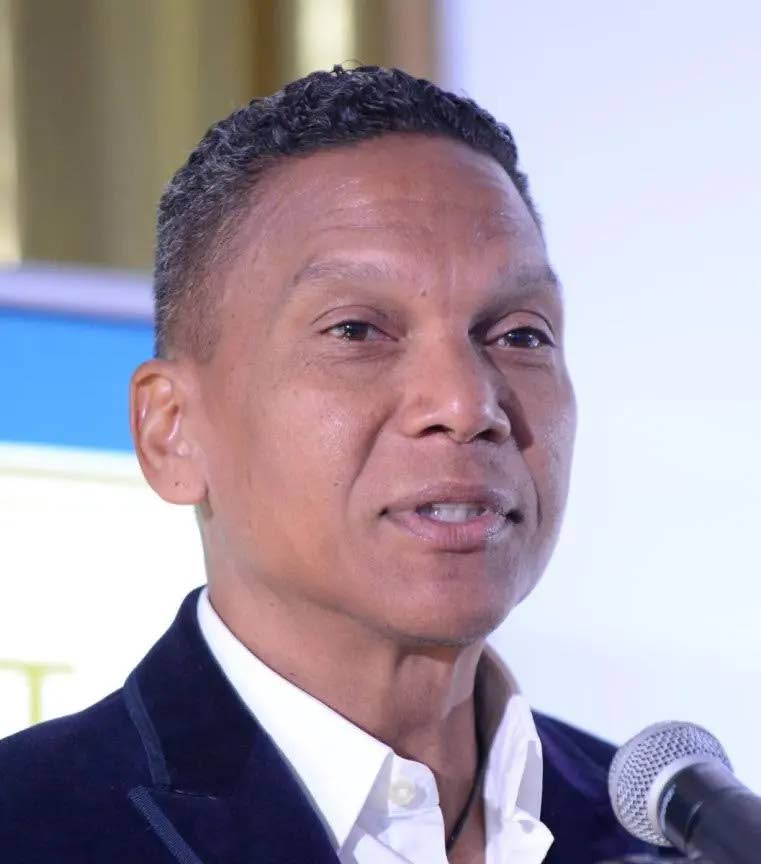 Chris Dehring, CEO of Cricket West Indies. Photo - Ian Allen
-
Chris Dehring, CEO of Cricket West Indies. Photo - Ian Allen
-
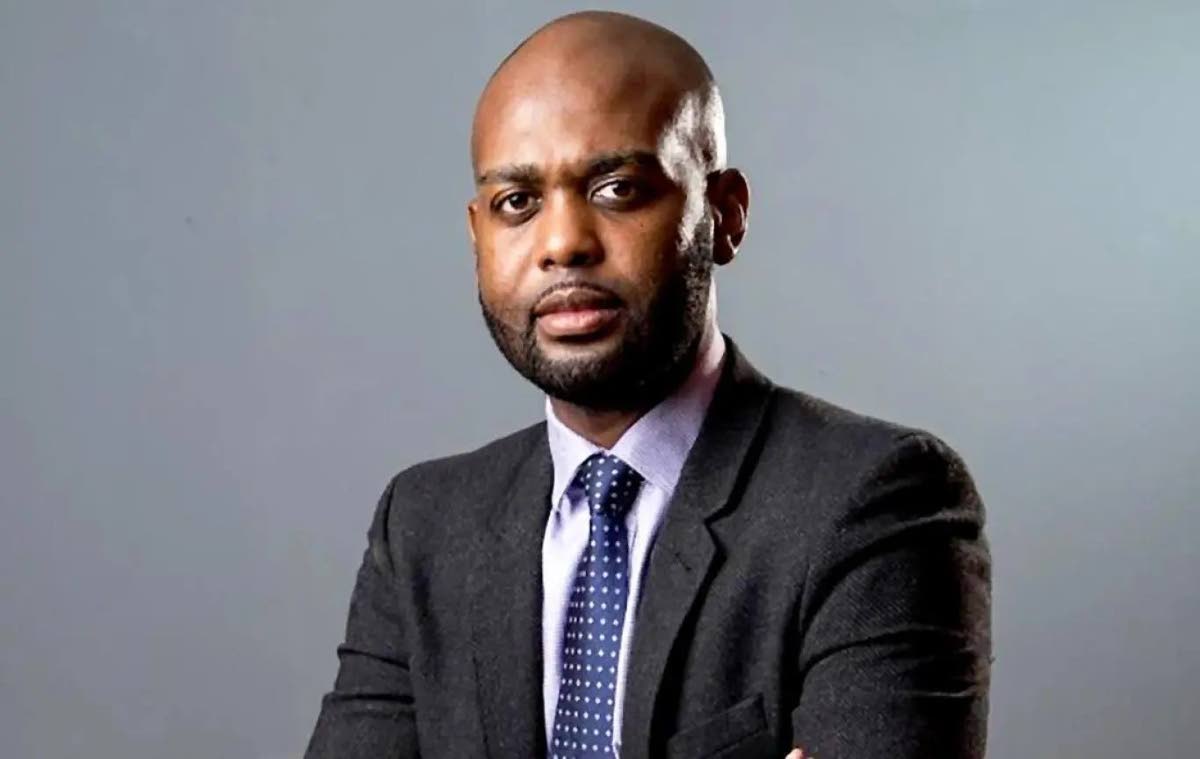 CWI’s president, Kishore Shallow. Photo - File
Chris Dehring’s recent marketing jargon-infused video report on the financial crisis facing West Indies cricket and what Cricket West Indies (CWI) is doing about it had three profound flaws.
First, as a crucial policy statement with serious implications for the foundation and future of regional cricket, the statement ought to have been delivered by CWI’s president, Kishore Shallow.
Second, given the deepened predicament in which the regional cricket board finds itself, decency and accountability should have impelled Dr Shallow to resign the presidency, as he should have done 11 months ago when he won a parliamentary seat in St Vincent and the Grenadines and became a minister in that country’s government. The palpable conflict of interest inherent in that situation remains unresolved.
But the statement’s greatest shortcoming was the failure of CWI and its owners, the territorial associations, to grasp the opening for a genuine overhaul of the governance structure of West Indies cricket, one that conceives of cricket as a public good and reflects a genuine appreciation of the West Indian public as its true owners and, therefore, critical stakeholders.
It is not too late for Dr Shallow to finally do what is right by resigning, and for CWI to, at long last, fundamentally reform itself. That process should start with revisiting the Patterson and Wehby reports with the intention of embracing their core principles. Patterson’s is especially crucial.
There is a basis for this, even if only tangentially, in Mr Dehring’s statement.
INITIATIVES TO EASE FINANCIAL STRAIN
Among the initiatives to pull CWI out of its financial hole, Mr Dehring said, was the “development and expansion of key relationships”, including with “governments, developmental institutions, the ICC (International Cricket Council), and all other important stakeholders, including the Caribbean Premier League”.
At its core, Mr Dehring’s message was that the region, whose team continues to underperform in all formats of the game, will play less organised, high-level domestic cricket over the next few years. This continues the frequent tinkering with regional competitions that went deeper in 2025. The round-robin format of the four-day competition was reduced to a series of bilateral encounters between the six regional franchises, yielding a dozen games.
This year’s men’s regional 50-over competition is being scrapped, as is the women’s T20 tournament. Like its 2025 iteration, next year’s four-day tournament will be another compressed affair. Additionally, CWI is reducing the length of contracts for players with regional franchises from one year to seven months. Players on contracts for international teams will have their pay reduced by 25 per cent.
While key domestic competitions will be suspended or downsized, next year, CWI will host men’s and women’s qualifying tournaments for the 10 teams under its aegis for the 2028 Olympics, when cricket returns to the Games in the T20 format. National institutions, rather than CWI, will bear the brunt of the cost of these tournaments and of sending qualifying teams to the Olympics.
The immediate problem facing CWI Indies is that it is nearly broke and facing a cash-flow crunch. The organisation’s financial report for the year ending September 2025 showed that CWI’s income declined by 54 per cent, or US$47.4 million, to US$40.88 million. It reported a loss of US$28.5 million, compared with a profit of US$22.6 million in the previous financial year.
60 PER CENT DECLINE
The difference was that, in the 2023-24 financial year, the West Indies co-hosted the T20 World Cup, from which its share of profit distribution, media rights, and ticket sales from the ICC amounted to US$80.27 million. In 2024-25, these line items generated US$32.1 million, a decline of US$48.2 million, or 60 per cent.
Additionally, the structure of ICC financial arrangements does not favour small, less powerful countries such as the West Indies, especially when the team is not performing well. In the West Indies’ case, that has been true for more than three decades.
These issues are compounded by, as the financial report noted, “the cyclical nature” of its revenue flows “per the bilateral tour arrangements by which international cricket is organised and planned”.
“Each full member of the ICC is able to sell the rights associated with their respective international home tours, with the value of those rights fluctuating depending on the tour content and on which country is visiting the West Indies,” the report said.
According to Mr Dehring, CWI understands “that we can’t simply cut our way into sustainability and produce competitive and winning teams”. The board had, therefore, embarked on “brave, commercially ambitious plans and projects” that will be combined with its development objectives.
Dehring evoked the daring of Carlos Brathwaite, the West Indies all-rounder who, in the final of the 2016 T20 World Cup, hit four consecutive sixes off England’s Ben Stokes to win the trophy for the regional team.
But sporadic brilliance is not sufficient. Neither is excellence likely to be sustained on a weak foundation. Whatever else it does, CWI needs a governance structure that truly appreciates rather than merely pays lip service to the fact that West Indies cricket is owned by, and belongs to, the people of the West Indies.