Editorial | Mental health at work
Loading article...
-
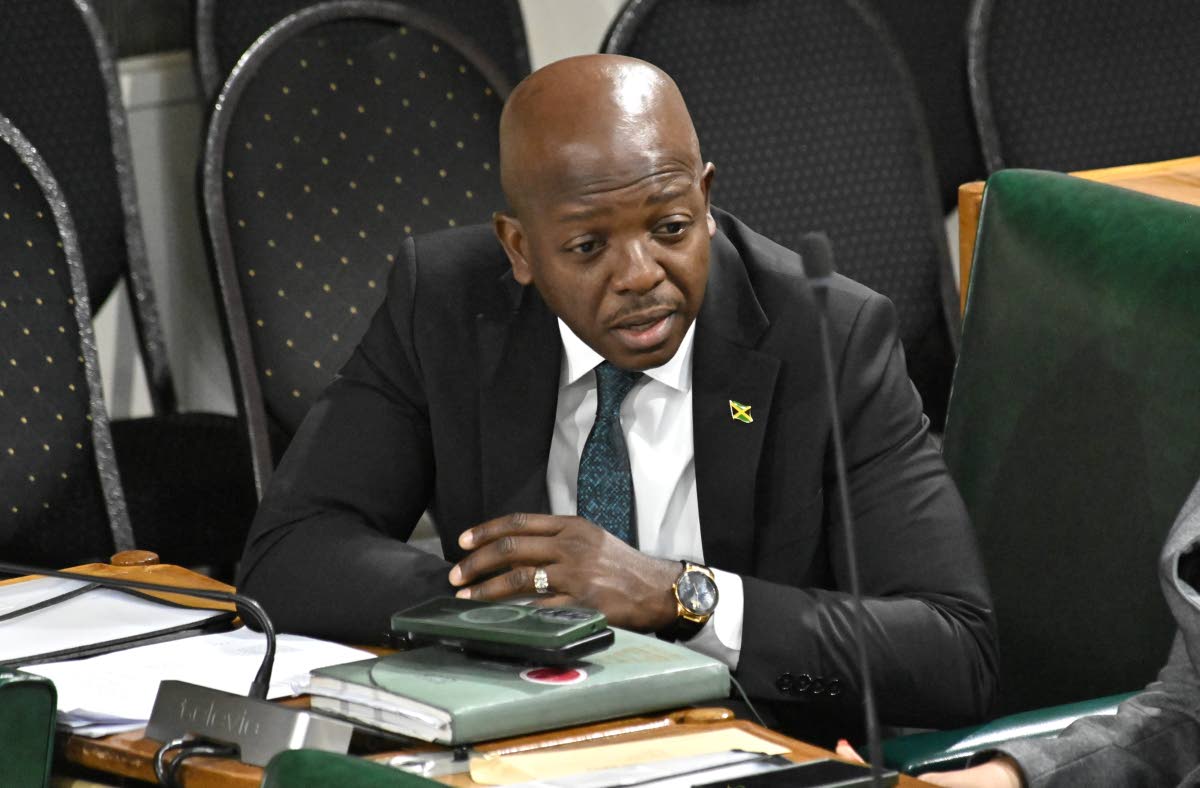
 Senator Kavan Gayle. Photo - AG Guest Guest
-
Senator Kavan Gayle. Photo - AG Guest Guest
-
 Photo - pexels.com
-
 Minister of Labour and Social Security, Pearnel Charles Jr. Photo - Rudolph Brown
Whether it becomes a clause in work contracts is a detail, but Senator Kavan Gayle’s call for mental health support to become an integral part of workplace practice is an issue that is long overdue and whose logic is beyond question.
Indeed, the labour and social security minister, Pearnel Charles Jr, should immediately place the matter on his agenda and work in partnership with the health and wellness ministry, labour unions, the private sector, and other stakeholders on a national strategy for its implementation.
Senator Gayle, who is also the president general of the Bustamante Industrial Trade Union (BITU), spoke on the question of mental health well-being in the work environment in an address in the Senate last week at the tail end of Jamaica’s observance of Mental Health Month in October - an annual occurrence that, unfortunately, doesn’t receive the attention it deserves.
“We must recognise that a safe workplace is not merely one in which machinery is properly maintained, physical hazards are controlled, and accidents are prevented,” the government senator said. “It must also be one in which psychosocial risks are identified and addressed. From a trade union perspective, I believe mental health must become a more deliberate and substantive feature of industrial relations and collective bargaining.”
mainstream health issue
Mental health, in the context of people’s well-being, including in the work environment, is not an abstract matter. It is estimated that around 13 per cent of the world’s population, or one in every eight persons, lives with a mental health condition. Among working adults, the proportion with mental health disorders, according to World Health Organisation (WHO) estimates, is 15 per cent. Moreover, the WHO said in a 2022 report on global mental health that 71 per cent of people with psychoses do not access mental health services. Essentially, they flounder along on their own.
In Jamaica, at least in relation to the proportion of people with mental health conditions, the statistics are likely to be worse than the global averages. According to data from the health and wellness ministry, between a fifth and a quarter of Jamaicans will suffer from a mental health condition at some time in their lives. However, some researchers, including the late Professor Fred Hickling, a Jamaican psychiatrist and mental health researcher, have put the figure at substantially higher - as high as 40 per cent.
Paying attention to mental health as a mainstream health issue, rather than ‘othering’ it, is not merely being decent but fulfilling an inherent obligation. For, as the WHO said in its report, “mental health is an integral part of our general health and well-being and a basic human right”.
Added the WHO: “Having good mental health means we are better able to connect, function, cope, and thrive. Mental health exists on a complex continuum, with experiences ranging from an optimal state of well-being to debilitating states of great suffering and emotional pain. People with mental health conditions are more likely to experience lower levels of mental well-being, but this is not always or necessarily the case.”
economic value
But there is also economic value to supporting people’s mental health to a greater value than what might be spent on the effort. Generally, countries spend no more than two per cent of their health budgets on mental health, and seven out of every 10 dollars of this allocation go to mental health hospitals rather than in communities and support services.
Yet, according to a 2010 analysis by the Davos Group, quoted by the WHO, it costs the world economy US$2.5 trillion annually, 68 per cent of which was in lost productivity. This cost was projected to increase to US$6 trillion by 2030, with low- and middle-income countries projected to bear 35 per cent of the cost. Indeed, four years ago, 12 billion workdays were estimated to be lost annually, primarily because of the absence of workers who suffer depression and anxiety.
Yet, according to WHO analysis, especially with respect to depression and anxiety, investment for clinical interventions can deliver significant returns. It reported, for instance, on a modelling study carried out for 36 large countries, which showed that a “linear increase in treatment coverage between 2016 and 2030 could secure 43 million extra years of healthy life, at a value of US$ 310 billion, and generate a further US$ 399 billion in productivity gains”.
“With the cost of scaling up treatment estimated at US$ 147 billion, this provides a benefit cost ratio of five to one,” the WHO said. “The highest rewards for investing in depression are predicted in lower-middle-income countries.”
But, as was implicit in Gayle’s remarks, government intervention oughtn’t to be the only process for supporting mental well-being.
Indeed, a joint workplace policy handbook by the WHO and the International Labour Organisation pointed out that, for all people, whether or not they suffer from a mental health condition, “workplaces can be places that enhance or undermine mental health”.
“On the one hand, decent work is known to influence mental health positively,” it said. “It not only provides the means to an income but also offers a platform for structured routines, positive relationships, and for gaining a sense of purpose and achievement
“... For all workers, safe and healthy working environments are not only a fundamental right but are also more likely to improve work performance and productivity, improve staff retention and minimise tension and conflict.”