5 Questions With Katarock Sound’s DJ Biggs
Loading article...
-
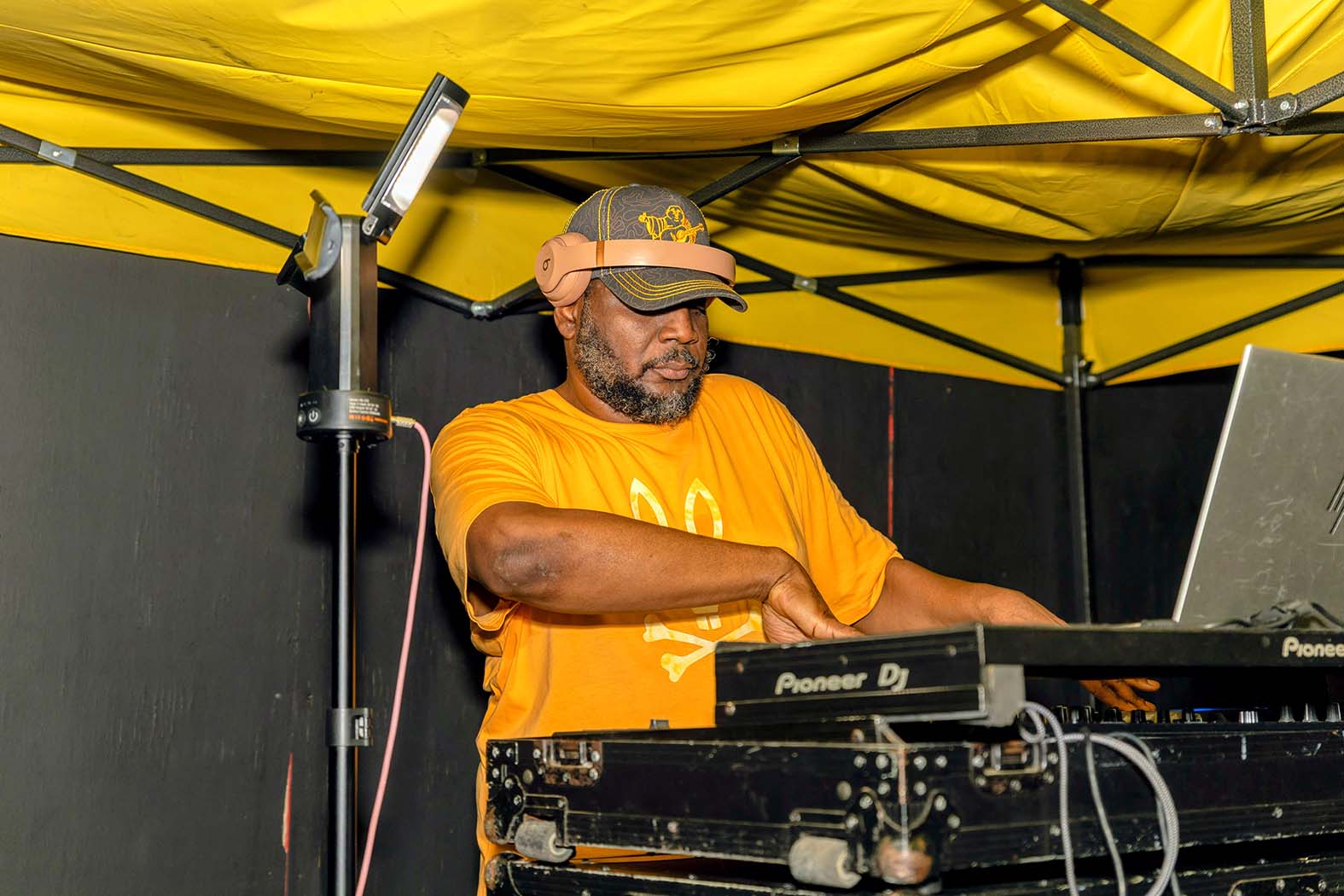 DJ Biggs of Katarock Sound in his element.
-
DJ Biggs of Katarock Sound in his element.
-
 DJ Biggs of Katarock Sound traces his introduction to Latin music back to Florida’s diverse club circuit, where Caribbean and Latin sounds collided and shaped a new musical direction in his career.
With a distinguished 40-year tenure in the music industry, DJ Biggs, whose real name is Ohene Blake, stands proudly as an active member of the legendary Katarock Sound, founded by DJs Kat, Minor Bag, and Cliff in the late 1990s, and later brought to prominence with the late legendary selector DJ Quincy. Working alongside Florida-based entertainer DJ Desmond to keep the Katarock banner flying high, DJ Biggs began his career at the age of 13 in Guyana before broadening his rhythmic horizons in the United Kingdom and the United States (Florida), and eventually returning to his roots in Jamaica.
As one who marches to the beat of festive drums, he offered a refreshing approach to reggaeton, reparto, salsa, and bachata during the recent Cinco de Mayo celebration at Que Rico La Fiesta in St Andrew, further making his mark in the nation’s growing Latin music scene. We caught up with Biggs of Katarock Sound for this week’s 5 Questions With … .
1. How did you get so knowledgeable on Latin music, and what inspired you to become a Latin music DJ?
In 2016, I was deejaying at venues in Florida like Caribbean Tease Restaurant in Lake Worth and Lobster Bar Sea Grille on Las Olas Boulevard. With a large Caribbean and Latin community in that state, there was a high demand for reggae and dancehall music, as well as reggaeton. So that's how I was introduced to this genre of music. Travelling back and forth between Jamaica and Fort Lauderdale, I'd grab a quick bite at Que Rico in Liguanea before catching a flight. And, with Latin songs in my repertoire, I'd test out some of the new songs for free while I was dining, just to see the reaction from the staff who would give their feedback. From there, I grew an even larger catalogue, and the owner asked me if I could play there when it became a full-fledged Latin venue. The rest is history.
2. How challenging is it for you to blend Latin tracks with other genres like dancehall?
It's not challenging at all. I started as a dancehall DJ, so I was blending Latin music in the mix. Now, it's vice versa … more Latin music with dancehall blended in. The same African retention drumming is present within those two musical genres, much like Afrobeats. So dancehall and reggaeton can seamlessly mix together.
3. When you're delving deeply into Latin music, do you find yourself gravitating more towards reggaeton and dem bow? And, do you incorporate a lot of salsa?
I’m versed in all genres of Latin music. However, reggaeton and reparto are my strongest genres. And, I rely on salsa and bachata when playing for the Latin community in Jamaica. Then, with salsa, there is a modern genre called salsa choke, which is more energetic and erotic.
4. What techniques have you developed over the years to read the crowd and keep the dance floor moving?
The first and common lesson that my DJ mentors… have taught me is that we don't rely on top 10 songs. Any DJ can play from that list to get a forward, but then what? I play songs that are international hits, tried and tested through decades to move dancefloors. You have to hold your audience … Secondly, I do my research and find out which songs are popular. Also, I will have my favourite waitress at the restaurant give me a heads up as to which nationalities are in the venue [and the] ratio of women to men and age cohort. Then I play from my collection of bangers. Those folders include Cuban, Colombian, Dominican, Panamanian, and Mexican music. When another sound is playing, I sit down and listen. If a DJ plays something, we at Katarock Sound don't play back that tune. When people hear it again, they don't react in the same way …. Also, you have to carefully manage song requests.
5. Cinco de Mayo events would definitely be your playground, but is there a growing demand for Latin music at parties?
Latin music has become popular through TikTok trends and global visibility of artistes like Bad Bunny at this year's Super Bowl and Shakira's theme song for World Cup 2010. Latin songs are the highest-streaming music on YouTube. Latin food, like tacos and quesadillas, is also trending – so local Latin restaurants introduce their customers to new music in the process. And, while many Jamaicans won't necessarily know the words or what the words are saying, it's the beats that move them.
BRAWTA
With the advances in technology, do you still play vinyl?
No, I don't play vinyl anymore. You have to move with the times. I have an apartment filled with old records back in the UK. But that's about it. And I don't miss having to lift those vinyl crates with the records either, which I did [while] travelling via train while playing Soul Connection from ages 17 to 19. But there was a valuable lesson in going through and sorting records by beats. The software is great. However, what is happening now is that some DJs can only move by what the computer tells them the beat is. They don't know how to count beats. I'm a classically trained musician; I played the piano and the violin. So my beat foundation is a little different. Bearing that in mind, technology has indeed helped to make my life as a DJ easier.
krysta.anderson@gleanerjm.com