ONION TEARS
Loading article...
-
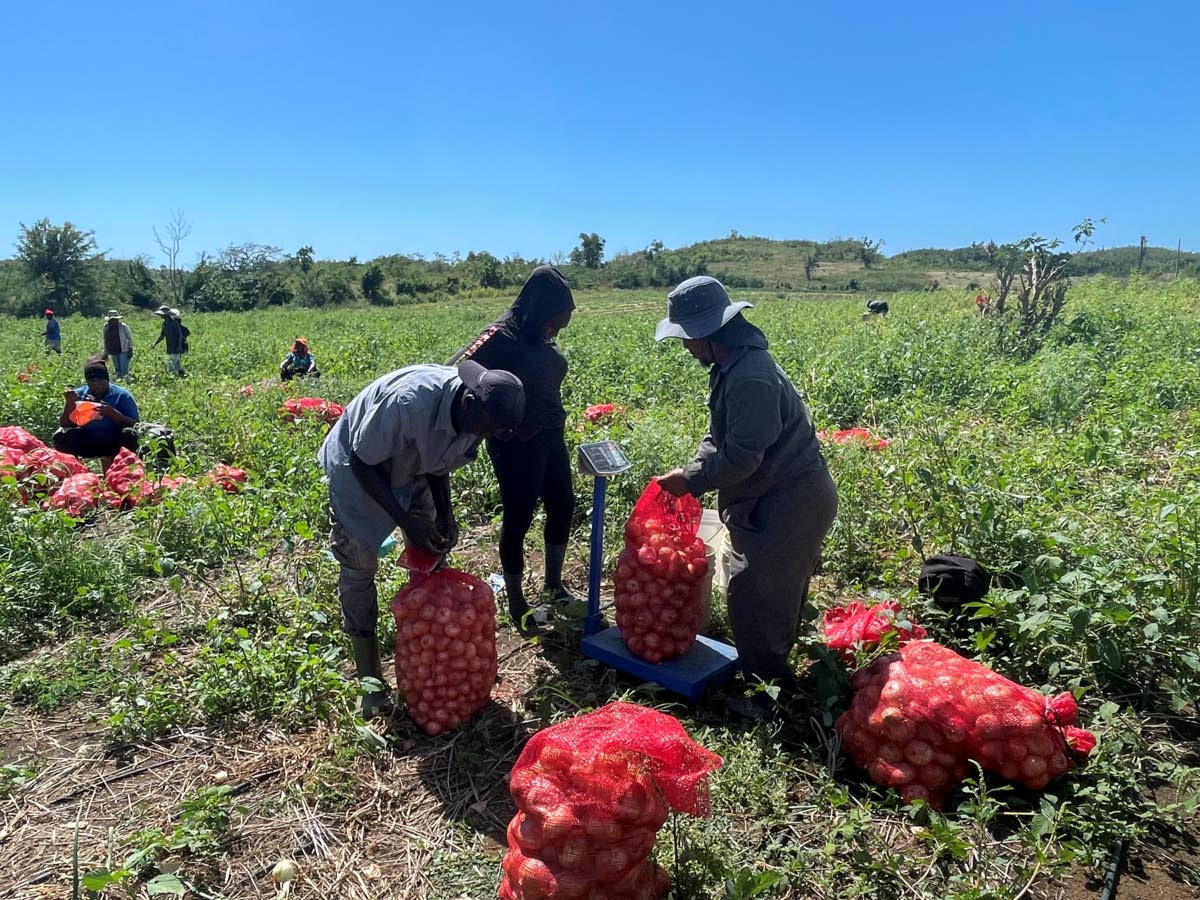 Workers reaping the first crop of onions since the passage of Hurricane Melissa on Andre Dyer’s five-acre onion farm in Mountainside, St Elizabeth, on February 16.
-
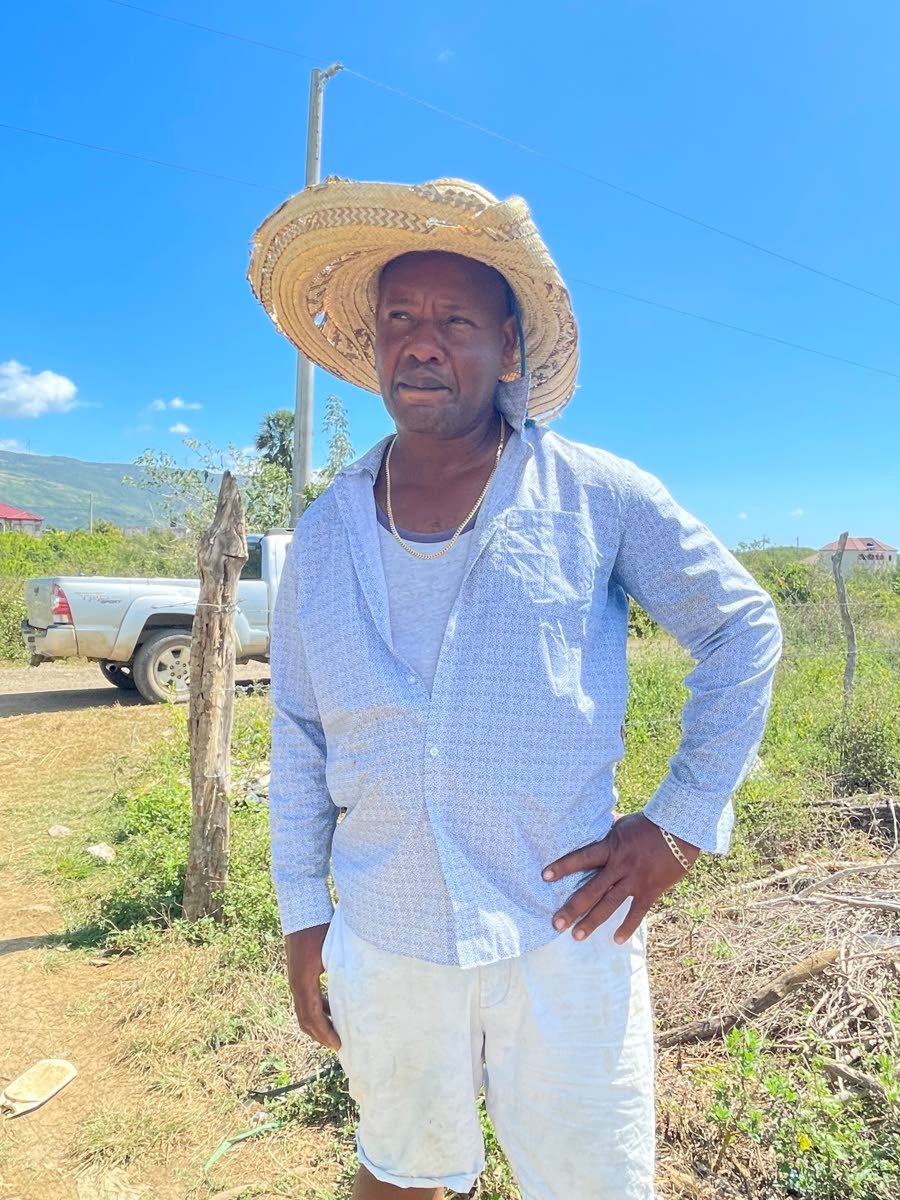 Former teacher Andre Dyer says he will exit the farming sector and return to the classroom overseas if the multimillion-dollar losses he projects are realised.
-
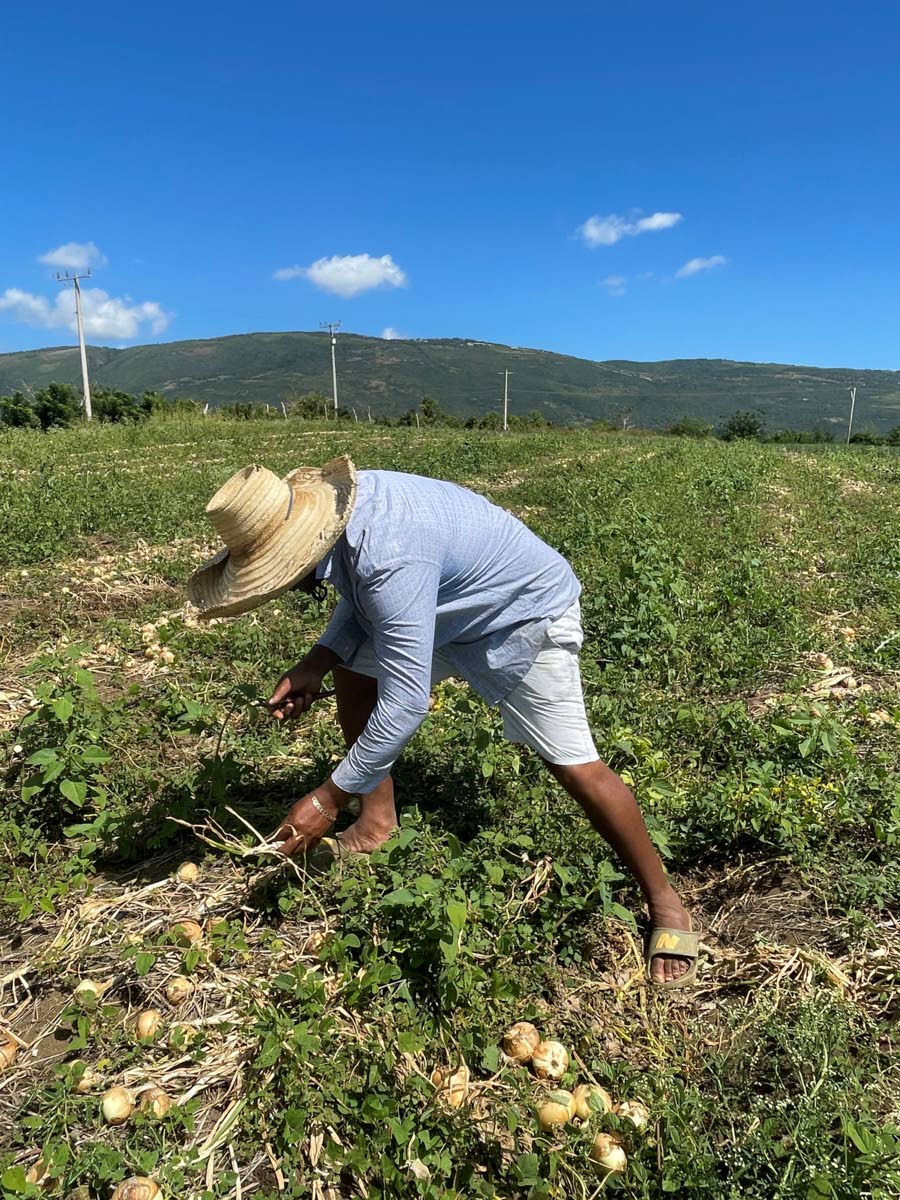 Andre Dyer examining onions on his farm in Mountainside, St Elizabeth.
-
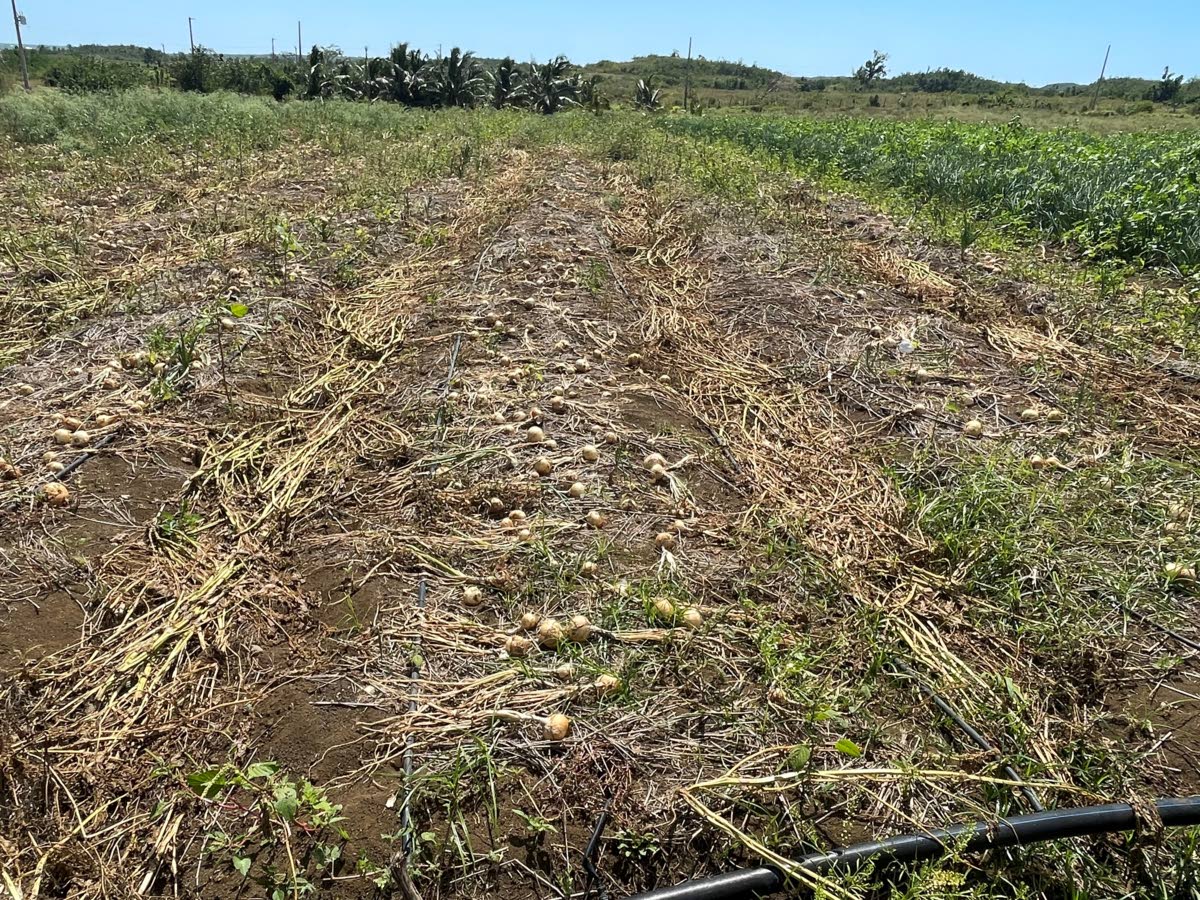 A section of Andre Dyer’s five-acre onion farm in Mountainside, St Elizabeth.
-
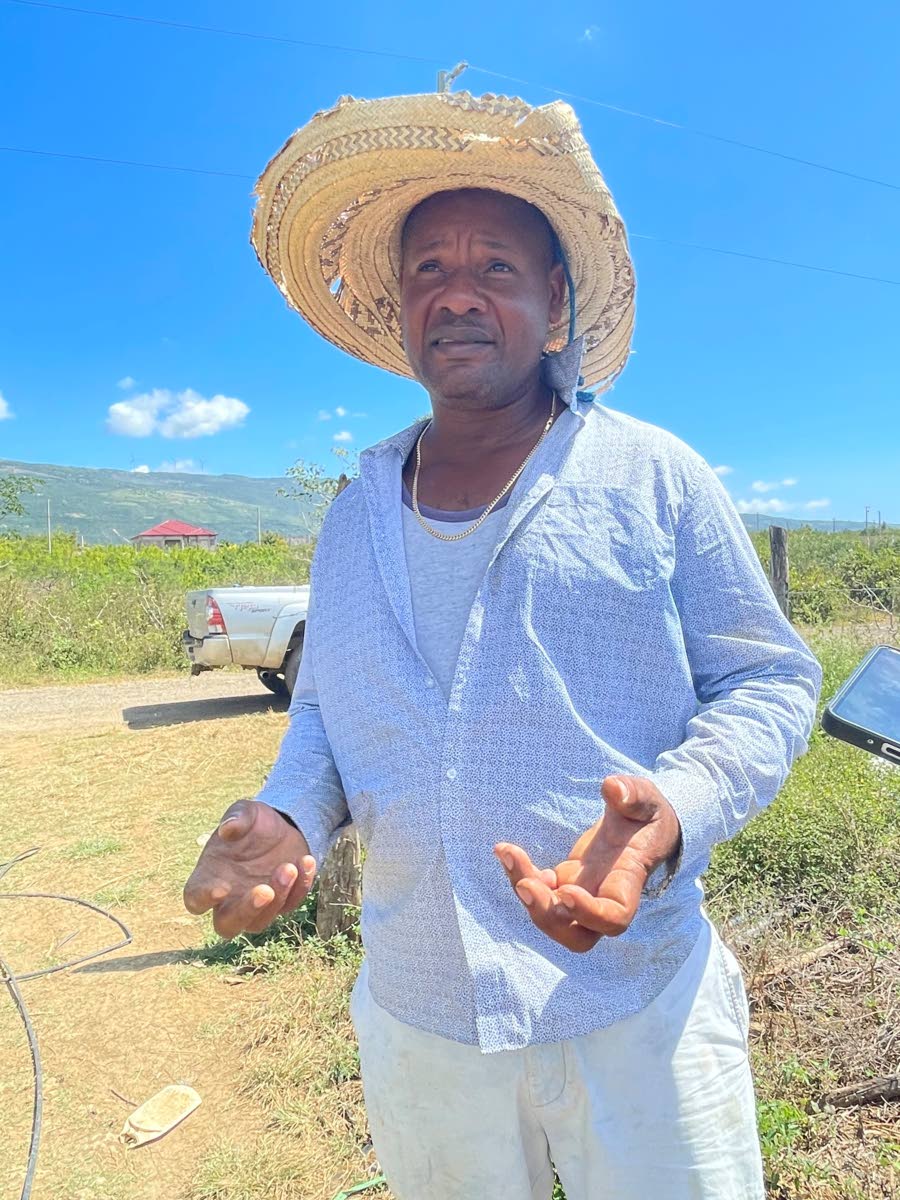 Andre Dyer: Right now, I don’t think that I can continue next year.
Frustration laced his voice as Andre Dyer, one of Jamaica’s largest onion farmers, bemoaned how the importation of onions is threatening the livelihood of local farmers, even as the traditional Breadbasket Parish of St Elizabeth fights its way back after Hurricane Melissa.
Dyer told The Sunday Gleaner that the October 2025 Category 5 hurricane left him with a staggering $27 million in losses when it slammed into western Jamaica, dumping several inches of rainfall, triggering storm surges and unleashing merciless winds. The onslaught, he said, demolished protective banks and turned his 20-acre onion farm in Mountainside, St Elizabeth, into a lake.
“It’s hybrid onions,” Dyer explained, casting his eyes across his farm, “so one pack of seeds raises between $55,000 and $70,000. After the hurricane came, it damaged everything. We had to replough, reorganise the banks and replant.”
Onion cultivation in Jamaica dates back more than 60 years, beginning in the early 1960s, and the crop has long been a staple in local kitchens. Jamaicans consume more than 13 million kilograms annually, drawn not only to its flavour but to its health benefits. Rich in flavonoids and antioxidants, onions are known to help relieve allergies and lower the risk of coronary heart disease.
Though onions can be grown across all parishes, commercial production is concentrated on the flat lands of St Thomas, Clarendon, St Catherine, Trelawny, St Ann and the traditional Breadbasket Parish of St Elizabeth. St Thomas accounts for nearly two-thirds of local output. Eight varieties are cultivated locally, with planting windows spanning mid-October to December and March to April. Depending on the variety, farmers wait between 110 and 160 days from planting to harvest.
But Dyer, who has been farming for a decade, said that besides natural disasters, another clear and present danger looms: the volume of imported onions competing with homegrown harvests.
“I am getting news down here that we have more onion imports. Somebody from Kingston told me, ‘You going to get the biggest shock of your life because you going to be reaping your onion and not getting the sale’,” he said.
Despite the lack of specificity, he was clearly concerned.
Dyer said that competition from imported onions has seen his farm-gate price plummeting, moving from $10,000 per bag in February last year to $4,000 per bag this month. With imports flooding the market, he noted, there is a reduced demand for local onions.
He told The Sunday Gleaner that his farm employs some 40 persons, with a weekly wage bill of roughly $750,000.
His employees were busy reaping the first crop since the hurricane when The Sunday Gleaner stopped by two Mondays ago.
“Normally when I start reaping, vendors are here to just take it off the field and purchase it and go away. Now I am forced to be creative with storing. Last year I did not have to store,” said Dyer.
The industry’s journey has been uneven. Between 1996 and 2013, production fell sharply from 4,200 tonnes to just 680 tonnes, forcing Jamaica to import about 90 per cent of the onions it consumed. By 2017, output had edged up to 800 tonnes against demand of 8,000 tonnes. Recovery has since gathered momentum: by 2023, production climbed to 6,000 tonnes, satisfying roughly 40 per cent of the 13,000-tonne demand, according to Agriculture Minister Floyd Green in his 2024 Sectoral Debate presentation in Parliament. By mid-2024, local output was meeting 44 per cent of consumption needs, with further improvements projected into 2025.
For more than a decade, The Netherlands has remained Jamaica’s primary supplier, consistently providing the largest volumes of imported onions. It is this reliance on imports – even amid rising domestic output – that now has farmers like Dyer on edge.
He views with suspicion the importation of a product that could result in the death knell for Jamaica’s onion farmers, questioning the reasons behind the Government’s decision to allow imports.
The situation has grown so dire that the former schoolteacher, who left the classroom four years ago to focus on farming, is now contemplating his next move.
“Right now, I don’t think that I can continue next year. I left the classroom. I am a maths teacher of over 20 years and I left the classroom come here, did extremely well and I could employ people,” he told The Sunday Gleaner.
Dyer, who is also president of the St Bess Potato and Onion Growers Association, says he has influenced others to plant onions.
But he confessed he is close to walking away if the losses he projects he could face are realised.
“I have an offer on the table. I can go to Dubai and teach. There is an offer sent to me. And if I lose $40-odd million, there is no way I can come back in one year. It’s not making sense. I am saying, if we can produce something out here, why are we importing? There should be no reason why we have to be importing onions flooding the market? I know with what I am hearing, I am going to lose big time this year.”
Onion farmers have raised the matter with the Jamaica Agricultural Society, according to its President Owen Dobson.
“We have received complaints from onion farmers across the country about the increasing negative impact the importation of onions is having,” he told The Sunday Gleaner. “We are arranging to meet on the matter, where we will discuss how serious the issue is and formulate a position. I don’t want to speak further on the matter until we have that meeting.”
The Ministry of Agriculture has not yet responded to the Sunday Gleaner questions sent more than a week ago asking about the process and conditions for awarding import licences for onions, who are the current licence holders, the protection mechanisms in place for local farmers (if any), among other questions. Similar questions were also sent to the Jamaica Trade Board, but Khadeja Brya, acting director of public relations, redirected questions to the ministry.
In 2023, after concerns about cheaper imports putting pressure on local onion farmers triggered a protest in St Thomas, the Ministry of Agriculture blamed “distribution bottlenecks” for the problem.
“It is unfortunate and regrettable that in instances where distribution bottlenecks occur, they are construed by some as a deliberate attempt by the ministry to sabotage its own production and productivity programme,” the agriculture ministry said in a release.
“The ministry is mindful that during the harvesting period for local onions an abundance of imported onions within the market space will create a market imbalance. It is for this reason and the need to ensure sufficient market space for local onions that deliberate steps are taken to encourage purveyors, who would normally seek to import onions to purchase and store locally,” it added.
karen.madden@gleanerjm.com