PERMIT VOIDED
Loading article...
-
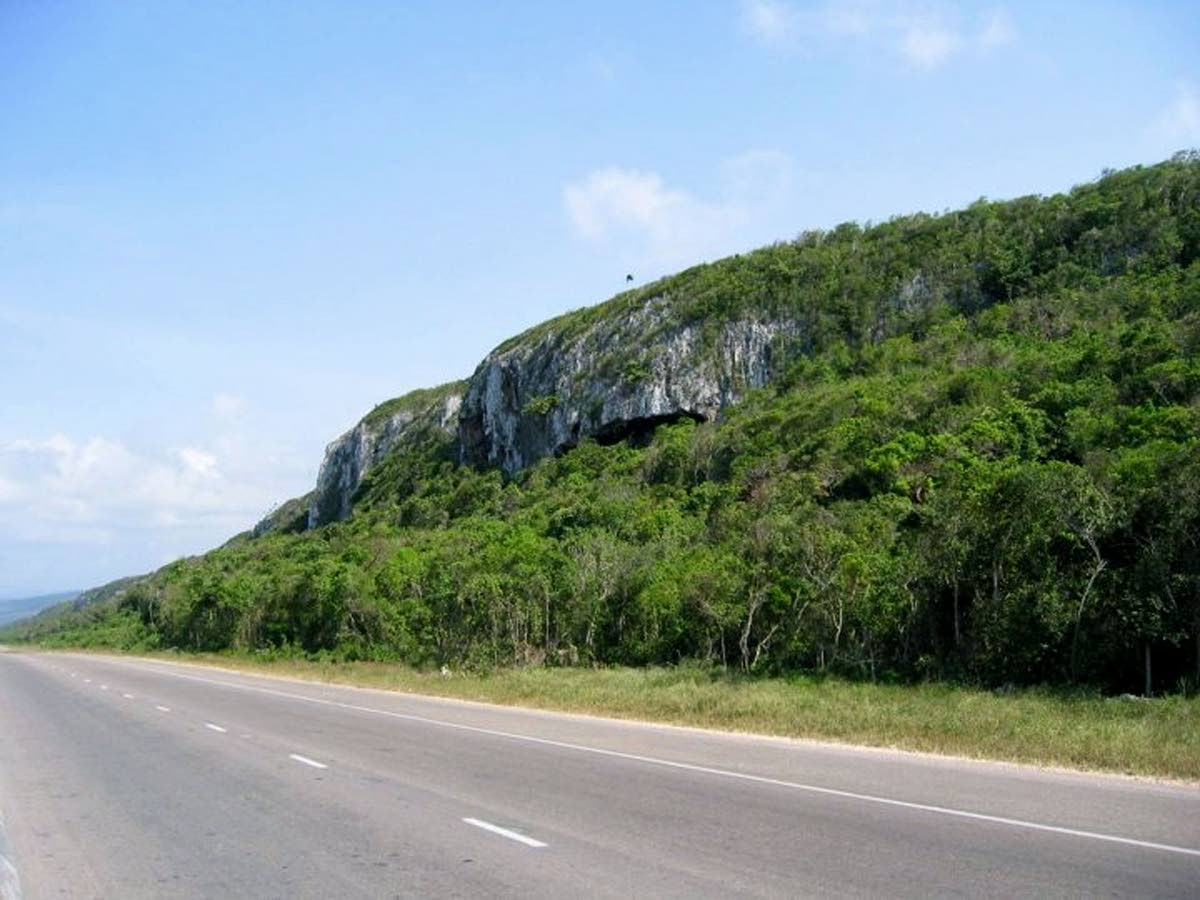
A section of the Puerto Bueno Mountain, also called the Dry Harbour Mountains, in St Ann.
-
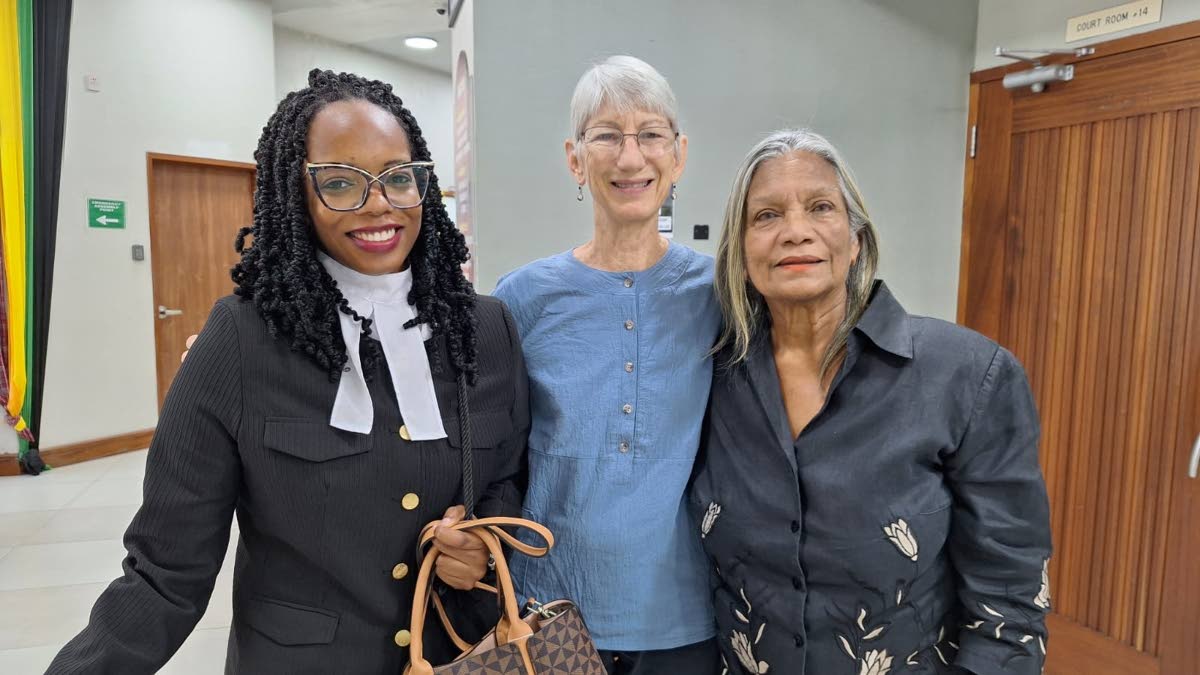 Attorney-at-law Daynia Allen; claimant Wendy Lee; and Arlene Harrison Henry, former public defender.
In a landmark decision on Thursday, Jamaica’s Constitutional Court ruled that a government minister cannot override the decision of an environmental regulator without clear, evidence-based justification, striking down a controversial 2020 permit for mining in the Dry Harbour Mountains, St Ann.
In a unanimous judgment, Justices Sonya Wint-Blair, Andrea Thomas, and Tricia Hutchinson-Shelly declared unconstitutional an environmental permit granted to Bengal Development Limited to mine bauxite, peat, sand, and other minerals in the ecologically sensitive area.
Located between Rio Bueno and Discovery Bay, the Dry Harbour Mountains have long been regarded as environmentally fragile. The court ruled that both the permit and the ministerial decision authorising it were “unconstitutional, void, and of no effect”.
The ruling centres on the actions of Prime Minister Dr Andrew Holness, who was acting as minister responsible for the Natural Resources Conservation Authority (NRCA). Holness had overturned the NRCA’s rejection of Bengal Development’s application in October 2020, stating that he had “decided to allow the appeal and set aside the decision of the NRCA”.
A permit containing 76 conditions was subsequently issued on November 5, 2020, and later amended amid public backlash. However, the court made it clear that the inclusion of conditions did not satisfy constitutional requirements. It emphasised that a minister cannot lawfully override a technical body without providing a credible justification grounded in evidence.
“The court has not been asked to decide whether development is good or bad for Jamaica,” Justice Wint-Blair wrote.
“The court’s task is much narrower and focused only on what the Constitution allows, “ she said, while emphasising the need to balance economic development with environmental protection.
What the Constitution does not allow, the court said, is for a minister to substitute the decision of a specialist regulatory body without demonstrating a sound and rational basis for doing so.
The NRCA had originally refused Bengal’s application, warning that a quarry of the proposed “nature, size, scale and intensity” would have a deleterious impact on the environment and surrounding communities. It further found that the potential loss of biodiversity in the area would be “irreplaceable”.
The approval followed an appeal process under the NRCA Act. Then-minister Leslie Campbell first allowed the appeal in July 2020, with Holness later affirming that decision.
Reacting to the ruling, King’s Counsel Michael Hylton, who led the residents’ legal challenge, said the implications extend well beyond the specifics of the case.
“It speaks to the limits of executive power. Where does the policymaking and other decision-making power of a minister or government body stop? And what are the limitations?” Hylton said.
He argued that when a minister exercises appellate authority to overturn a decision made by a technical body, there must be a clear and demonstrable basis.
“You’re entitled to come to another view, but you need a good reason – and a demonstrably better reason than the body you’re overruling,” he said. “And you need to explain the reason to the public, to the affected people, and, if necessary, to the court. That’s a really big point.”
Eight claimants – residents, landowners, farmers, and business operators in the Bengal area – filed the constitutional claim in December 2020. They included biologist Wendy Lee, physician Shermian Woodhouse, and farmers Martin and Anne Hopwood.
The residents argued that the permit was likely to breach their Charter right to “a healthy and productive environment free from the threat of injury or damage from environmental abuse”. The court agreed, finding that they had proven a likely breach and that the State failed to justify it.
Central to the ruling was the court’s analysis of the permit’s 76 conditions and objections from the Forestry Department.
Justice Wint-Blair identified 10 legal and evidentiary problems, finding that the conditions “do not cure the problem. They cannot establish a rational connection when the underlying activity is likely to be harmful. Nor do they transform likely irreversible environmental harm into constitutionally acceptable minimal impairment merely by being attached to the permit”.
Key evidence included objections from the Forestry Department, which warned that the Environmental Impact Assessment lacked feasible mitigation measures and that no quarry site in Jamaica had been successfully restored through reforestation. Even Bengal’s own assessment acknowledged risks, including blasting hazards and groundwater contamination.
On economic benefit, Justice Thomas rejected the Government’s claims as unsupported. Statements about growth and employment were described as “sweeping generalisation[s]” with no concrete data.
The court also clarified the meaning of a “healthy and productive environment”. Justice Wint-Blair interpreted “productive” as sustainable development that supports human well-being while preserving natural resources, not mere exploitation.
Justice Hutchinson-Shelly similarly found the Government’s development goals “aspirational” and unsupported by evidence such as feasibility studies.
“There was no evidence presented in respect of these assertions, whether feasibility studies or other data which support the economic and developmental benefits expected,” she said.
The court dismissed Bengal’s claim to property rights, ruling that such rights did not extend to securing quarrying permits. It also declined to award damages, noting that the breach had been prevented.
Orders included nullifying the permit and barring Bengal from undertaking mining activities on the land.
The residents were represented by Hylton and attorney Daynia Allen, with Abe Dabdoub appearing for Bengal. Annaliesa Lindsay represented the attorney general.
Both Dabdoub and Lindsay offered no comment, indicating that they had not yet read the judgment.
Reacting to the ruling, Lee welcomed the decision as a defining moment for local environmental rights.
“This ruling confirms without doubt that Jamaicans have a constitutional right to enjoy a healthy and productive environment free from the threat of injury or damage,” she said, noting that Dry Harbour Mountain had long been identified for protection under the St Ann Development Order.
She also credited the Office of the Public Defender and the legal team at Hylton Powell for supporting the case.
Allen also described it as a significant constitutional milestone.
“As you might know, this is the first direct decision in relation to the new right to protection of the environment and health … so it’s a very important case,” she said, adding that it could serve as precedent.
“I think it sends a very good signal … . I encourage the public to be familiar with it and companies and the government as well to just take note of the principles outlined here.”
tanesha.mundle@gleanerjm.com jovan.johnson@gleanerjm.com