Gone without a trace - At least 40 elderly persons reported missing to police since January
Loading article...
-
CONTRIBUTED PHOTOS
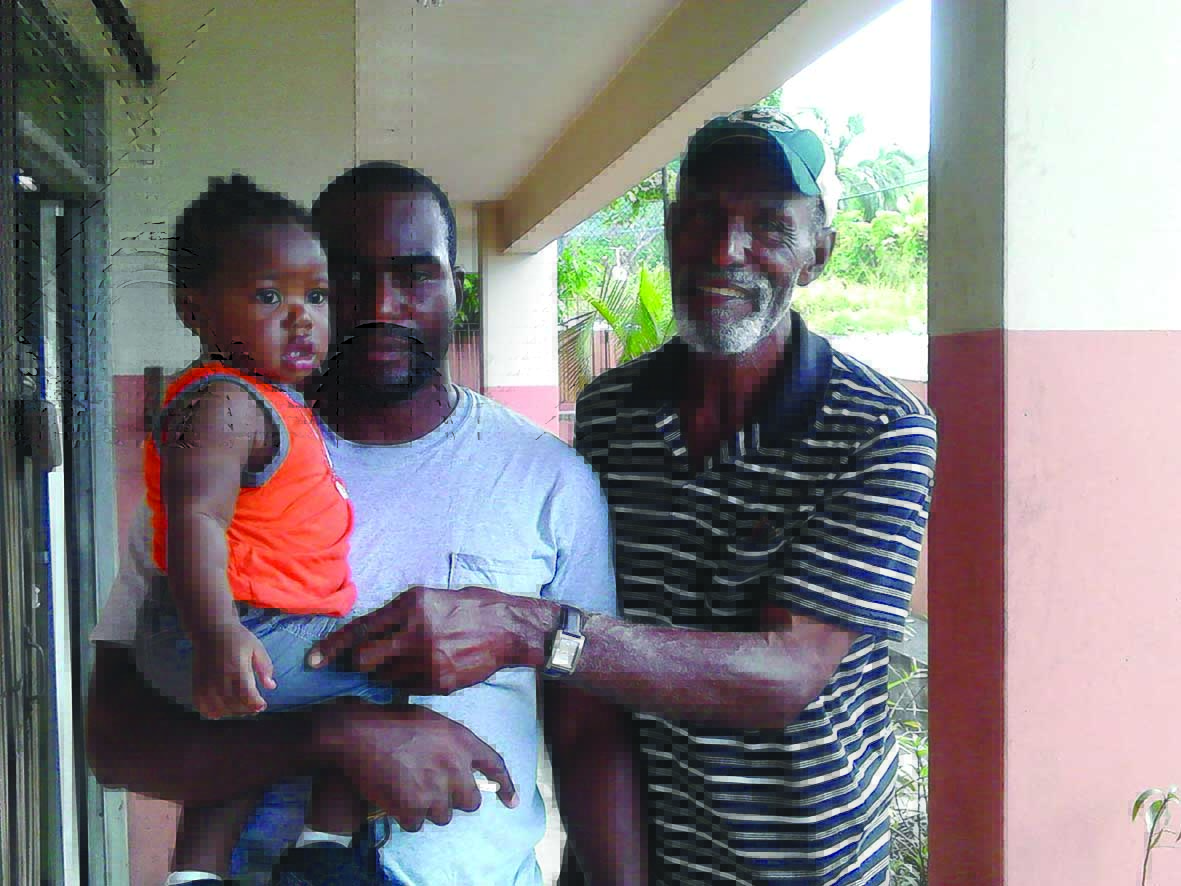
Winston Watson Jr (left) holds his son, LeAndre, as he shares a happy moment with his father, Winston Watson Sr.
-
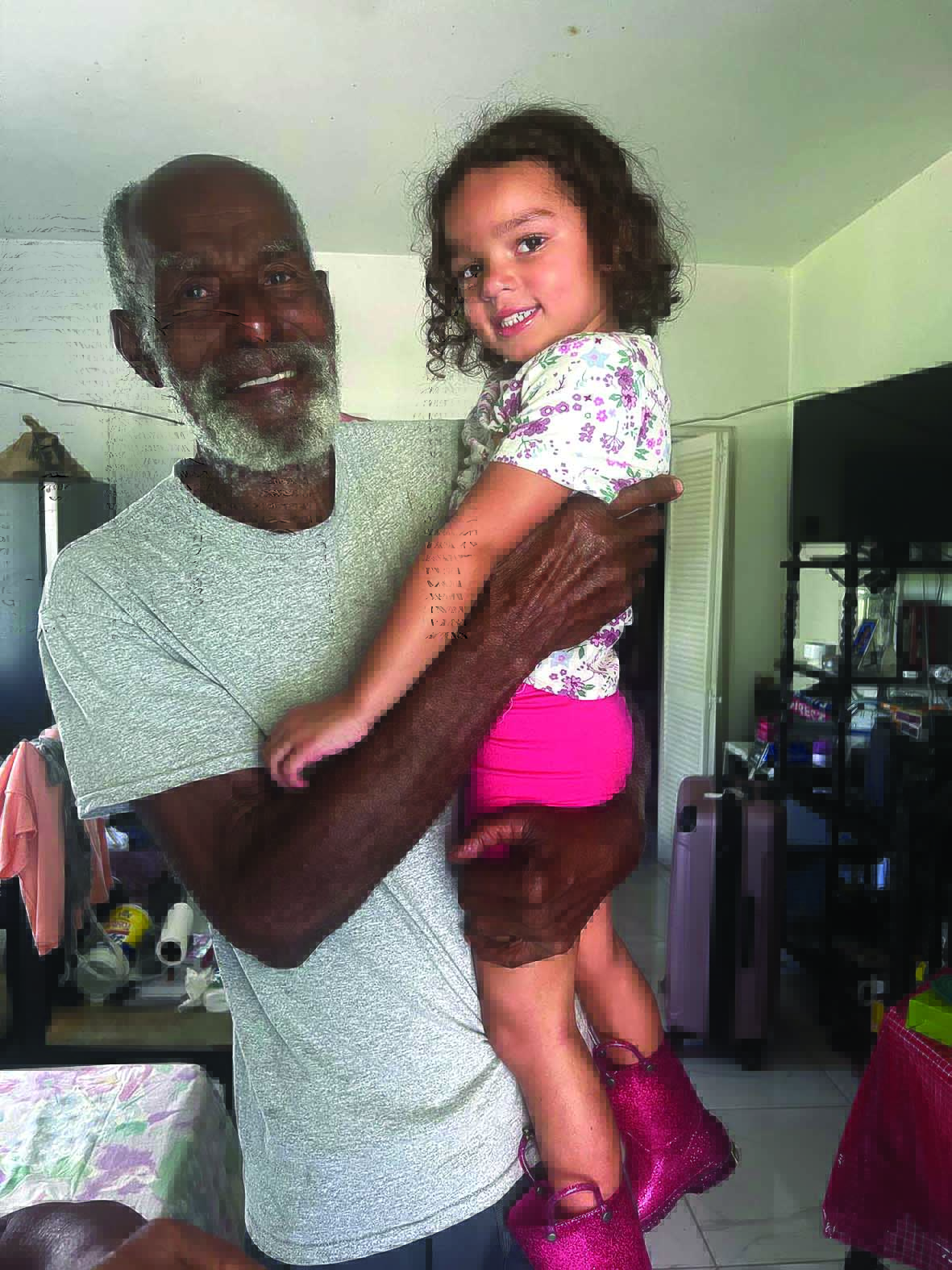
Winston Watson Sr holds his granddaughter, Maelani, in happier times.
-
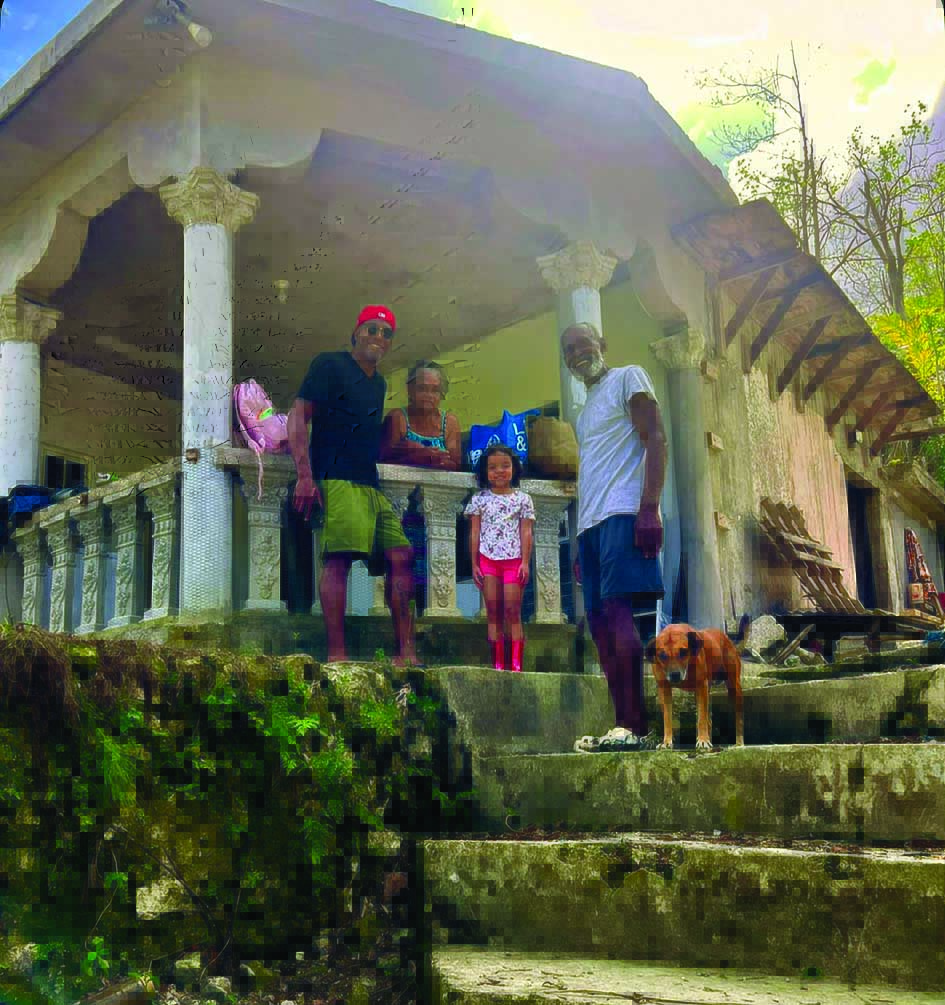
Winston Watson Sr sharing a moment with relatives at his Lethe, Hanover, home before his disappearance just over two weeks ago.
Winston Watson knows the communities between Negril, Westmoreland, and Montego Bay, St James, better than he ever wanted to.
For more than two weeks, he and his relatives have criss-crossed western Jamaica chasing reported sightings of his missing father, Winston Watson Sr – a retired tour bus driver with dementia who disappeared from his Hanover home and has not been seen by his family since.
From Fairview in Montego Bay to trodding through bushes across Westmoreland and Hanover, Watson has followed every lead, pinned up flyers, questioned strangers, and pursued reports that seemed to place the 74-year-old in a different parish almost every day.
It is a relentless routine fuelled by hope, exhaustion and the growing fear that each passing day may be making it harder to bring him home. The search has left Watson with scars and rashes. Yet so far, every lead has ended the same way – in heartbreak.
Still, the worried son, a member of the Jamaica Constabulary Force (JCF), keeps searching.
Last Thursday, he prepared to extend the search to Braeton in Portmore, St Catherine, after receiving reports that his father had been spotted there. But Watson faced another challenge: he had not been to Portmore in years and knew few people in the area.
"Every day I wish somebody would see me and say, 'See your father here’," he said. "When I go home and I don't see him, I'm just hoping somebody will call and say, 'Your father is here safe.'"
Despite hundreds of flyers, social media posts, police patrols and assistance from the JCF’s Canine Division, that call has not come.
“We’ve been getting calls from random strangers. This morning, the person who called had apparently first contacted my cousin, then another cousin. Someone she used to work with saw the missing-person post on her WhatsApp status. Another person called after 9 a.m. saying she had seen him in Fairview. In total, we have responded to about eight calls so far,” he said.
“And nothing.”
The elder Watson, who suffers from Alzheimer’s disease, reportedly wandered away from his home in Lethe, Hanover, around 4 p.m. on May 19 while his wife was tending chickens outside. He was wearing a black T-shirt, black shorts, and a pair of black-and-white Crocs.
Watson Sr is among 40 senior citizens listed as missing by the JCF’s Constabulary Communication Network (CCN) since the start of the year. Flyers bearing their photographs, descriptions and relatives’ contact information can be seen in supermarkets, clinics and on light posts across the island.
At least two of those missing persons have been reunited with their families, while another, Seymour Henry, was found dead on May 14 after disappearing from his home in Mocho, Clarendon, in February.
Among the latest additions to the list is 65-year-old Donavon Flowers, who went missing from Kingston on May 29. One of the most enduring mysteries, however, remains the disappearance of Joyce Fearon, 61, of Barnett Oval, Montego Bay, who vanished on National Heroes Day in 2023.
After suffering a stroke in 2022 that reportedly altered her personality, Fearon left her belongings at a church in Christiana, Manchester, where she had attended a women's convention with a church group.
Security footage later confirmed sightings of her in Albert Town, Trelawny, but despite repeated reports from strangers, no meaningful breakthrough has emerged. Some callers have even demanded money from relatives in exchange for information.
It is unclear how many of the people on the CCN’s missing list suffer from Alzheimer’s disease or other forms of dementia. Watson, however, said the signs of his father’s illness first emerged more than a decade ago while he was studying in Kingston.
First, the routine Sunday phone calls stopped.
Then, after criminals broke into the family home in 2017, Watson Sr became increasingly convinced that people were stealing from him – even when he had hidden the items himself.
“A few times I searched and found things that he himself hid,” Watson recalled. “At first I didn’t really pay it any mind. But after a while I started saying to myself, ‘This doesn't really sound like my father.’”
After several months, he took his father for a medical evaluation.
“That is when we were told he had the onset of dementia and was given medication. But when I look back, you could see the condition deteriorating over the years, even though it wasn’t always obvious,” he said.
Last week, Jamaica was named among nine countries selected to benefit from a new regional initiative aimed at expanding access to advanced blood testing for Alzheimer’s disease, potentially improving the early detection and management of the condition.
The programme stems from a partnership between US-based companies C2N Diagnostics and SouthGenetics and will provide Jamaican healthcare professionals with access to blood tests designed to identify amyloid plaques in the brain – a key hallmark of Alzheimer’s disease. The rollout also includes Argentina, Chile, Colombia, the Dominican Republic, Ecuador, Mexico, Uruguay and Venezuela.
Researchers said the tests will only be available through qualified healthcare professionals and are intended to complement, rather than replace, clinical assessments.
Mellesia Lee, a molecular microbiologist and medical doctor who founded Molecular Evolution Laboratory in Kingston, welcomed the development, noting that healthcare workers traditionally rely on more basic screening methods when assessing dementia.
“If a doctor suspects that a patient has dementia, there is a specific set of blood tests that you request. You would ensure they don’t have syphilis because neurosyphilis is a cause. HIV is a cause of degenerative brain disease associated with dementia, and older people also tend to be B12 deficient, which can cause psychosis that mimics dementia,” she explained.
“So they often don’t look for the Alzheimer’s type of dementia, which is different and can be caused by other things, including viruses and mutations in the brain. It is based on what is readily available, and the cultural practice is often to search for what is readily available.”
Wilson said that apart from Alzheimer’s disease, his father has no other major illnesses, and he shudders to think that the elderly man may be somewhere cold, alone or vulnerable.
An estimated 19,000 to 20,000 Jamaicans are living with dementia. Research indicates a prevalence rate of approximately 5.9 per cent to six per cent among the island's elderly population (roughly one in 16 people aged 60 and older).
Because dementia is not routinely monitored by the national health system, these figures are based on epidemiological studies conducted by the Mona Ageing and Wellness Centre at The University of the West Indies.
A breakdown shows Alzheimer's pattern accounts for about 62 per cent of dementia cases, while vascular dementia accounts for roughly 32 per cent.
Women and older adults show significantly higher rates of the condition.
Jean Lowrie-Chin, founder and executive director of the Caribbean Community of Retired Persons, said the issue of elderly persons wandering off from home is a growing concern, and urged relatives to implement greater security systems to prevent this.
“I have heard of very caring relatives whose loved ones have wandered off, and sometimes it is just a little slip, maybe not locking a grille or not checking a second time. When you see the pleas from the families for these missing people, you know that they are loved, missed and the families are very upset,” she said.
“I’m finding now that alarm systems being offered by several security companies are not that expensive, and I think they allow for as soon as somebody goes missing, an alarm can be made,” continued Lowrie-Chin, proposing also that relatives alert neighbours to be on the lookout when they are caring for such elderly persons.
Last week, Watson wished he could get another chance to implement those measures as memories of his father flooded back to him.
“It’s hard to pick out just a couple good memories about him. I remember him teaching me how to iron my school uniform properly, how to put a nice seam in my pants. He and my brother showed me how to prepare chicken and do things for myself,” he said.
“If somebody found him today, I would be extremely grateful. Every evening when I come home without finding him, that’s all I’m hoping for – that somebody will call and say, ‘Your father is here.’
“I would really appreciate that person.”
corey.robinson@gleanerjm.com