Marking the 250th Anniversary of US Independence - Jamaica and the USA: the people link
Loading article...
The movement of people between Jamaica and the United States (US) predates the declaration of independence by the 13th British American colonies on July 4, 1776. There was a close relationship between Jamaica and other British West Indian territories and the American colonies from 1607 when the British first established a settlement at Jamestown, Virginia, with people moving back and forth, whether by their own free will or not.
Americans in Jamaica
Following the American Revolution, in the 1780s, some British Americans loyal to the British Monarch, known as Loyalists, were resettled in Jamaica. It is reported that they numbered about 10,000 including white planters and soldiers, enslaved blacks, and free blacks. Among the blacks were George Liele and Moses Baker who began the Baptist moment in Jamaica.
Through the years, Americans visited Jamaica for leisure and business. Some made Jamaica a second home. These include Adele Astaire (Fred Astaire’s sister) – dancer and actress; Patrice Wymore Flynn – actress; George Farkas- businessman; John Rollins – politician/businessman; Ralph Lauren – fashion designer; Johnny Cash – country and western singer; Terry McMillan –author; and others. The abolitionist, Frederick Douglass, visited briefly in the 1871, and civil rights leader, Martin Luther King, visited in June 1965, noting that in Jamaica he felt like a human being.
Profile of an American in Jamaica – Ruth Bryan Owen
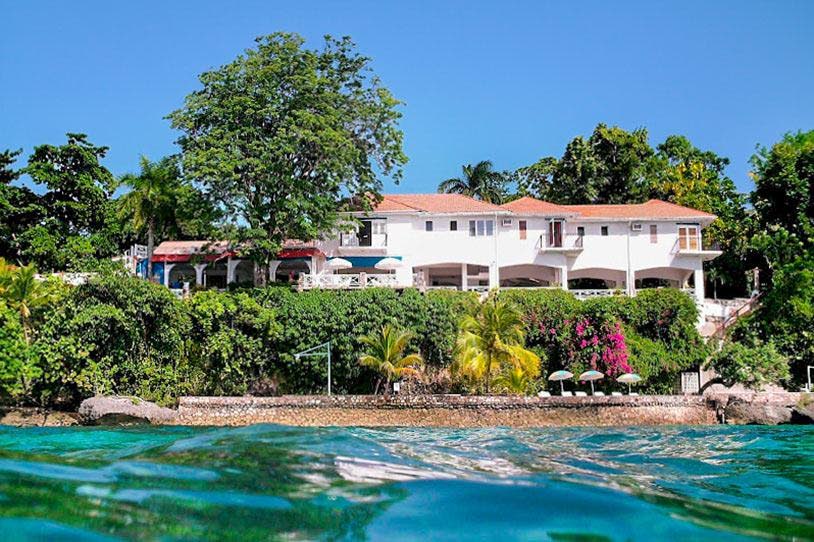
An interesting American, forging a close link with Jamaica was Ruth Bryan Owen. She was born Ruth Bryan on October 2, 1885, in Jacksonville, Illinois, to Democratic politician, William Jennings Bryan, and his wife, Mary E. Baird. In 1910, Ruth married her second husband, Lt Reginald Altham Owen, a British army engineer, who was assigned to Jamaica. They had two children. They bought a property in about 1911, from Percival Henriques Lindo, a Jamaican property owner and distiller. Ruth spent three years in Oracabessa, St Mary, where she oversaw the design and construction of her home, called Golden Clouds. She vacationed here in the winter for 30 years. Ruth detailed her time and experiences at Golden Clouds in her book, Caribbean Caravel. To aid in rebuilding the local economy, Ruth encouraged local residents to develop their skills as artisans and cultivated a community of painters and carvers. Given her social standing and wealthy friends in the US, she sent artwork to various galleries for sale thus helping the art community to earn a living. Ruth left Jamaica in about 1914 and settled in Florida. Her husband, Reginald Owen, died in 1928. In 1929, Ruth was one of the first women from Florida elected to the US House of Representatives. In 1933, she became the first woman to be appointed as a US ambassador. Ruth Bryan Owen died on July 26, 1954, in Copenhagen, Denmark. Her Oracabessa home, Golden Clouds, was sold in the 1970s.
Jamaicans in the US
From 1655, when the British captured Jamaica, the movement of people began among the territories. Sir William Penn was the naval commander when Jamaica was captured and, in 1681, his son, William Penn, named Pennsylvania in his honour, forging a link with Jamaica. There would be other more direct links with the US. In the 18th Century, abolitionist David Barclay resettled a group of enslaved people from Jamaica in Philadelphia, Pennsylvania. Alexander Dallas, the father of US Vice President George Mifflin Dallas (1792-1864), was born in Jamaica at Dallas Castle near Papine, which was owned by his grandfather, Robert Dallas. The family moved to the US.
Following Emancipation and the decline of sugar, some members of plantation families left Jamaica and moved to the US. One such was a son of William Power-Trench who had owned Trench Pen. People from the various strata of Jamaican society went to the US in increasing numbers from the 1860s. Contracting farm workers from Jamaica and other British West Indian territories started after the end of the US Civil War in 1866. This programme was expanded during the Second World War. Many Jamaicans going to the US in the first half of the 20th Century went to northern states, such as New York, New Jersey, and Connecticut, where racial segregation was not as strictly observed and coloured Jamaicans could be accepted as white. Sir Alexander Bustamante spent time working in the US and Norman Manley’s mother also went there to work. One of the oldest communities of people of Jamaican heritage is Hartford, Connecticut. Increasing numbers of Jamaicans also went to Florida. There was a surge in immigration to the US in the 1970s when nearly 260,000 Jamaicans were admitted.
There are many Jamaicans who went to the US to study and work or were born there to Jamaican immigrants who have risen to prominence in their chosen professions and areas of advocacy. Jamaicans rising to prominence in the US include Marcus Garvey, Claude McKay, Violet Lopez Watson, Rubina Ann Guscott, Una Clarke, Harry Belafonte, Colin Powell, Madge Sinclair, Donald Harris, Kamala Harris, Sheryl Lee Ralph, Patrick Ewing, Al Roker, Orlando Patterson, Robert Hill, and Tanya Chutkan.
Profile of a Jamaican in the USA –Jacob DeCordova
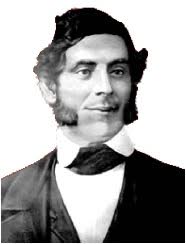
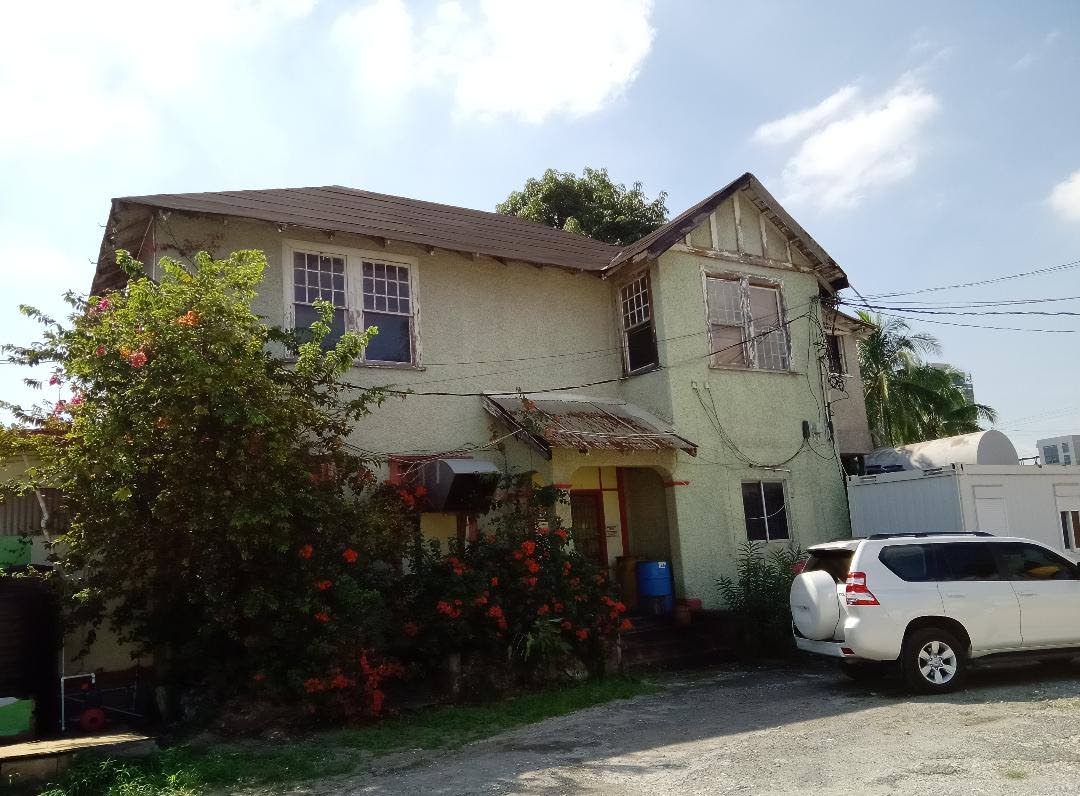
Jacob Raphael DeCordova (1808-1868) was discovered when exploring the history of an old house at 12 Waterloo Road which was built in 1890. The house was linked to the DeCordova family, who established Leonard DeCordova Limited in 1907 and Hardware and Lumber in 1927. Members of the family were also involved in the founding of The Gleaner, and one was Jacob DeCordova who became an honoured citizen of Texas in the US.
Jacob DeCordova was born in Spanish Town, Jamaica in 1808, son of Raphael and Judith DeCordova who were in the coffee business. They were British Jews. He grew up in England but returned to Jamaica in 1834. He and his brother, Joshua, established The Gleaner newspaper. In 1836, Jacob moved to the US, settling in Texas in 1839, and was elected to the state legislature in 1847. He was involved in the mapping of Texas and land development. The De Cordova Bend Reservoir was named in his honour. The DeCordova family had a reunion in Jamaica in 2018.
Today, it is estimated that about 1.5 million people of Jamaican heritage live in the US. A much smaller number of American heritage live in Jamaica, but, on average, more than two million tourists from the US vacation in Jamaica each year. In spite of changes in US immigration policies, the link between people from Jamaica and the US will remain strong.
Marcia Thomas is a member of the Jamaica Historical Society and Built Heritage Jamaica