New irrigation system, agro park launched in St Catherine
Loading article...
-
 British High Commissioner Alicia Herbert and Agriculture Minister Floyd Green alongside other officials at Thursday’s commissioning of the Amity Hall/Bridge Pen Agro Park and irrigation system. Photo - Contributed
-
British High Commissioner Alicia Herbert and Agriculture Minister Floyd Green alongside other officials at Thursday’s commissioning of the Amity Hall/Bridge Pen Agro Park and irrigation system. Photo - Contributed
-
 From left: L. O'Reilly Lewis, director of the Projects Department at the CDB; British High Commissioner to Jamaica, Alicia Herbert; and Minister of Agriculture, Fisheries and Mining, Floyd Green. Photo - Contributed
-
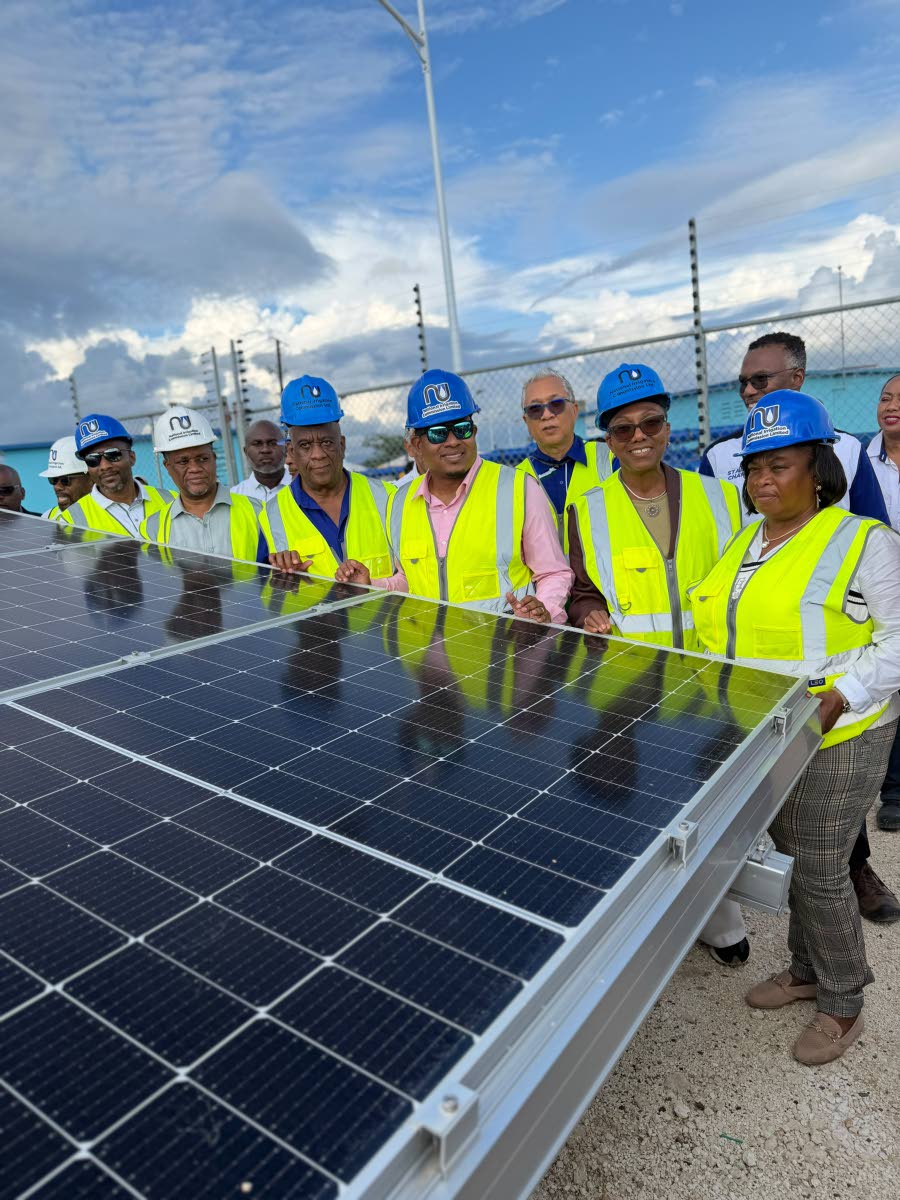 Officials in front of the 100-kilowatt solar photovoltaic system-Amity Hall. Photo - Contributed
A major agricultural development in St Catherine, expected to benefit hundreds of farmers and boost Jamaica’s food production, was officially launched on Thursday with the commissioning of the Amity Hall/Bridge Pen Irrigation System and the opening of the Amity Hall/Bridge Pen Agro Park.
The development, part of the Southern Plains Agricultural Development (SPAD) Project, is designed to improve agricultural productivity, strengthen food security and help farmers withstand the effects of climate change.
The wider project covers 795 hectares of agricultural land in Amity Hall, St Catherine, and Parnassus, Clarendon, and is expected to benefit approximately 700 farmers and agricultural entrepreneurs.
Funded primarily through the United Kingdom Caribbean Infrastructure Fund (UKCIF), in partnership with the Caribbean Development Bank (CDB) and the Government of Jamaica, the initiative includes modern irrigation infrastructure, farm roads and support for agricultural training and market access.
The Amity Hall/Bridge Pen Agro Park covers 480 hectares and comprises approximately 143 agricultural lots. Its infrastructure includes a pumping station capable of supplying 46,000 cubic metres of treated irrigation water daily, a 20,000-cubic-metre reservoir, 24 kilometres of irrigation pipelines and 13 kilometres of farm roads.
A 100-kilowatt solar photovoltaic system is also expected to reduce electricity costs by approximately 15 per cent.
Speaking at the ceremony, British High Commissioner to Jamaica Alicia Herbert said the investment would help farmers increase production while strengthening the sector’s ability to withstand climate-related threats.
“The Southern Plains Agricultural Development Project demonstrates the power of partnership to deliver real and lasting benefits for communities. By investing in modern, climate-resilient agricultural infrastructure, and investing in farmers themselves, we are helping farmers increase productivity, strengthen food security and build resilience in the face of climate change,” she said.
Herbert said the project was also expected to directly benefit more than 300 women farmers and agricultural entrepreneurs through improved access to irrigated land, training and agricultural support services.
She also highlighted efforts to increase the participation of young people and persons with disabilities, describing the initiative as “inclusive development in action”.
The high commissioner said the investment was particularly important as Jamaica marked one year since Hurricane Melissa, which exposed the vulnerability of farming communities to extreme weather and reinforced the need for climate-resilient infrastructure.
Significant returns
Agriculture Minister Floyd Green said the Government had deliberately prioritised agriculture when seeking funding under the UKCIF, arguing that investment in the sector would deliver significant returns.
“When our friends from the United Kingdom established the Caribbean Infrastructure Fund, putting away £300 million pounds for the Caribbean and inviting member states to come to them with projects, the Government could have chosen any area to approach the UK government about; but the Government decided to seek the funds to help drive agriculture, because we believe that that will give us the greatest return on our investment,” Green said.
Meanwhile, L. O’Reilly Lewis, director of the CDB’s Projects Department, said reliable irrigation, drainage and road access would help farmers reduce their dependence on rainfall and improve water and food security.
“CDB is pleased to support this transformative project because it puts farmers in control of their future. With reliable water, drainage and access roads, harvests no longer hinge on rain, and every drop goes further to build water and food security across Jamaica and the region,” he said.
Beyond infrastructure, the SPAD project has provided agricultural training, improved market linkages and expanded access to land for women and young people.
Some 576 stakeholders have received training, while 60 farmers have benefited from the project’s Matching Grant Scheme.
The investment is expected to support increased production of crops including onions, sweet potatoes, Irish potatoes, hot peppers, cassava, mangoes and papayas, while improving farmers’ access to markets and strengthening rural livelihoods.
Jamaica is the largest beneficiary of UKCIF, a UK grant-funded programme delivered in partnership with the CDB to support infrastructure development and climate resilience across the Caribbean.