Elizabeth Morgan | Kingston and St Andrew’s water woes: an impending crisis
Loading article...
-
-
 Samuda
This feels like the hottest summer ever experienced in Kingston and St Andrew to date, although the records say that, generally, 2023 was much hotter. This year, Jamaica is experiencing the effects of a super El Niño which causes much higher temperatures. The Saharan dust is also causing wind shear which suppresses the development of Atlantic tropical depressions. So, parts of Jamaica are experiencing drought conditions.
This year, in Kingston and St Andrew, we have the customary water restrictions as, without consistent rainfall, the water levels in the Hermitage and Mona dams are falling. The Hermitage was completed in 1927 and the Mona officially came into service in 1959, although it was completed in 1946. These dams depend on rainfall, mainly from water flowing in from rivers, as well as periodic heavy rainfall. The Hermitage gets water from the Wag Water River and Mona from the Hope and Yallahs rivers. Water is also sourced through wells and springs.
Population increase
In 1923, before the Hermitage Dam was built, Kingston and St Andrew had a combined population of about 119,000. In 1960, when the Mona Dam was opened, Kingston and St. Andrew had a population of 421,000. Today, with the same two dams, Kingston and St. Andrew have an estimated population of about 700,000.
There is continuous construction in Kingston and St Andrew as single-family homes are bought up, everything is bulldozed, including mature trees, and townhouses, apartments, and commercial high-rise buildings are constructed. In recent years, the habitable lot density has increased.
So, the population of Kingston and St Andrew has nearly doubled and the water capacity has not increased. The National Water Commission (NWC) has said that a lot of water is lost through leaks and they have been trying to address this.
It may be recalled that, in the latter part of the 19th century, the parishes of Kingston and St Andrew had mainly large estates/pens which would have had their domestic water coming from wells, if not directly from a river or spring. A water supply for the city did not come into operation until 1845, when the private Kingston and Liguanea Water Works was established, which has evolved into the NWC. Some wells still in existence in Kingston and St Andrew are not in use, it is reported, as the water is contaminated.
Weather pattern change
So, the domestic water system in Kingston and St Andrew needs consistent rainfall. From geography studies, in the 20th Century rainfall was fairly predictable. In the winter months, there was some rainfall from frontal systems coming from North America. There would be a dry period over March and April, and rain could be expected in May. In the summer months, one could expect convectional rain, as the heat of the morning would rise, condense into cumulonimbus clouds, and there would be afternoon thunder showers.
Hurricane season is June 1 to November 30. Rain would be expected from tropical waves and tropical depressions, which could develop into tropical storms and hurricanes, particularly from August into October. The peak would be between September and October which could be very rainy. Of course, there could also be years of drought.
In geography in the 1970s, there was no focus on Saharan dust. Now, it is evident that meteorologists and climatologists have learnt much more about the movement of dust from the Sahara Desert over the Atlantic and its impact on the weather in the Atlantic and the Caribbean Basin. It also appears that the density of the dust and height of circulation have increased, and this can increase drought conditions and suppress hurricane formation.
It is evident that the weather patterns have changed in Jamaica, including in Kingston and St Andrew: rain cannot be expected in May; convectional summer rain is near non-existent; episodes of Saharan dust are more significant; droughts are longer; oceans warmer; and hurricanes more intense e.g. Melissa.
Of course, climate change because of global warming is further complicating the weather system, as there is more concrete and more carbon emissions from deforestation, manufacturing, motor vehicles, airplanes, and other activities.
Climate change
The globe has been warming at an alarming rate. It is reported that 2026 could be one of the hottest years on record, combining the continuing advance of manmade climate change and the Super El Niño. The Conference of Parties of the UN Framework Convention on Climate Change (COP 30) in Brazil failed to get decisions to further reduce carbon emissions and especially from fossil fuels. COP31 is scheduled to be held in Turkiye in November. Of course, the US Trump administration thinks climate change is a hoax.
A pending water crisis
A strict water prohibition order came into effect for Kingston and St. Andrew on Monday, August 17. As the water levels fall daily in the two dams, if there isn’t heavy rainfall soon, the Corporate Area could be back to 2009 when the water shortage became critical and water was supplied only for a few hours per day.
This will impact schools, businesses, and the economy generally. Not much can function without water. After all, it is life.
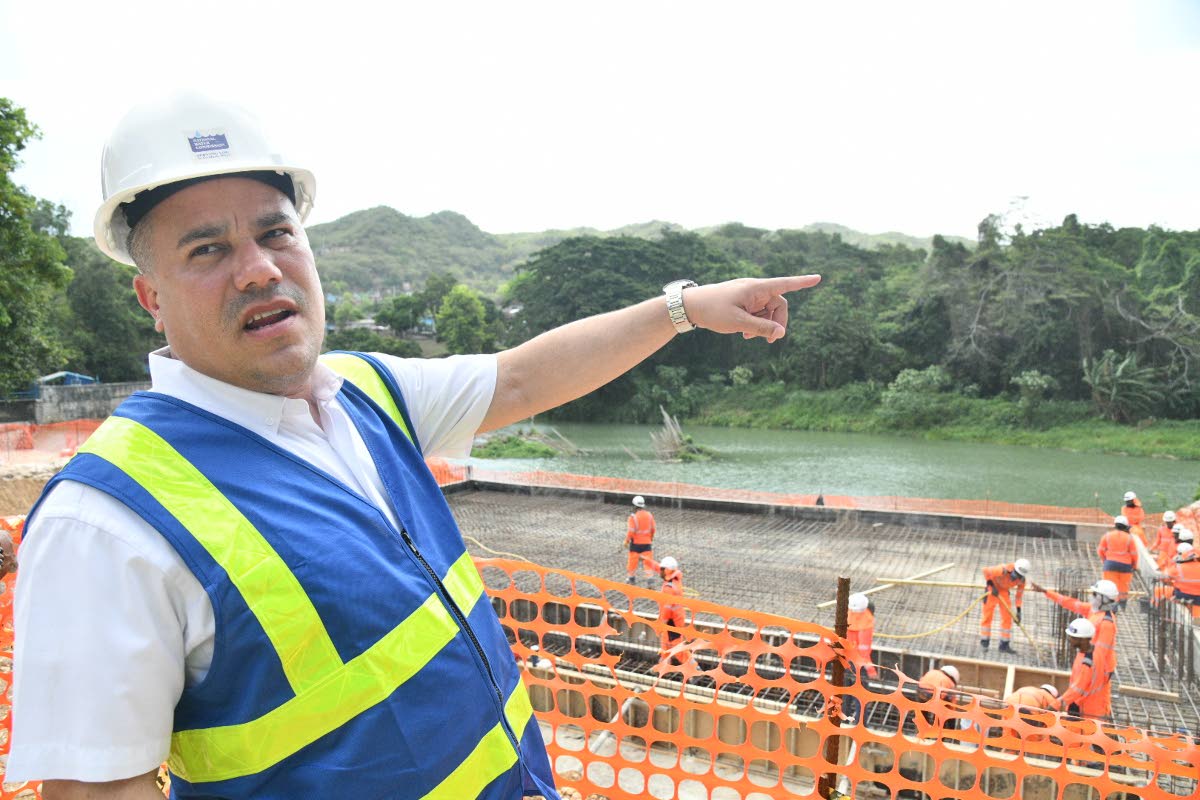
Matthew Samuda, minister of water, environment, and climate change, has said that improvements in water supply could be coming next year from an expansion of the Hermitage Dam and from the Rio Cobre river system.
There are others saying that a new dam is needed and water from north coast rivers should be diverted to Kingston. None of this may be feasible. A new dam like Mona could cost billions of US dollars and may not be environmentally feasible, and neither might be diverting rivers.
There now has to be an environmentally sustainable long-term solution. What is now urgently needed, however, is a short-term solution. We need some heavy rainfall soon to save Kingston and St Andrew from another period of water shortage misery.
Elizabeth Morgan, is a specialist in international trade policy and international politics. Send feedback to columns@gleanerjm.com.