Kristen Gyles | Chasing squatters
Loading article...
-
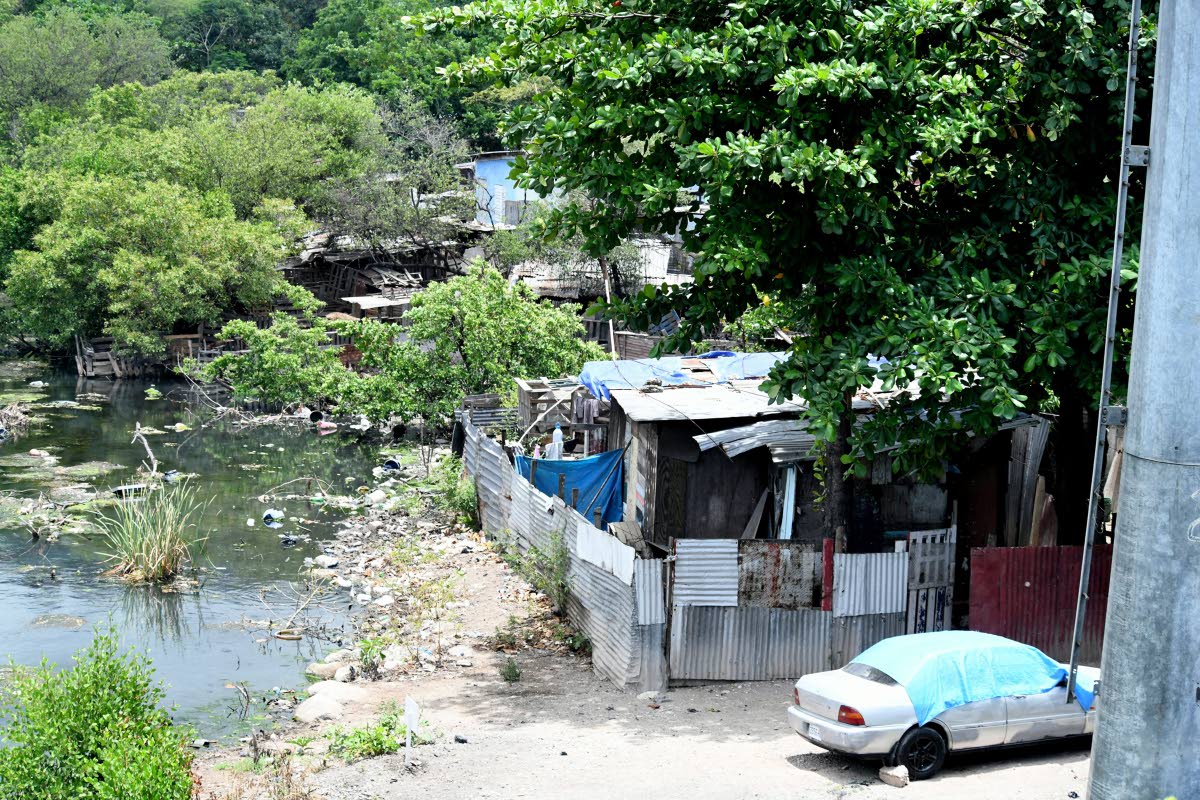 This file photo shows a section of a squatting community in New Haven, St Andrew. Photo - File
-
This file photo shows a section of a squatting community in New Haven, St Andrew. Photo - File
-
 Kristen Gyles. Photo - File
In a country with an abundance of Crown land, dispossessing a private landowner of the land they purchased to give it to someone else,in the name of “equity” is itself inequitable.
A person who legitimately purchases land should not feel as though they are in a race against time to quickly build on or cultivate it, lest they lose it. But this is the effect that the current legislation pertaining to land ownership has on private landowners.
Property owners in general should feel free to use their property in any manner that suits them. An individual should be able to purchase land, leave the country, and return at their convenience to build on their land. Frankly, many people have to take this route to even be able to afford to build a house in this day and age. No one should lose ownership of their purchased property simply because of how they choose to use, or not use, it or because of how long it takes them to use it.
On the other hand, Crown land belongs, in principle, to the public. It is there for the people’s benefit. When a person occupies an unused parcel of land openly, peacefully and continuously for many years, building a home, raising a family and becoming part of the community, there may come a point when regularising that occupation serves the public interest. In many instances, ‘squatters’ who want to stake a claim to government land that they have possessed end up making improvements to the land that otherwise would not have been made, given the land was previously idle. Nothing is being taken away from anyone in this instance.
Private land is different. It represents a specific individual’s savings, inheritance or investment. Permitting squatters to acquire rights over it would force one individual to finance another individual’s housing by surrendering an asset they lawfully own. That is not right. A title should not become a race between an absent owner and an opportunistic occupier.
Personal circumstances are often very nuanced and differ widely. The notion that everyone who owns land is rich, while everyone who does not own land is poor, is perhaps as popular as it is false. A landowner may be overseas but working menial, overtime jobs just to save enough to build a small unit on their small piece of land. A landowner may also have nothing else to their name but the quarter acre of land that was willed to them by a grandfather or grandmother. A landowner may be battling severe illness and desperately need the proceeds from the sale of their land to procure medical treatment. And, guess what? A landowner may very well be rich and overflowing with wealth and simply want to secure their land for their kids. None of these circumstances should convert private property into an unofficial public-housing programme.
Government has several policy options. It can lease, sell or regularise occupation on suitable public land. A private owner has only the protection of the law. The fair approach is for the government to use government land to address housing and inequality, not to solve these social ills by transferring the property of one private citizen to another.
It is curious that the legislators responsible for the current Limitation of Actions Act could have managed to get it so wrong. Under this legislation, a person can acquire legal title to privately owned land through adverse possession after occupying it continuously and uninterrupted for at least 12 years. By contrast, a claim involving government-owned land generally requires 60 years of continuous occupation.
What would make sense is for a squatter to be able to claim a right to government land after 12 years of occupation but claim a right to private land only after 60 years or, frankly, not at all. The opposition leader’s intention to introduce a new bill to allow for a reduction of the qualifying period to acquire government land through adverse possession is quite in order.
There are some who feel that, because they spent hard-earned money to purchase their land, no one else should have the benefit of calling a place ‘home’ that they didn’t likewise purchase. Aside from the fact that most squatter communities are simply not desirable places to live, the entire mindset is an odd one. I certainly don’t envy any ‘squatter’. I also think the social implications of chasing squatters as they move around nomadically are likely to be a bigger problem than simply leveraging more government land for the benefit of so-called ‘squatters’.
There are several categories of circumstances that lead to both intentional and unintentional squatting. Not all squatters are the same, and it is silly to characterise all squatters as careless or lawless, especially when individual circumstances vary so widely. For example, several people lost homes to Hurricane Melissa. Reports and relief assessments in the aftermath of the hurricane indicate that some such individuals have had to seek shelter in unfinished or abandoned buildings. This would make them, by definition, squatters. Many of these people would never have seen themselves out of a home, but it happened. Life happens.
Ultimately, public resources, including land, should serve the public. We have to ask ourselves how well the public is being served by an abundance of unused, uncontrolled government land for which the government has no immediate plans.
Kristen Gyles is a free-thinking public affairs opinionator. Send feedback to kristengyles@gmail.com and columns@gleanerjm.com