Imani Tafari-Ama | Reconstruction is also about priorities
Loading article...
-
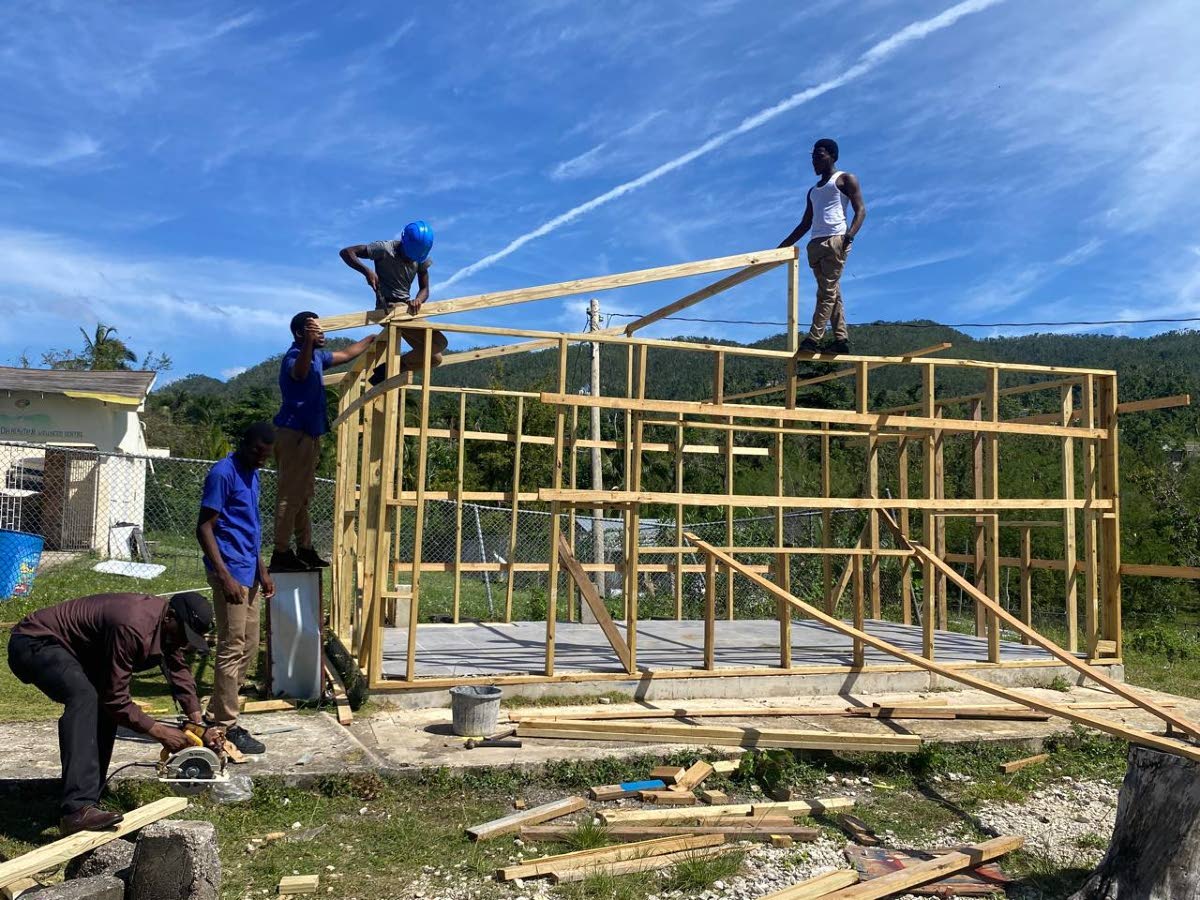 Students and staff at Aberdeen High School in Aberdeen, St Elizabeth, advance reconstruction of the institution’s tuck shop, which was decimated by Hurricane Melissa. Photo - Contributed
-
Students and staff at Aberdeen High School in Aberdeen, St Elizabeth, advance reconstruction of the institution’s tuck shop, which was decimated by Hurricane Melissa. Photo - Contributed
-
 Imani Tafari-Ama. Photo - Contributed
Almost a year after Hurricane Melissa devastated Jamaica, a rather extraordinary juxtaposition confronts us. On one side is the continuing struggle of Jamaicans whose homes, livelihoods and communities were battered by the category-5 hurricane.
On the other is the decision by the National Reconstruction and Resilience Authority (NaRRA) to lease headquarters in the Digicel Building on Kingston’s waterfront at approximately $115.2 million a year, under a five-year agreement. That is roughly $576 million in rent over five years, before utilities, staffing and other operating costs.
The announcement understandably provoked public concern. On October 7, the Government announced that it was scaling back the amount of space NaRRA would initially occupy, saying it had heard the concerns and would reduce the associated costs.
But the controversy should not end with a smaller office. It raises a much larger question about how we understand reconstruction and what our expenditure choices say about national priorities.
More than $1.47 billion in net donations had entered the Office of Disaster Preparedness and Emergency Management’s (ODPEM’s) hurricane-donation accounts by March 31, according to ODPEM. More than 17,000 people had contributed. Of those funds, approximately $146 million had been spent on the Government-led roof-repair programme, supplemented by about $400 million in donated roofing materials.
Prime Minister Andrew Holness recently said $11.5 billion had been allocated to the ROOFS programme, with more than 50,000 people benefiting and approximately 118,000 households assessed.
Even with that said, the question that continues to trouble many Jamaicans is this: how quickly and effectively are resources reaching the people who need them most? That question became particularly difficult after the Auditor General’s real-time audit found that, as of February 23, only $26 million, or 1.8 per cent, of $1.44 billion in Hurricane Melissa cash donations had been spent for the benefit of victims. Approximately $569.6 million and US$5.9 million remained in the relevant donation accounts at that point.
ODPEM initially told the Auditor General that the low utilisation of the donated funds was partly attributable to the absence of authorisation from the Ministry of Finance to spend them. Later, Permanent Secretary Rocky Meade offered a broader explanation, saying the Government had initially prioritised physical supplies and other immediate humanitarian assistance rather than rushing to spend cash donations.
The Prime Minister has similarly defended the approach, arguing that the Government was spending public money on tangible recovery while humanitarian supplies were flowing into the country.
Fair enough.
But if the Government can mobilise billions of dollars for recovery, then we are entitled to ask another question: what does it mean to spend more than $115 million a year to house the very institution created to coordinate that recovery? Since the Prime Minister moved ODPEM into the Office of the Prime Minister after Melissa, isn’t that also the logical location for NaRRA?
NaRRA’s justification is that the Digicel Building is resilient, with structural and engineering features intended to withstand environmental hazards and maintain critical operations during disasters. The authority also says the National Land Agency assessed the proposed rent against market values and what other government agencies pay for office space and found it consistent with prevailing standards.
Market value is not synonymous with value for money. Nor is a building’s resilience sufficient justification for its cost. The real issue is opportunity cost. What else could $115 million a year accomplish?
NOT ABSTRACT FIGURE
At a time when some people are still without shelter, rebuilding roofs, homes, farms and livelihoods, that amount is not an abstract accounting figure. It is approximately four times the $26 million that the Auditor General found had been spent from the hurricane cash donations by February. Over five years, $576 million is roughly 40 per cent of the $1.44 billion in cash donations received for Hurricane Melissa.
When the institution spending the money is called the NaRRA, the symbolism becomes difficult to ignore. Reconstruction is not simply about rebuilding roads, bridges and roofs. It is also about rebuilding public confidence. It is about demonstrating that the state has learned from the vulnerabilities exposed by disaster. It is about creating institutions that are efficient, transparent and responsive.
And it is about making expenditure decisions that ordinary citizens can understand. Jamaican people hate it when you “tek dem fi fool”. This is very important because people donated to Hurricane Melissa relief because they wanted to help fellow Jamaicans. They did not donate because they wanted to see money sit in bank accounts. Or pay ridiculous rents.
A reconstruction authority should model the principles it is supposed to advance, not rage-bait the public before reviewing a foolish idea. It should demonstrate that every major expenditure has been tested against alternatives. It should be able to show citizens not merely that something is affordable but why it is the best available use of scarce public resources.
The Government’s decision to scale back NaRRA’s initial office footprint is significant. It demonstrates that public scrutiny can influence public expenditure. But it should also prompt a broader conversation. Why did it take public backlash for the scale of the commitment to be reconsidered?
And what other expenditure decisions, particularly in the reconstruction effort, deserve the same level of drilling down? Nearly a year after Hurricane Melissa, Jamaica should not be measuring recovery only in billions allocated, contracts awarded or buildings occupied.
SECURELY HOUSED
We should be asking how many families are securely housed, how many livelihoods have been restored, how many communities have regained their economic footing and whether the people who donated their hard-earned money can see tangible evidence of what their generosity accomplished.
We should also ask whether the billions being spent are reducing the vulnerabilities that made the disaster so devastating in the first place. That is the deeper meaning of resilience. The purpose of reconstruction is not simply to return Jamaica to where it was before October 28, 2025. It should be to build a country that is better prepared for the next Melissa.
That requires more than resilient buildings. It requires resilient institutions, disciplined expenditure, transparent decision-making and a government capable of explaining, convincingly, why every significant public dollar is being spent where it is.
When thousands still rebuilding their lives after a catastrophic hurricane, what should reconstruction look like, and whose needs should be reflected first in the choices we make?
Imani Tafari-Ama, PhD, is a Pan-African advocate and gender and development specialist. Send feedback to i.tafariama@gmail.com and columns@gleanerjm.com.