A.J. Nicholson | Independent Jamaica’s derailed constitutional journey
Loading article...
-
-
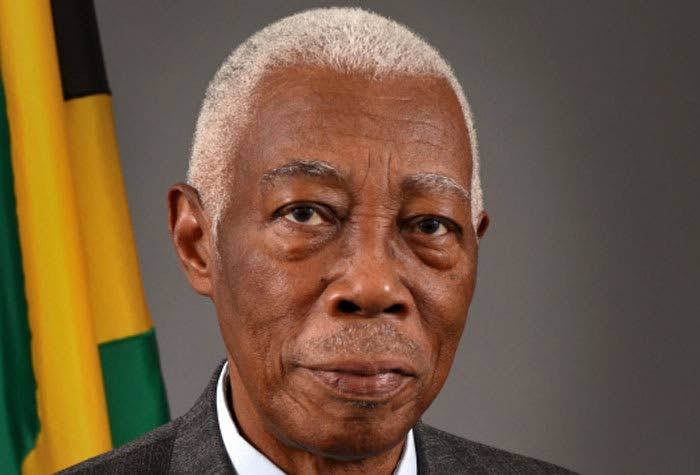 A.J. Nicholson
Lamentably, as Jamaicans prepare to mark the 64th anniversary along the independence journey, candid questions loom concerning how ill-judged steps taken by some of their leaders have landed them into an unflattering cul-de-sac.
How has it come to pass that Jamaica, proudly first among British Caribbean territories to gain political independence, finds itself six decades-plus later no less tied to the monarch and the monarch’s court than when colonial status ended on August 6, 1962?
Hasn’t the entire world changed multiple times over during that period?
Can there be any letting up, as some seem to suggest, on public lament over the generational injustice of being condemned to remaining tied to their highest tribunal of justice in a country an ocean away, inaccessible to the vast majority of the citizens?
Deep into this 21st century, is there a traceable genesis of this societal unjustness?
The Gleaner, in September 2003, reported that the then Jamaica Labour Party Opposition Leader, Edward Seaga, had made the following muscular pronouncement, the deeply disabling core of which is generally lost in public discourse:
“I want to make it clear that the JLP will only agree to the replacement of the monarchy when the people are consulted by referendum about the future of the right of appeal for Jamaicans through the Privy Council as the final Court of Appeal ... the critical importance of maintaining in place the safeguard of access to the Privy Council as the final Court of Appeal is paramount”.
The immediate intent of that hair-raising proclamation was replying to projections by then Prime Minister and People’s National Party President, PJ Patterson, at his party’s 65th annual conference at the National Arena on the previous Sunday concerning his administration’s constitutional reform policy pursuit.
He had declared to supporters and all Jamaica that “the time has come when we must move from a monarchical form of government to a republican form of government”, and he saw no reason why the process could not be completed within 18 months.
On the CCJ, he intimated, “(T)he people of Jamaica will be engaged through their representatives in Parliament”.
Beyond a reply to the Patterson clear notification, the unprecedented stance assumed by the JLP leadership has resulted in far-reaching consequential instability to this day - and continuing.
It presented a frontal challenge to the unwritten expectation, in embracing the Independence Constitution, that appeals to the Privy Council would be maintained only until appropriate alternative arrangements were made.
It struck at the heart of the people-centered determination of the Hugh Shearer-led government, in 1970, Edward Seaga being a Cabinet member, that Jamaica would eventually abandon appeals to the British institution to accede to a regional final court.
COLLAPSED COLLABORATION
To the extent that it collapsed collaboration between both political parties - an indispensable requirement for success to attend any proposed departure from the monarchical construct - the pronouncement spawned a toxic, unsettling environment.
Crucially, however, the yardstick by which its effect must ultimately be judged is how succeeding JLP leadership have reacted to the gateway strictures which directly disabled the decolonisation forward movement.
Bruce Golding, a member of the 1980s Seaga-led government, which fully endorsed Jamaica’s link to the regional court, succeeded to the JLP leadership.
As prime minister, piloting debate on the Charter of Fundamental Rights and Freedoms bill in 2009 in the House of Representatives, he pointedly alerted his colleague members to the futility of the threshold referendum route, particularly where, as here, one party would not support the referendum question.
His reminder of his predecessor’s advice that operations of the regional court should be monitored for a reasonable period and then an appropriate decision taken has fallen on deafened ears of the succeeding leadership.
Strong authentic urgings from several quarters have consistently been publicly placed before the current JLP leadership, pressing for a prudent change of direction.
Unheeding, they doubled down on a fixed anti-CCJ posture in slavish obedience to the paramountcy of “maintaining in place access to the Privy Council”.
They are unimpressed by the good sense inherent in the history of delinking from the monarch’s court before or alongside movement away from the monarchy.
They unsparingly expend taxpayer dollars in seeking to usher Jamaicans away from the monarchy on a beguiling promise to conduct final-court discussions at some nebulous future time in spite of having settled on an unyielding resolve to maintain in place “the safeguard of access to the Privy Council”.
Surely, that crossed the transparency and candour red line!
Rejecting the secure direction pointed by the combination of constitutional provisions, history, and convention, the judgment of the highest court, accessibility, and good sense, they steadfastly strategise how to preserve in place access to the London-based court, a privilege enjoyed only by wealthy Jamaicans.
UNIMAGINABLE BREACH
Accordingly, to thwart the required parliamentary transition vote, they meddled unlawfully with the rules that govern Senate membership, committing a hitherto unimaginable breach of the Constitution, as Minister Delroy Chuck would undoubtedly recall.
They are unconcerned that the referendum route, a political exercise, has been shunned by every country that successfully made the transition for fear of woeful damage being done to the judicial system resulting from close contact with political maneuvering as is currently being experienced in a centuries-old democracy within the Americas.
Political independence symbolises that public policy leadership and power reside not with outsiders but in a government drawn from among Jamaica’s own people.
Lamentably, during this forgettable episode, the JLP leadership have been fully united that the resilient citizens - overwhelmingly their kith and kin - deserved no explanation whatsoever for the disdainful stance taken against their general well-being.
Recently, Justice Minister Chuck smugly affirmed that the Government would regard a change of direction not as a caring, dutiful pursuit in the best interests of their employers but rather as “bowing to the demands of the Opposition”.
Does that not reveal the anchor of their iron-fisted pharaonic posture, refusing to free their own people from the bondage of generational deprivation of access to justice?
Is that not the signpost feature of Independent Jamaica’s constitutional journey, uncaringly derailed from the path plainly laid out 23 years ago by Prime Minister Patterson on September 21, 2003?
Emergence from the demeaning cul-de-sac will come about only through a directional change by the governing party leadership being faithful to their sworn duty to obey the law and uphold the Constitution.
Speaking of which, they need to ponder how their self-absorbed approach to matters of law and the Constitution, declining to ‘bow’ to valid suggestions from any quarter, has led to unceasing failure to taste success in the law courts.
Calling from his village in the foothills of the Bull Head Mountain, Farmer Joe described the Government’s messaging as peculiar, questioning: If they truly believe in Chuck’s assertion that joining the CCJ amounts to moving towards a new union or Federation, why are they not leading the charge for Jamaica’s attachment to that integration movement, which includes the Cooperative Republic of Guyana?
Yet another dispiriting lament as the emancipendence milestone nears: Are the oft-promised Vale Royal talks not as much a mirage as the latest beguiling promise of a local final appellate court?
A.J. Nicholson is former minister of justice and attorney general of Jamaica. Send feedback to columns@gleanerjm.com.