Dennis A. Minott | Imagine a ‘billioneerer’ investing with Jamaica
Loading article...
-
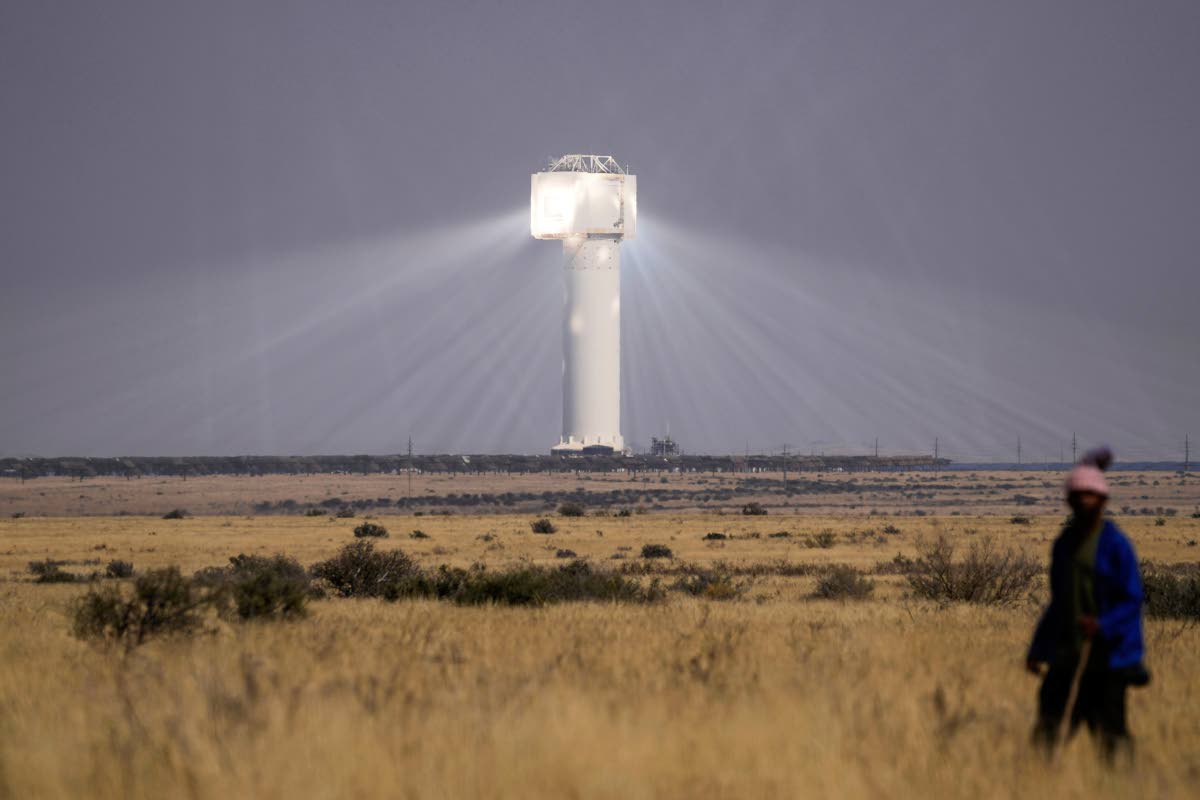
A shepherd watches livestock near Khi Solar One, a solar thermal plant that converts the sun’s light energy into electricity, outside Upington, South Africa, in the Northern Cape province.
-
. Dennis Minott
Imagine that early tomorrow morning, Jamaica awoke to extraordinary news. One of the world’s wealthiest entrepreneurs announced plans to mindfully invest billions of US dollars in our country over the next two decades. Parliament would applaud. Editorials would celebrate. Social media would erupt with excitement. Such an announcement would rightly attract attention.
Yet before celebrating, Jamaica should ask one deceptively simple question: What kind of ‘billioneerer’ is coming?
Not every great fortune is created in the same way. Some fortunes are built by helping societies become more productive, more innovative, and more prosperous. Others are accumulated by extracting value from places whose people remain little better off after the investors have earned their returns. One model creates wealth with a nation. The other grows wealthy off it.
That distinction is far more important than the size of any investment announcement.
For too long, the public conversation has tended to confuse investment with development. The two are not synonymous. Investment is a financial transaction. Development is an enduring increase in a nation’s productive capability. One can occur without the other.
A country may record impressive gross domestic product growth while steadily losing ownership of its productive assets, importing increasing quantities of technology, exporting much of its profits, and remaining heavily dependent upon external expertise. Activity rises, yet national capability scarcely advances.
A wiser measure of development asks a different question: Does this investment leave Jamaica more capable than it found her?
FIRST TEST
That single question deserves to become the first test applied to every major proposal whether in tourism, energy, agriculture, technology, manufacturing, or infrastructure.
Consider tourism.
There can be little doubt that tourism remains indispensable to Jamaica’s economy. It provides employment, earns valuable foreign exchange and supports thousands of families. None of this should be minimised.
Equally, however, economists have long recognised the phenomenon of tourism leakage throughout much of the Caribbean. Significant proportions of visitor expenditure leave host economies through imported food, overseas reservation platforms, foreign-management contracts, insurance, aviation services, financing arrangements, and profit repatriation. Visitor arrivals alone, therefore, tell only part of the story.
The more important question is how much of every tourism dollar continues circulating within Jamaica.
Does the hotel purchase vegetables from Jamaican farmers? Does it employ Jamaican engineers, architects, software developers and designers? Does it source furniture from local manufacturers? Does it stimulate domestic entrepreneurship and innovation? Does it strengthen local communities long after visitors have departed?
If the answer is increasingly yes, tourism becomes not merely an industry but a national multiplier of capability.
Exactly the same reasoning applies to energy.
The purpose of an electricity system extends beyond moving electrons. It should also strengthen domestic engineering competence, expand technical education, stimulate innovation, and improve long-term economic resilience.
Every billion dollars invested in energy should leave behind better technicians, stronger institutions, more sophisticated manufacturers and a more secure electricity system than existed before.
This principle deserves careful reflection as Jamaica considers various future energy options.
Large, highly specialised technologies often require imported expertise, proprietary equipment, extensive regulatory capacity, and decades of financial commitment. Such technologies may well prove appropriate in some national circumstances. Yet every dollar committed to one pathway is a dollar unavailable for another.
The relevant policy question is, therefore, not whether sophisticated technologies are impressive. It is whether they represent the highest return on national capability.
COMPARATIVE ADVANTAGE
Jamaica possesses remarkable comparative advantages that remain underdeveloped. Our sunshine, wind resources, tropical biomass potential, agricultural diversity, and talented young scientists and engineers present opportunities extending far beyond electricity generation alone.
Properly integrated, decentralised renewable systems can stimulate manufacturing, software development, equipment maintenance, agricultural innovation, and technical services while simultaneously improving energy security.
Similarly, sustainably managed tropical biomass can support dispatchable renewable generation while creating rural employment, rehabilitating degraded lands and retaining a far greater proportion of expenditure within domestic communities than imported fuels.
The objective should never be merely to generate power. It should be to generate national competence.
That same philosophy extends beyond energy.
Imagine investors establishing advanced tropical biotechnology industries drawing upon Jamaica’s extraordinary biodiversity. Imagine pharmaceutical research linked to our universities. Imagine precision agriculture serving tropical markets across Africa, Asia, and Latin America. Imagine Caribbean-centred artificial intelligence applications, climate-resilient construction technologies, advanced food processing, and marine biotechnology becoming recognised Jamaican exports.
Each of these sectors depends principally not upon imported natural resources but upon educated people. Knowledge is the world’s most valuable renewable resource because it compounds.
A skilled engineer trains younger engineers. A successful entrepreneur inspires additional entrepreneurs. A productive research laboratory generates further discoveries. Every generation enlarges the opportunities available to the next. That is how prosperous nations are built.
The mindful billioneerer understands this.
Profit remains essential. Businesses unable to earn sustainable returns cannot continue investing. There is, therefore, no contradiction between commercial success and national development. The real distinction lies elsewhere.
The extractive investor asks, “How rapidly can I recover my capital?” The mindful investor asks, “What productive capabilities will still exist here 20 years after my investment?” The first primarily measures financial yield. The second measures enduring national value.
Jamaica should actively welcome investors of the second kind.
Public policy can encourage them. Tax incentives can increasingly reward technology transfer, workforce development, domestic procurement, research partnerships and local value addition. Universities can collaborate more closely with industry. Government procurement can strengthen Jamaican suppliers without sacrificing competitiveness. Financial institutions can provide greater support for innovative domestic enterprises capable of exporting knowledge-intensive goods and services.
None of these measures represents hostility towards international investment. Quite the contrary.
They recognise that the strongest partnerships occur when foreign capital combines with local talent, domestic entrepreneurship, and shared long-term interests. Imagine, then, a different kind of billioneerer.
One who measures success not by the number of concessions negotiated, or by the profits quietly transferred overseas but by the number of Jamaican scientists employed, engineers trained, patents registered, export industries established, farmers enriched, apprentices mentored, and communities strengthened.
Such an entrepreneur would almost certainly become immensely wealthy. More importantly, Jamaica would become wealthier, too. That is enlightened capitalism and enterprise aligned with nation-building.
Every generation inherits a country partly shaped by the investment decisions of those who came before it. The question before us is, therefore, not whether Jamaica should welcome investment. We absolutely should. The real question is what kind of investment will best enlarge the capabilities, confidence and productive capacity of the Jamaican people.
The greatest fortunes are not made by taking the best out of a country. They are made by bringing out the best within it.
Dennis A. Minott, PhD, is a physicist, green energy consultant, and long-time college counsellor. He is the CEO of A-QuEST. Send feedback to columns@gleanerjm.com.