Allan Bernard | China’s fight against poverty offers important lessons for Jamaica
Loading article...
-
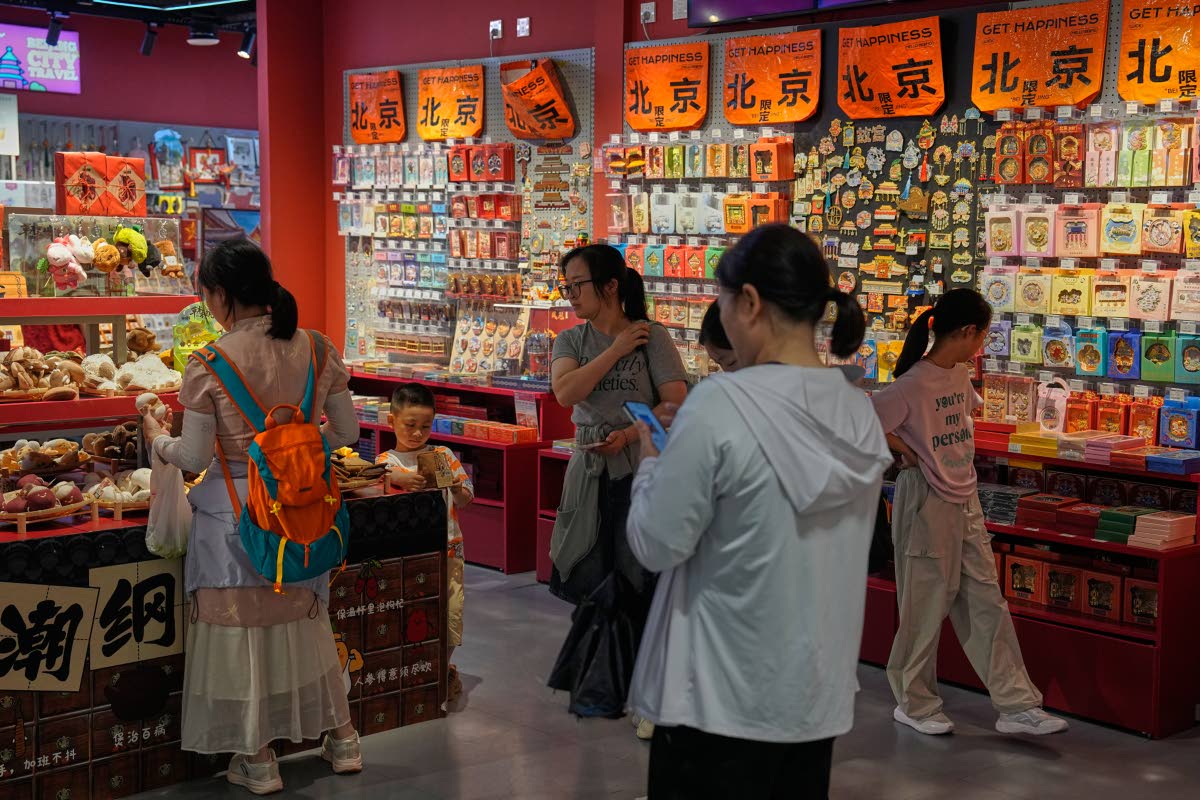
People visit a souvenir store at a shopping mall in Beijing, China
-

Allan Bernard
China’s announcement in 2021 that it had eradicated absolute poverty was met with both admiration and scepticism. After spending 10 days in China participating in the International Seminar on Xi Jinping Thought on Socialism with Chinese Characteristics for a New Era and Its Relevance to the World, I returned convinced of one thing: regardless of political perspective, there is much Jamaica can learn from China’s development journey.
The seminar, held under the theme, ‘Path to Modernisation: Takeaways from China’s Theory and Practice in Poverty Alleviation’, brought together political leaders and scholars from around the world. Through visits to villages, farms, industrial parks and innovation centres across Gansu Province, Ningxia Hui Autonomous Region and Beijing, delegates witnessed how coordinated public policy transformed communities that were once among China’s poorest.
The most striking lesson was that China does not regard poverty as merely a welfare issue. Instead, poverty reduction is pursued through integrated development, where housing, healthcare, education, clean water, employment, infrastructure, digital connectivity and environmental protection reinforce one another. Development is measured not only by economic growth, but by tangible improvements in people’s lives.
Communities such as Bulenggou, Hongde and Minning Town, once characterised by severe deprivation, now feature modern housing, paved roads, schools, healthcare facilities and thriving local businesses. These were not isolated showcase projects, but the product of a long-term national strategy sustained over many years.
Equally significant was China’s emphasis on creating wealth rather than simply distributing it. Agricultural cooperatives, including the renowned Huaniu apple industry, demonstrated how farmers were supported through technology, financing, modern production methods and reliable market access. Poverty reduction was achieved by helping people become more productive instead of permanently dependent on government assistance.
For Jamaica, where many rural communities continue to struggle with agricultural productivity, market access and climate resilience, there are valuable lessons. Strengthening cooperatives, expanding agro-processing, improving rural infrastructure and creating stronger links between farmers and markets could contribute meaningfully to reducing poverty and improving livelihoods.
Another important insight was China’s view that infrastructure is itself a form of social policy. Highways, railways, ports, electricity, water systems and digital networks are seen not simply as construction projects, but as investments that connect people to opportunity, allowing businesses to grow, students to reach schools, patients to access healthcare and farmers to bring products to market.
This philosophy has particular relevance for Jamaica. Our own experience demonstrates that strategic infrastructure investment can stimulate economic activity and improve quality of life. China’s contribution to projects, such as the North-South Highway, public buildings and healthcare infrastructure has become an important part of Jamaica’s development landscape.
The visit also reinforced the importance of the Jamaica–China relationship, which has evolved significantly since diplomatic ties were established in 1972. Cooperation now spans infrastructure, trade, mining, agriculture, healthcare, education and cultural exchange. Thousands of Jamaicans have benefited from scholarships and professional training, while Chinese investment has supported employment and economic development.
At the same time, Jamaica’s relationship with China now exists within an increasingly complex geopolitical environment. The Caribbean has become an arena of strategic competition between China and the United States. Recent statements by senior U.S. officials regarding Chinese investments in critical infrastructure, alongside China’s defence of its development partnerships, illustrate how economic cooperation is increasingly viewed through a geopolitical lens.
For Jamaica, this requires careful balance. The United States remains our largest trading partner, principal tourism market, closest security partner and home to one of our largest diaspora communities. China, meanwhile, has become one of Jamaica’s most significant development partners through investment, infrastructure financing and technical cooperation.
These relationships should not be viewed as mutually exclusive. Jamaica’s national interest is best served by maintaining constructive partnerships with both countries while making decisions based solely on our own development priorities. Small states should not be compelled to choose between competing global powers when their overriding responsibility is to improve the lives of their citizens.
One of the seminar’s central messages was that every country must pursue modernisation according to its own history, institutions and culture. China’s experience is not presented as a model to be copied wholesale but as one from which practical lessons can be adapted to local conditions.
That distinction matters. Jamaica’s parliamentary democracy, constitutional traditions and development challenges are unique. We cannot import another country’s political or economic model. We can, however, learn from China’s emphasis on long-term planning, productive infrastructure, agricultural modernisation, capable public institutions and targeted poverty reduction. These are not uniquely Chinese ideas; they are sound development principles with broad relevance.
Perhaps the most enduring lesson from my visit is that poverty is neither inevitable nor insurmountable. It requires sustained political commitment, coherent national planning and an unwavering focus on improving people’s lives.
As Jamaica confronts rising living costs, climate change, productivity challenges and the need for stronger economic growth, we should remain open to learning from successful experiences wherever they emerge. Whether those lessons come from China, the United States or elsewhere, they should be judged by one simple question: Will they help build a more prosperous, equitable and resilient Jamaica?
That is the conversation we should be having.
Senator Allan Bernard is People’s National Party deputy spokesperson on social protection and social transformation. Send feedback to columns@gleanerjm.com